


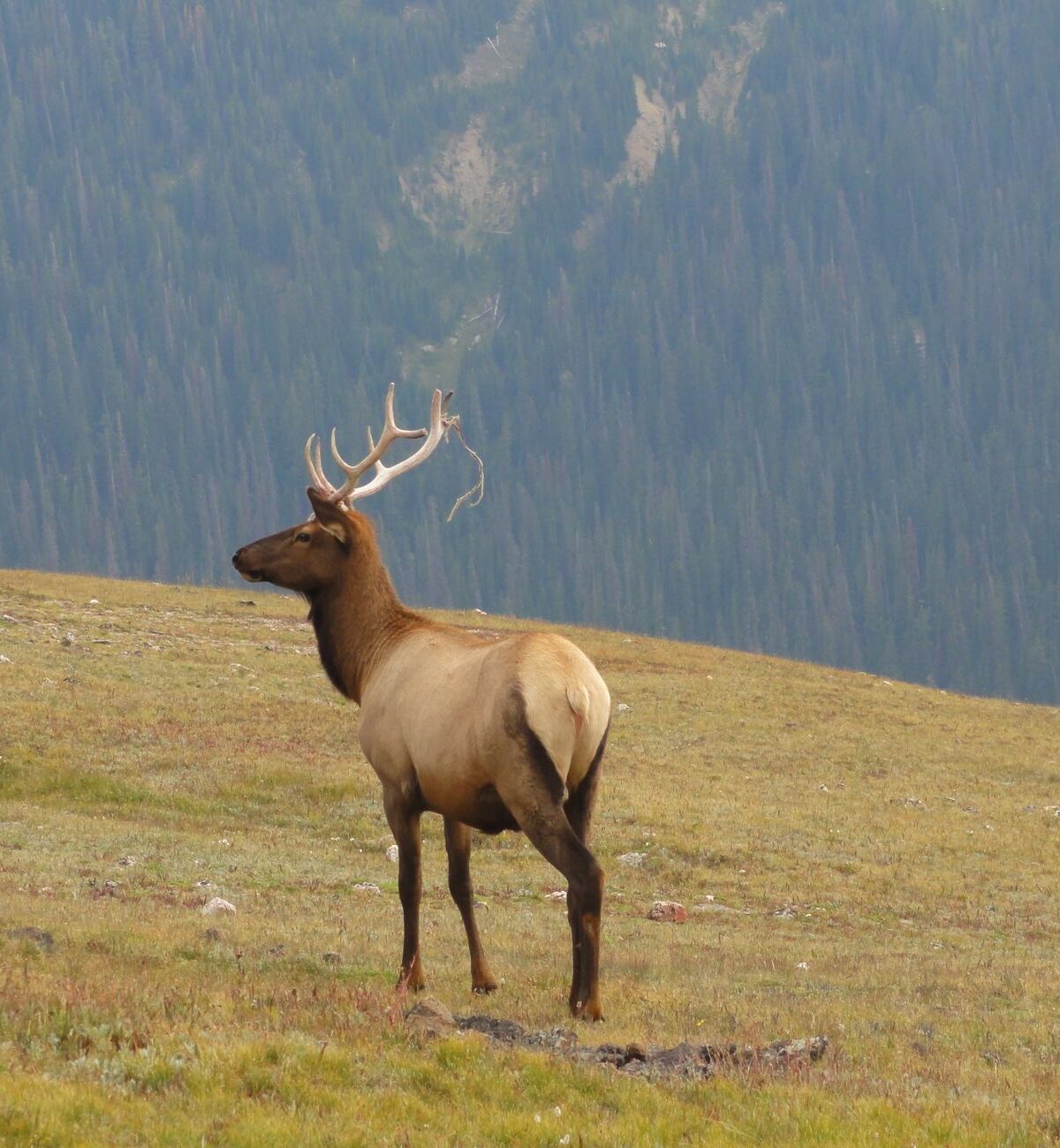
ROCKY MOUNTAIN ELK
Cervus canadensis nelsoni
DESCRIPTION
Rocky Mountain Elk (Cervus canadensis nelsoni) is commonly known as Wapiti. This subspecies of elk is characterized by its large size, with males typically exhibiting impressive antlers that can span up to four feet. They are social animals, often found in herds, and are known for their distinctive bugling calls during the mating season, which can be heard over long distances.
FUN FACTS
- Rocky Mountain Elk are known for their impressive antlers, which can grow up to an inch per day during the growth season
- These antlers are shed annually, and males will regrow them each year, often larger than before
- | During the rutting season, males engage in vocal displays and physical confrontations to establish dominance and attract females
- Their bugling calls can resonate through the mountains, creating a hauntingly beautiful sound that is a hallmark of the Rocky Mountain wilderness
QUICK INFO
Lifespan10-20 years in the wild, up to 25 in captivity
Average Weight200-450 kg
Average Length1.8-2.7 m
Diet TypeHerbivore
Social Structuregroup — they often form herds, especially during the mating season.
Activity PatternDiurnal
Breeding SeasonFall (September-November)
- Habitat
- These elk inhabit a variety of environments, including forests, grasslands, and mountainous regions. They prefer areas with ample vegetation for grazing and cover for protection.
- Biomes
- Temperate Forest, Grassland, Mountain
- Native Range
- Rocky Mountain Elk are native to the western United States and parts of Canada, particularly in the Rocky Mountain region.
- Continent
- North America
- Countries
- United States, Canada
- Diet
- Rocky Mountain Elk primarily feed on grasses, leaves, and bark, adapting their diet based on seasonal availability. They are known to graze in meadows and browse on shrubs and trees.
- Diet Type
- Herbivore
- Favorite Food
- grasses, leaves, bark
- Social Structure
- group — they often form herds, especially during the mating season.
- Activity Pattern
- Diurnal
- Group Size
- 10-100
- Territorial
- 0
 LC
LC
LC
LC
 LC
LC
200-450 kg
Weight
1.8-2.7 m
Length
1.2-1.5 m at shoulder
Height (Shoulder)
- Coloration
- They have a light brown to tan coloration with a darker mane and a lighter patch on their rump.
- Sexual Dimorphism
- Males are larger and have antlers, while females are smaller and do not have antlers.
- Lifespan
- 10-20 years in the wild, up to 25 in captivity
- Gestation Period
- 240 days
- Offspring per Birth
- 1
- Sexual Maturity
- 1-2 years
- Breeding Season
- Fall (September-November)
LC
Least Concern
IUCN Red List Status
- Population Status
- The population of Rocky Mountain Elk is generally stable, with successful conservation efforts in place.
- Wild Population Estimate
- over 1 million
- Population Trend
- Stable
- Endangered
- 0
- Threats
- Main threats include habitat loss due to urban development and hunting pressures. Additionally, climate change may impact their food sources and migratory patterns.
- Conservation Program
- Various state and national parks have implemented conservation programs to protect their habitats.
- Predators
- Wolves, mountain lions, bears, and humans.
- Defense Mechanisms
- They rely on their size and speed to escape predators, and they can also use their antlers for defense if necessary.
- Compatible Animals
- Bison, deer, various bird species
- Found in Zoos
- Common