


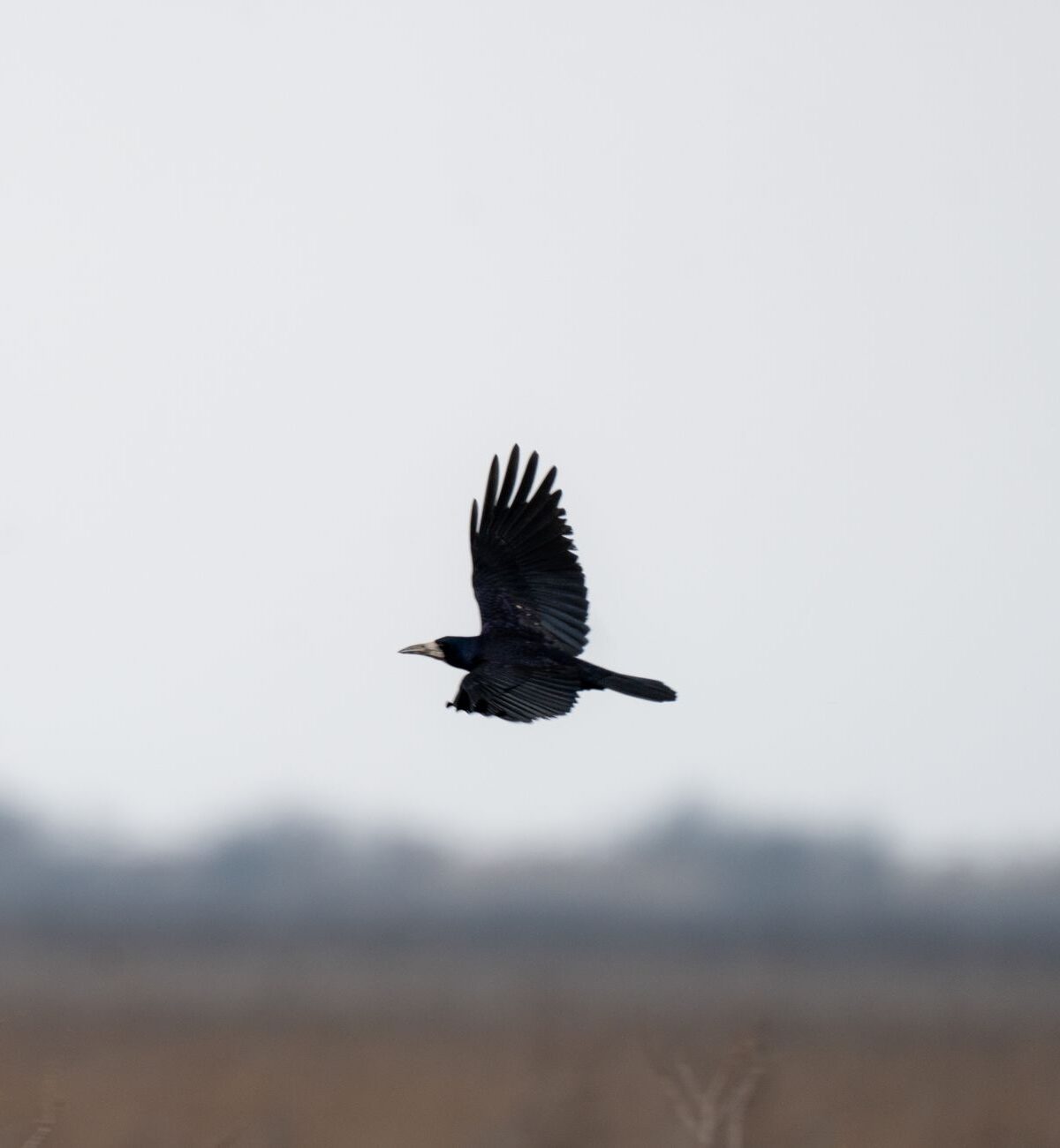
ROOK
Corvus frugilegus
DESCRIPTION
Rook (Corvus frugilegus) is a large, black bird with a distinctive shaggy throat and a long, pointed bill. It is often found in open fields and near human settlements, where it forages for food. Rooks are highly social birds, often seen in large flocks, and are known for their intelligence and complex social behaviors.
FUN FACTS
- Rooks are known for their remarkable problem-solving abilities, often using tools to access food
- They have been observed dropping hard-shelled nuts onto roads to crack them open, showcasing their intelligence and adaptability.|Rooks are highly social and often engage in playful aerial displays, which can include acrobatics and synchronized flying
- These behaviors are not only a form of social interaction but also serve to strengthen bonds within their flocks
QUICK INFO
Lifespan5-10 years in the wild, up to 15 years in captivit
Average Weight200-400 g
Average Length40-50 cm
Diet TypeOmnivore
Social StructureRooks are highly social birds, often found in large groups that can number in the hundreds. They engage in cooperative breeding and communal roosting.
Activity PatternDiurnal
Breeding SeasonSpring (March-May)
- Habitat
- Rooks inhabit a variety of environments, including farmland, grasslands, and urban areas. They prefer open spaces where they can easily find food and build their nests in trees or tall structures.
- Biomes
- Temperate Forest, Grassland
- Native Range
- Rooks are native to Europe and parts of Asia, commonly found in the British Isles and across mainland Europe.
- Continent
- Europe, Asia
- Countries
- United Kingdom, France, Germany, Poland, Russia
- Diet
- Rooks primarily feed on insects, seeds, and small invertebrates, often foraging in agricultural fields. They are known to use tools to extract food from hard-to-reach places.
- Diet Type
- Omnivore
- Favorite Food
- insects, seeds
- Social Structure
- Rooks are highly social birds, often found in large groups that can number in the hundreds. They engage in cooperative breeding and communal roosting.
- Activity Pattern
- Diurnal
- Group Size
- 20-100
- Territorial
- 0

 VU
VU
 LC
LC
200-400 g
Weight
40-50 cm
Length
- Coloration
- black with a glossy sheen and shaggy throat feathers
- Lifespan
- 5-10 years in the wild, up to 15 years in captivit
- Offspring per Birth
- 3-6
- Sexual Maturity
- 1-2 years
- Breeding Season
- Spring (March-May)
LC
Least Concern
IUCN Red List Status
- Population Status
- The population of Rooks is generally stable, with large numbers in suitable habitats.
- Wild Population Estimate
- 1,000,000-2,000,000
- Population Trend
- Stable
- Endangered
- 0
- Threats
- Rooks face threats from habitat loss due to agricultural intensification and urban development. Additionally, they can be affected by pesticide use, which reduces their food sources.
- Predators
- foxes, birds of prey, domestic cats
- Defense Mechanisms
- Rooks use their intelligence to evade predators, often employing mobbing behavior to deter threats.
- Compatible Animals
- none
- Found in Zoos
- Uncommon