


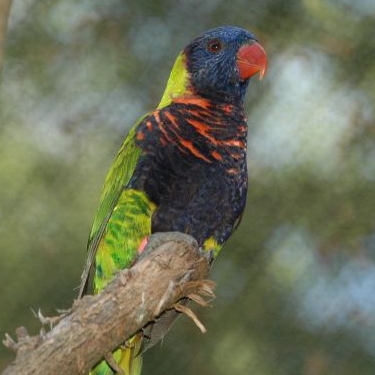
ROSENBERG'S LORIKEET
Trichoglossus rosenbergii
DESCRIPTION
Rosenberg's Lorikeet (Trichoglossus rosenbergii) is also known as Rosenberg's Parakeet and is a vibrant, medium-sized parrot native to New Guinea. This species is characterized by its striking plumage, which features a mix of green, blue, and yellow colors, making it visually appealing. They are highly social birds, often found in flocks, and are known for their playful behavior and acrobatic flight patterns.
FUN FACTS
- Rosenberg's Lorikeets have a unique feeding adaptation that allows them to extract nectar from flowers with their specialized tongues, which are long and brush-like
- This adaptation not only helps them feed but also plays a crucial role in pollination, benefiting the plants they feed on
- | These birds are known for their playful and acrobatic behavior, often hanging upside down while feeding or playing with each other
- Their social nature makes them popular in aviculture, where they are appreciated for their vibrant colors and engaging personalities
QUICK INFO
Lifespan10-15 years in the wild, up to 20 years in captivi
Average Weight100-150 g
Average Length25-30 cm
Diet TypeHerbivore
Social StructureThey are typically found in pairs or small groups, often forming loose flocks during foraging.
Activity PatternDiurnal
Breeding SeasonSpring to early summer
- Habitat
- These lorikeets inhabit tropical rainforests and woodlands, often found in areas with abundant flowering plants. They prefer regions with a high density of flowering trees, which provide their primary food source.
- Biomes
- Tropical Rainforest
- Native Range
- Rosenberg's Lorikeet is native to the lowland forests of New Guinea and surrounding islands.
- Continent
- Oceania
- Countries
- Papua New Guinea, Indonesia
- Diet
- Rosenberg's Lorikeets primarily feed on nectar, fruits, and flowers, utilizing their specialized tongues to extract nectar from blossoms. They also consume pollen and soft fruits, which provide essential nutrients.
- Diet Type
- Herbivore
- Favorite Food
- nectar, fruits, flowers
- Social Structure
- They are typically found in pairs or small groups, often forming loose flocks during foraging.
- Activity Pattern
- Diurnal
- Group Size
- 5-30
- Territorial
- 0
 LC
LC
100-150 g
Weight
25-30 cm
Length
- Coloration
- They exhibit a bright green body with blue and yellow accents on the wings and head.
- Sexual Dimorphism
- Males and females are similar in appearance, making it difficult to distinguish between the sexes.
- Lifespan
- 10-15 years in the wild, up to 20 years in captivi
- Offspring per Birth
- 1-3
- Sexual Maturity
- 1-2 years
- Breeding Season
- Spring to early summer
LC
Least Concern
IUCN Red List Status
- Population Status
- The population of Rosenberg's Lorikeet is currently stable, but habitat loss poses a potential threat.
- Wild Population Estimate
- Unknown
- Population Trend
- Stable
- Endangered
- 0
- Threats
- Main threats include habitat destruction due to logging and agricultural expansion. Additionally, they may be affected by the pet trade.
- Predators
- Natural predators include birds of prey and snakes, which may target their nests or young.
- Defense Mechanisms
- They rely on their agility and ability to fly quickly to evade predators.
- Compatible Animals
- Other lorikeets, small parrots
- Found in Zoos
- Common