


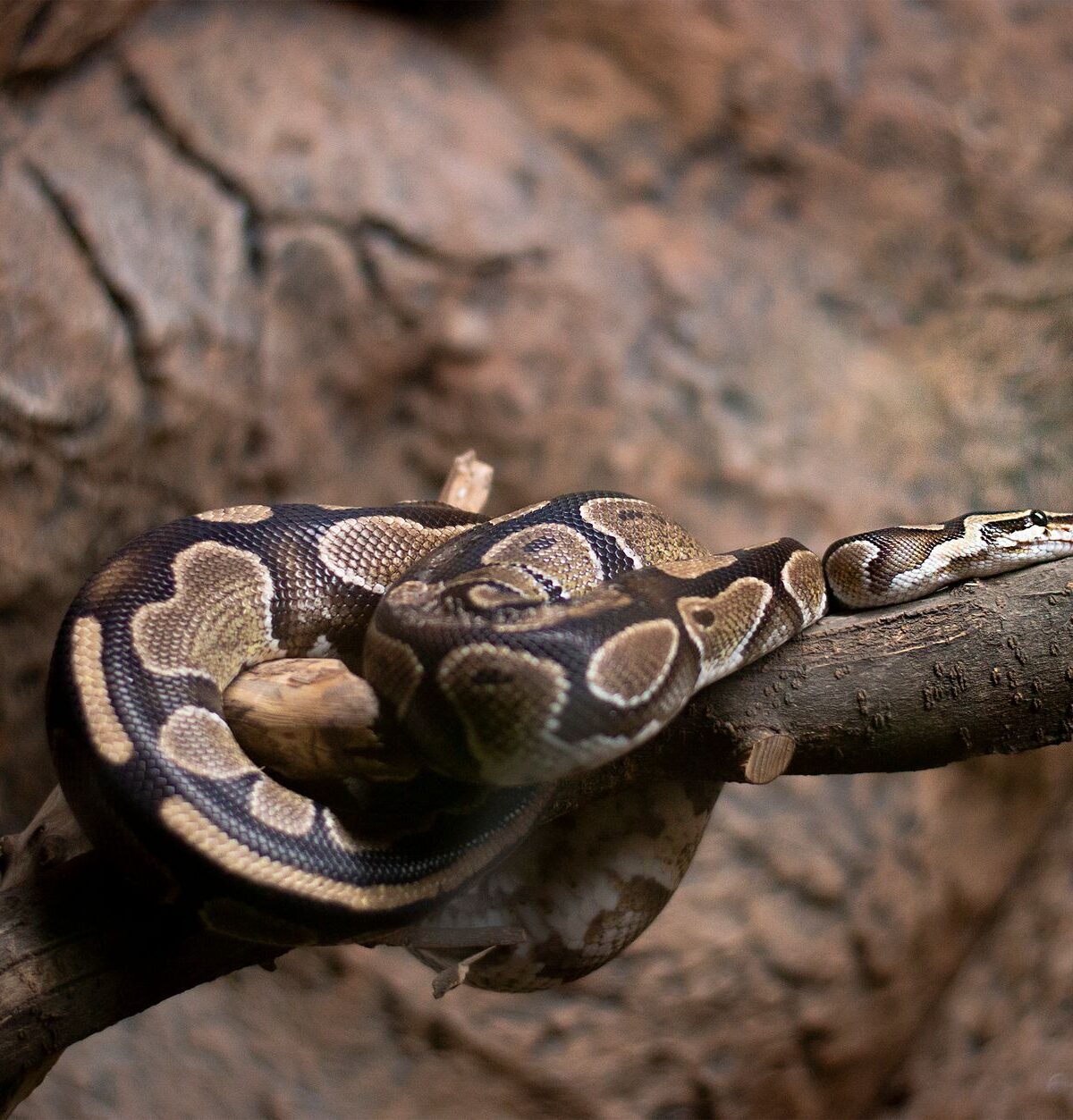
ROYAL PYTHON
DESCRIPTION
Also called Ball Python, Royal Python is a non-venomous constrictor snake native to sub-Saharan Africa. It is known for its distinctive coloration, which typically includes a pattern of dark brown or black blotches on a lighter background, making it a popular choice in the pet trade. Royal Pythons are generally shy and prefer to hide in burrows or under rocks, exhibiting a calm demeanor when handled, which contributes to their popularity among snake enthusiasts.
FUN FACTS
- Royal Pythons are known for their unique ability to constrict their prey, which allows them to consume animals much larger than their head
- This method of hunting is not only effective but also showcases their strength and adaptability in the wild
- | In captivity, Royal Pythons can exhibit a variety of color morphs due to selective breeding, leading to stunning variations in appearance
- These morphs can include colors like albino, piebald, and pastel, making them highly sought after by reptile enthusiasts
QUICK INFO
Lifespan15-30 years in captivity
Average Weight1.5-2.5 kg
Average Length1.2-1.5 m
Diet TypeCarnivore
Social Structuresolitary, typically found alone except during mating
Activity PatternNocturnal
Breeding SeasonSpring (March-May)
- Habitat
- Royal Pythons inhabit a variety of environments, including grasslands, savannas, and forests. They often seek refuge in burrows or crevices to avoid predators and extreme temperatures.
- Biomes
- Savanna, Tropical Rainforest
- Native Range
- Royal Pythons are found throughout sub-Saharan Africa, particularly in countries like Ghana, Nigeria, and the Democratic Republic of the Congo.
- Continent
- Africa
- Countries
- Ghana, Nigeria, Democratic Republic of the Congo, Cameroon, Uganda
- Diet
- Royal Pythons primarily feed on small mammals and birds, using constriction to subdue their prey. They are opportunistic feeders and may consume prey that is larger than their own diameter.
- Diet Type
- Carnivore
- Favorite Food
- Rodents, birds
- Social Structure
- solitary, typically found alone except during mating
- Activity Pattern
- Nocturnal
- Group Size
- 1
- Territorial
- 0
 VU
VU
1.5-2.5 kg
Weight
1.2-1.5 m
Length
- Coloration
- Dark brown or black blotches on a lighter tan or yellow background
- Sexual Dimorphism
- Males are generally smaller than females
- Lifespan
- 15-30 years in captivity
- Offspring per Birth
- 3-10
- Sexual Maturity
- 2-3 years
- Breeding Season
- Spring (March-May)
LC
Least Concern
IUCN Red List Status
- Population Status
- The population is currently stable, with no significant declines reported.
- Wild Population Estimate
- Unknown
- Population Trend
- Stable
- Endangered
- 0
- Threats
- Main threats include habitat loss due to agriculture and deforestation, as well as the pet trade. Over-collection for the exotic pet market poses a risk to local populations.
- Predators
- Birds of prey, larger snakes, and mammals such as mongooses may prey on Royal Pythons.
- Defense Mechanisms
- Royal Pythons often curl into a ball when threatened, which is a behavior that gives them their common name.
- Found in Zoos
- Common