


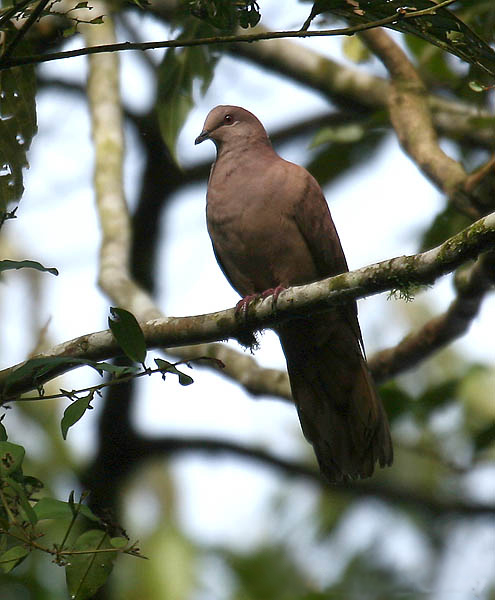
RUDDY PIGEON
Columba subvinacea
DESCRIPTION
Ruddy Pigeon (Columba subvinacea) is a medium-sized bird characterized by its rich reddish-brown plumage, which can appear more vibrant in sunlight. This species is often found in pairs or small groups, displaying a calm demeanor as it forages for food. It inhabits forested areas and is known for its soft cooing calls, which can be heard during its daily activities.
FUN FACTS
- Ruddy Pigeons are known for their unique courtship displays, which include bowing and puffing up their feathers to attract mates
- They also play a crucial role in their ecosystem by dispersing seeds, helping to maintain the health of their forest habitats
QUICK INFO
Lifespanup to 10 years in the wild
Average Weight200-300 g
Average Length30-35 cm
Diet TypeHerbivore
Social Structurepair
Activity PatternDiurnal
Breeding SeasonYear-round, with peaks during wet seasons
- Habitat
- This species prefers humid tropical forests and can also be found in secondary growth areas. They are often seen in the understory or lower canopy, where they can easily access food sources.
- Biomes
- Tropical Rainforest
- Native Range
- Ruddy Pigeons are native to the Caribbean, specifically found on the islands of Jamaica and Hispaniola.
- Continent
- North America, Caribbean
- Countries
- Jamaica, Haiti, Dominican Republic
- Diet
- Ruddy Pigeons primarily feed on seeds, fruits, and berries, foraging on the ground or in trees. They are known to consume a variety of plant materials, adapting their diet based on seasonal availability.
- Diet Type
- Herbivore
- Favorite Food
- seeds, fruits, berries
- Social Structure
- pair
- Activity Pattern
- Diurnal
- Group Size
- 2-10
- Territorial
- 0
 CR
CR
 LC
LC
 LC
LC
200-300 g
Weight
30-35 cm
Length
- Coloration
- rich reddish-brown plumage with a slightly paler underbelly
- Sexual Dimorphism
- males and females are similar in appearance
- Lifespan
- up to 10 years in the wild
- Offspring per Birth
- 1-2
- Sexual Maturity
- 6-12 months
- Breeding Season
- Year-round, with peaks during wet seasons
LC
Least Concern
IUCN Red List Status
- Population Status
- The population of Ruddy Pigeons is currently stable, but habitat loss poses a potential threat.
- Wild Population Estimate
- unknown
- Population Trend
- Stable
- Endangered
- 0
- Threats
- Main threats include habitat destruction due to deforestation and urbanization. Additionally, hunting in some areas poses a risk to their populations.
- Predators
- hawks, snakes, domestic cats
- Defense Mechanisms
- Ruddy Pigeons rely on their camouflage and the dense foliage of their habitat to avoid predators.
- Found in Zoos
- Uncommon