


RUFFED LEMUR
DESCRIPTION
The Ruffed Lemur is a large primate known for its striking black and white fur, which gives it a distinctive appearance. They are arboreal and spend most of their time in the trees of Madagascar's rainforests, where they are known for their loud vocalizations. Socially, Ruffed Lemurs are unique among lemurs as they often form groups, but they can also be quite solitary, depending on the availability of food and resources.
FUN FACTS
- Ruffed Lemurs are one of the largest lemur species and are known for their unique social structure
- They are also one of the few lemurs that are fully arboreal, spending almost their entire lives in trees, which helps them avoid many ground-based predators.|Ruffed Lemurs have a very strong sense of smell, which they use to locate ripe fruits and flowers
- Their keen sense of smell is crucial for their survival in the dense forests of Madagascar, where visual cues can be limited
QUICK INFO
Lifespan15-20 years in the wild, up to 30 in captivity
Average Weight3-4 kg
Average Length1-1.5 m
Diet TypeHerbivore
Social StructureThey typically live in small groups or pairs, but can also be found alone. Their social structure is flexible, often influenced by food availability.
Activity PatternDiurnal
Breeding SeasonSpring (September-November)
- Habitat
- Ruffed Lemurs inhabit the rainforests of Madagascar, where they thrive in the dense canopy. They prefer areas with abundant fruiting trees and are often found in both primary and secondary forests.
- Biomes
- Tropical Rainforest
- Native Range
- Endemic to Madagascar, primarily found in the eastern rainforests of the island.
- Continent
- Africa
- Countries
- Madagascar
- Diet
- Ruffed Lemurs primarily eat fruits, leaves, and flowers, making them important seed dispersers in their ecosystem. They have a preference for ripe fruits and are known to consume nectar as well.
- Diet Type
- Herbivore
- Favorite Food
- fruits, leaves, flowers
- Social Structure
- They typically live in small groups or pairs, but can also be found alone. Their social structure is flexible, often influenced by food availability.
- Activity Pattern
- Diurnal
- Group Size
- 2-10
- Territorial
- 1
 EN
EN
3-4 kg
Weight
1-1.5 m
Length
- Coloration
- Black and white fur with a ruffled appearance.
- Sexual Dimorphism
- Males are generally larger than females.
- Lifespan
- 15-20 years in the wild, up to 30 in captivity
- Gestation Period
- 90-100 days
- Offspring per Birth
- 1-6
- Sexual Maturity
- 2-3 years
- Breeding Season
- Spring (September-November)
EN
Endangered
IUCN Red List Status
- Population Status
- The population is currently declining due to habitat loss and hunting.
- Wild Population Estimate
- 10,000-20,000
- Population Trend
- Decreasing
- Endangered
- 1
- Threats
- The main threats to Ruffed Lemurs include deforestation due to agriculture and logging, as well as hunting for bushmeat. These pressures have led to significant habitat loss and fragmentation.
- Predators
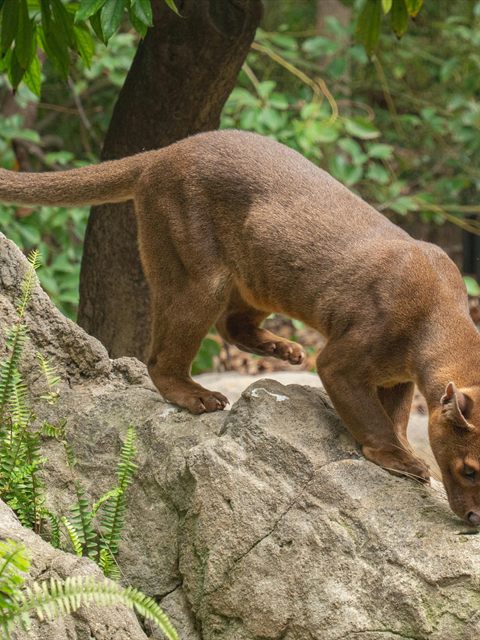
- Fossa, Madagascar Harrier Hawk, and various snakes.
- Defense Mechanisms
- Ruffed Lemurs use loud vocalizations to warn others of danger and can also flee into the treetops to escape predators.
- Found in Zoos
- Uncommon