


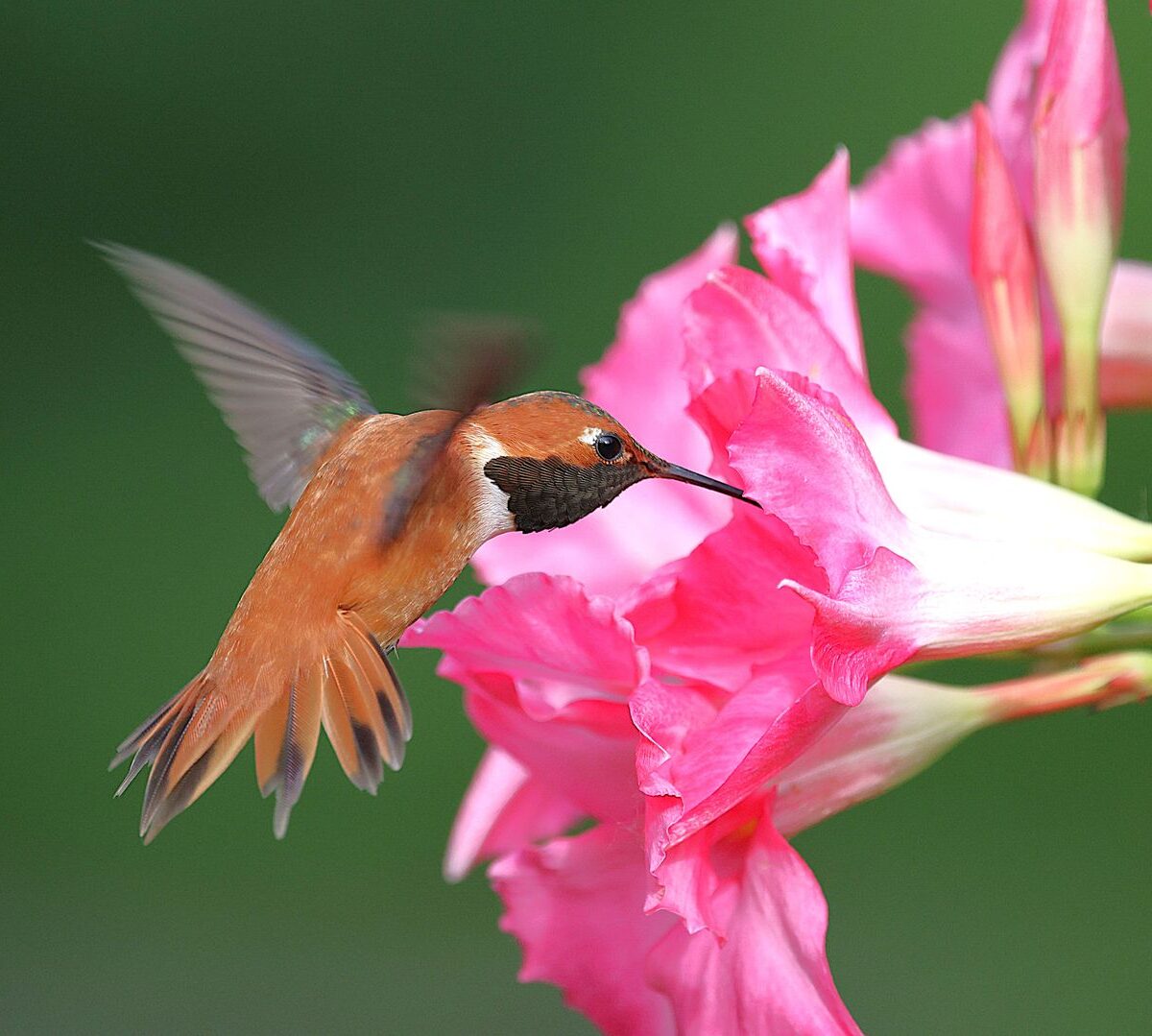
RUFOUS HUMMINGBIRD
Selasphorus rufus
DESCRIPTION
Rufous Hummingbird (Selasphorus rufus) is a small, vibrant bird known for its striking orange-red plumage, particularly in males. These birds are highly territorial and are often seen aggressively defending their feeding territories from other hummingbirds. They are migratory, traveling long distances between their breeding grounds in North America and wintering areas in Mexico.
FUN FACTS
- Rufous Hummingbirds are known for their incredible migratory journey, traveling up to 3,000 miles from their breeding grounds in North America to wintering sites in Mexico
- They are one of the most long-distance migrating hummingbirds, often flying non-stop across the Gulf of Mexico
- | These birds have a unique ability to hover in place, thanks to their rapid wing beats, which can reach up to 80 beats per second
- This allows them to feed on nectar while remaining perfectly still in the air, a skill that is essential for their survival
QUICK INFO
Lifespan3-5 years in the wild, up to 10 years in captivity
Average Weight3-4 g
Average Length7.5-9 cm
Diet TypeOmnivore
Social Structuresolitary, males are particularly territorial and often seen alone during the breeding season
Activity PatternDiurnal
Breeding SeasonSpring (April-June)
- Habitat
- They inhabit a variety of environments, including open woodlands, gardens, and meadows. Rufous Hummingbirds are often found in areas with abundant flowering plants.
- Biomes
- Temperate Forest, Grassland, Shrubland
- Native Range
- Their breeding range extends from the western United States to southern Canada, while they migrate to Mexico for the winter.
- Continent
- North America
- Countries
- United States, Canada, Mexico
- Diet
- Rufous Hummingbirds primarily feed on nectar from flowers, but they also consume small insects and spiders for protein. Their long, specialized bills allow them to access nectar deep within tubular flowers.
- Diet Type
- Omnivore
- Favorite Food
- nectar, small insects
- Social Structure
- solitary, males are particularly territorial and often seen alone during the breeding season
- Activity Pattern
- Diurnal
- Group Size
- 1-2
- Territorial
- 1
 EN
EN
3-4 g
Weight
7.5-9 cm
Length
- Coloration
- males are bright orange-red with iridescent green on the back, females are more muted with green and brown tones
- Sexual Dimorphism
- males are more brightly colored than females
- Lifespan
- 3-5 years in the wild, up to 10 years in captivity
- Offspring per Birth
- 2
- Sexual Maturity
- 1 year
- Breeding Season
- Spring (April-June)
LC
Least Concern
IUCN Red List Status
- Population Status
- The population of Rufous Hummingbirds is currently stable, though they face habitat loss in some areas.
- Wild Population Estimate
- unknown
- Population Trend
- Stable
- Endangered
- 0
- Threats
- Main threats include habitat destruction due to urban development and agricultural practices. Climate change may also impact their migratory patterns and food availability.
- Predators
- Praying mantises, spiders, larger birds, and some mammals may prey on Rufous Hummingbirds.
- Defense Mechanisms
- They use rapid flight and aggressive behavior to defend their territory and evade predators.
- Found in Zoos
- Uncommon