


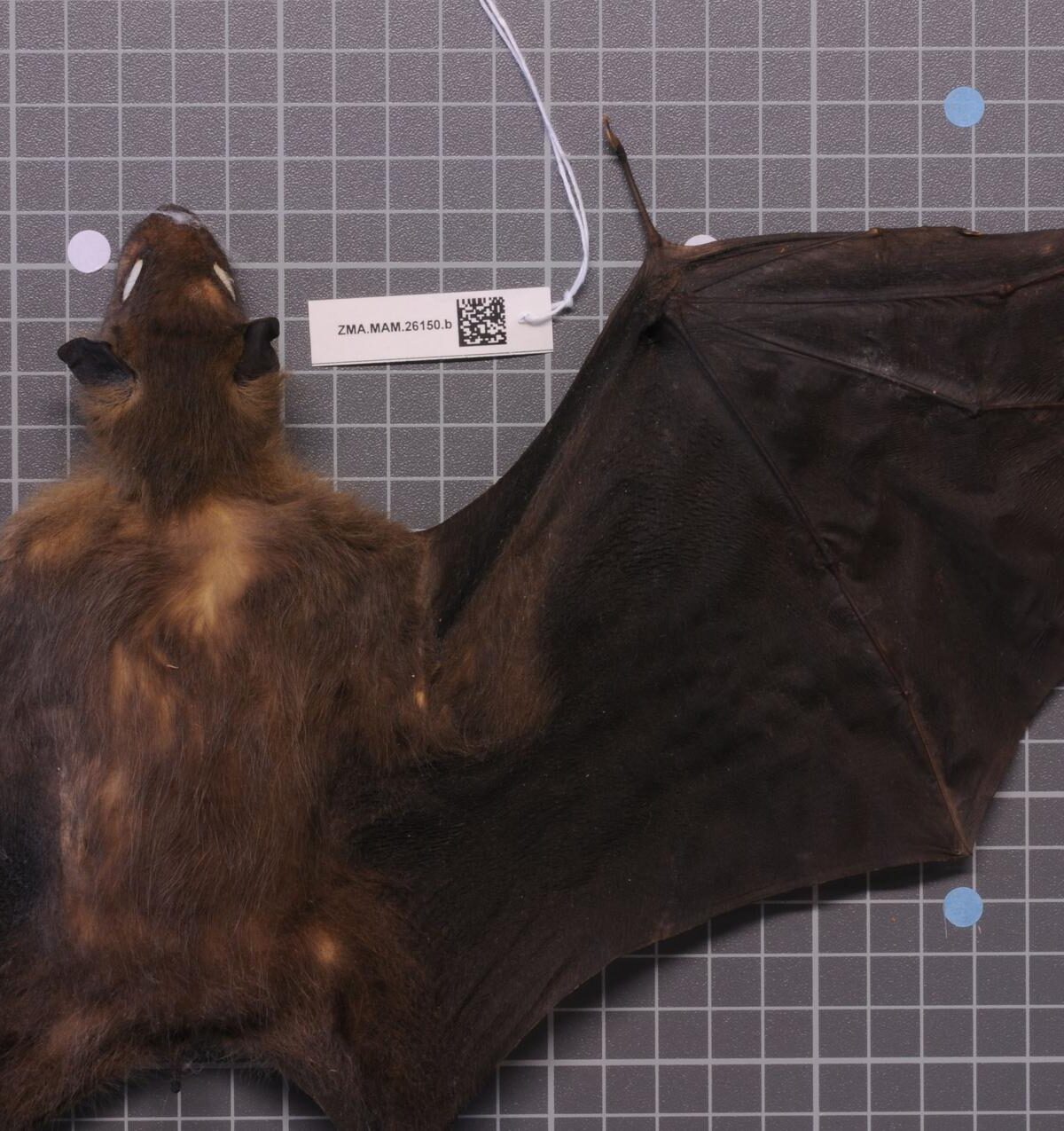
RUWENZORI FRUIT BAT
DESCRIPTION
Also called the Ruwenzori Bat, the Ruwenzori Fruit Bat is a large species of fruit bat found in the mountainous regions of East Africa. It has a distinctive appearance with a wingspan that can reach up to 1 meter and a body covered in dark brown to black fur. These bats are known for their social behavior, often roosting in large colonies in trees, and they play a crucial role in their ecosystem as pollinators and seed dispersers.
FUN FACTS
- Ruwenzori Fruit Bats have a unique role in their ecosystem as pollinators, helping to fertilize flowers while feeding on nectar
- They are also known to travel long distances in search of food, sometimes covering several kilometers in a single night.|These bats have a remarkable ability to navigate through dense forests using echolocation, allowing them to find food and avoid obstacles in complete darkness
- Their social structure is fascinating, as they communicate with each other through a variety of vocalizations, which helps maintain group cohesion
QUICK INFO
Lifespan10-15 years in the wild
Average Weight200-300 g
Average Length25-30 cm
Diet TypeHerbivore
Social StructureThey are typically found in groups, often roosting in colonies that can number in the hundreds.
Activity PatternNocturnal
Breeding SeasonYear-round, with peaks during fruiting seasons
- Habitat
- This species inhabits montane forests and woodlands, often at elevations between 1,500 and 3,000 meters. They prefer areas with abundant fruiting trees and flowering plants.
- Biomes
- Tropical Rainforest, Montane Forest
- Native Range
- The Ruwenzori Fruit Bat is native to the Ruwenzori Mountains and surrounding areas in East Africa.
- Continent
- Africa
- Countries
- Uganda, Democratic Republic of the Congo
- Diet
- The Ruwenzori Fruit Bat primarily feeds on fruits, nectar, and flowers, which they locate using their keen sense of smell. They are important for the dispersal of seeds in their habitat.
- Diet Type
- Herbivore
- Favorite Food
- Fruits and nectar
- Social Structure
- They are typically found in groups, often roosting in colonies that can number in the hundreds.
- Activity Pattern
- Nocturnal
- Group Size
- 50-200
- Territorial
- 0
 VU
VU
 LC
LC
200-300 g
Weight
25-30 cm
Length
- Coloration
- Dark brown to black fur with lighter underparts
- Lifespan
- 10-15 years in the wild
- Gestation Period
- 120 days
- Offspring per Birth
- 1
- Sexual Maturity
- 1-2 years
- Breeding Season
- Year-round, with peaks during fruiting seasons
LC
Least Concern
IUCN Red List Status
- Population Status
- The population is currently stable, but habitat loss poses a potential threat.
- Wild Population Estimate
- Unknown
- Population Trend
- Stable
- Endangered
- 0
- Threats
- Main threats include habitat destruction due to deforestation and agricultural expansion. Climate change may also impact their food sources and roosting sites.
- Predators
- Birds of prey, snakes, and larger mammals may prey on Ruwenzori Fruit Bats, especially when they are roosting.
- Defense Mechanisms
- They rely on their ability to fly and roost in high trees to avoid predators.
- Found in Zoos
- Uncommon