


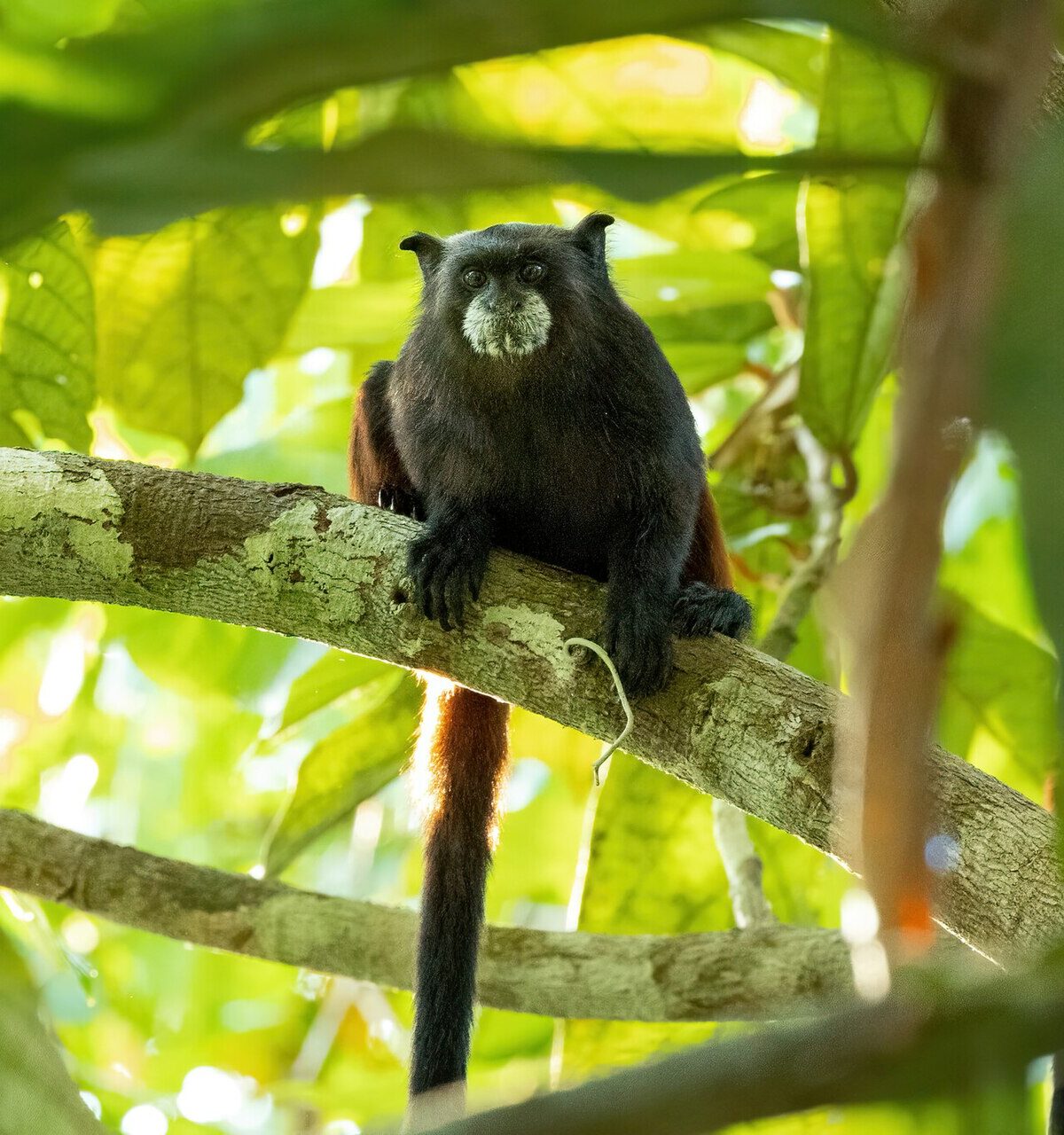
SADDLEBACK TAMARIN
Saguinus fuscicollis
DESCRIPTION
Saddleback Tamarin (Saguinus fuscicollis) is commonly known as the Brown Tamarin and Fuscicollis Tamarin. This small primate is characterized by its distinctive saddle-like patch of dark fur on its back, contrasting with its lighter face and limbs. They are social animals, often found in groups, and are known for their vocalizations and playful behavior, which play a crucial role in their social interactions.
FUN FACTS
- Saddleback Tamarins are known for their unique social structures, where the dominant female often gives birth to twins, and the entire group helps in raising the young
- They are also highly vocal, using a variety of calls to communicate with each other, which can be heard over long distances in their dense forest habitat
QUICK INFO
Lifespan10-15 years in the wild, up to 20 years in captivi
Average Weight300-500 g
Average Length25-30 cm
Diet TypeOmnivore
Social StructureThey live in groups, typically consisting of 5-15 individuals, which include a dominant breeding pair and their offspring.
Activity PatternDiurnal
Breeding SeasonYear-round, with peaks depending on environmental conditions
- Habitat
- They inhabit tropical rainforests, particularly in areas with dense vegetation. These environments provide ample food sources and shelter for their social groups.
- Biomes
- Tropical Rainforest
- Native Range
- Saddleback Tamarins are native to the Amazon Basin, specifically in parts of Brazil, Peru, and Colombia.
- Continent
- South America
- Countries
- Brazil, Peru, Colombia
- Diet
- Saddleback Tamarins primarily consume fruits, insects, and small vertebrates. Their diet is diverse, allowing them to adapt to varying food availability in their habitat.
- Diet Type
- Omnivore
- Favorite Food
- Fruits, insects
- Social Structure
- They live in groups, typically consisting of 5-15 individuals, which include a dominant breeding pair and their offspring.
- Activity Pattern
- Diurnal
- Group Size
- 5-15
- Territorial
- 1
 LC
LC
300-500 g
Weight
25-30 cm
Length
- Coloration
- They have a mix of dark brown and black fur with a lighter face and limbs.
- Sexual Dimorphism
- Males and females are similar in size and appearance.
- Lifespan
- 10-15 years in the wild, up to 20 years in captivi
- Gestation Period
- 140 days
- Offspring per Birth
- 1-2
- Sexual Maturity
- 1.5-2 years
- Breeding Season
- Year-round, with peaks depending on environmental conditions
LC
Least Concern
IUCN Red List Status
- Population Status
- The population is currently stable, but habitat loss poses a threat.
- Wild Population Estimate
- Unknown
- Population Trend
- Stable
- Endangered
- 0
- Threats
- Main threats include habitat destruction due to deforestation and fragmentation. Additionally, they face pressures from the illegal pet trade.
- Predators
- Predators include birds of prey, snakes, and larger mammals such as jaguars.
- Defense Mechanisms
- They rely on their agility and vocalizations to warn group members of potential threats.
- Compatible Animals
- Other small primates, such as marmosets, in controlled environments like zoos.
- Found in Zoos
- Common