


SAHARA SAND VIPER
Vipera lebetina
DESCRIPTION
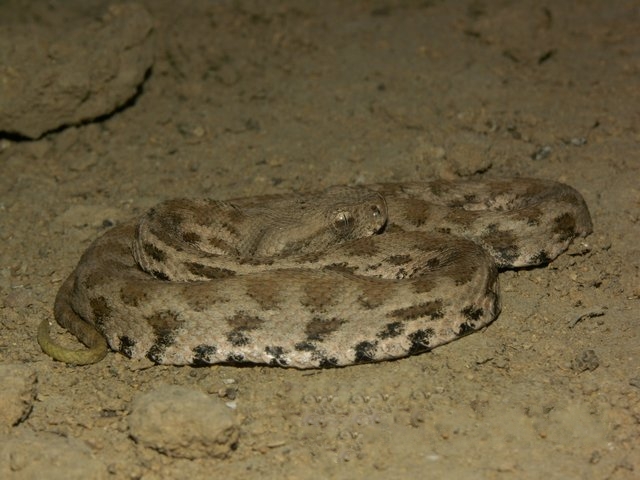
The Sahara Sand Viper, or Vipera lebetina, is a robust snake characterized by its distinctive coloration, which typically includes shades of brown, yellow, and gray, allowing it to blend seamlessly into its sandy desert environment. This species is known for its relatively large size, with adults averaging between 1.2 to 1.5 meters in length. Behaviorally, it is primarily terrestrial and is often found basking in the sun or hiding under rocks and vegetation, showcasing its ambush predation strategy.
FUN FACTS
- The Sahara Sand Viper is known for its impressive camouflage, which allows it to blend into the desert landscape, making it difficult for both predators and prey to spot
- Additionally, its venom is hemotoxic, which means it can cause significant tissue damage to its prey, ensuring a quick kill and easier consumption
- | Despite its fearsome reputation, the Sahara Sand Viper plays a crucial role in its ecosystem by controlling the populations of small mammals and other prey species, thus maintaining a balance in the desert food web
QUICK INFO
Lifespan10-15 years in the wild, up to 20 years in captivi
Average Weight1-2 kg
Average Length1.2-1.5 m
Diet TypeCarnivore
Social Structuresolitary
Activity PatternNocturnal
Breeding SeasonSpring (April-June)
- Habitat
- This species inhabits arid and semi-arid regions, particularly sandy deserts and rocky outcrops. It prefers areas with sparse vegetation where it can easily camouflage.
- Biomes
- Desert, Semi-arid
- Native Range
- The Sahara Sand Viper is native to North Africa, particularly in the Sahara Desert region.
- Continent
- Africa
- Countries
- Algeria, Tunisia, Libya, Morocco, Mali, Niger
- Diet
- The Sahara Sand Viper primarily preys on small mammals, birds, and lizards. It uses its venom to immobilize its prey before consumption.
- Diet Type
- Carnivore
- Favorite Food
- small mammals, birds, lizards
- Social Structure
- solitary
- Activity Pattern
- Nocturnal
- Group Size
- 1
- Territorial
- 1
 VU
VU
1-2 kg
Weight
1.2-1.5 m
Length
- Coloration
- Typically brown or gray with darker patterns, providing excellent camouflage in sandy environments.
- Sexual Dimorphism
- Males are generally smaller than females.
- Lifespan
- 10-15 years in the wild, up to 20 years in captivi
- Gestation Period
- 90-100 days
- Offspring per Birth
- 5-15
- Sexual Maturity
- 2-3 years
- Breeding Season
- Spring (April-June)
LC
Least Concern
IUCN Red List Status
- Population Status
- The population is currently stable, but local declines may occur due to habitat destruction.
- Wild Population Estimate
- Unknown
- Population Trend
- Stable
- Endangered
- 0
- Threats
- Main threats include habitat loss due to desertification and human encroachment. Additionally, they are sometimes killed out of fear or misunderstanding.
- Predators
- Birds of prey, larger snakes, and mammals such as foxes may prey on the Sahara Sand Viper.
- Defense Mechanisms
- When threatened, it may hiss loudly and display its fangs as a warning before striking.
- Found in Zoos
- Uncommon