


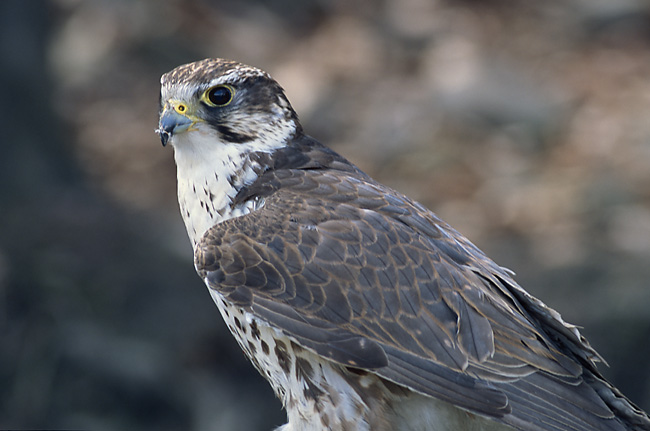
SAKER FALCON
Falco cherrug
DESCRIPTION
The Saker Falcon is a large bird of prey known for its powerful build and impressive wingspan, which can reach up to 1.2 meters. It has a distinctive plumage that varies from light brown to dark brown, often with streaks and spots that provide excellent camouflage in its natural habitat. This species is known for its remarkable hunting skills, often employing a combination of speed and agility to catch its prey, and it is highly regarded in falconry for its trainability and hunting prowess.
FUN FACTS
- Saker Falcons are known for their incredible speed, capable of reaching speeds of up to 200 km/h during a dive, making them one of the fastest birds in the world
- They have been used in falconry for centuries, and their ability to be trained for hunting has made them a favorite among falconers, showcasing their intelligence and adaptability
QUICK INFO
Lifespan10-15 years in the wild, up to 20 years in captivi
Average Weight1-1.5 kg
Average Length45-55 cm
Diet TypeCarnivore
Social Structuresolitary, pairs during breeding season
Activity PatternDiurnal
Breeding SeasonSpring (April-June)
- Habitat
- Saker Falcons inhabit open landscapes such as steppes, grasslands, and agricultural fields, where they can easily spot prey. They often nest in cliffs or tall trees, providing a vantage point for hunting.
- Biomes
- Grassland, Temperate Forest
- Native Range
- The Saker Falcon is native to parts of Europe, Asia, and the Middle East, with populations found in countries such as Mongolia, Kazakhstan, and Hungary.
- Continent
- Asia, Europe
- Countries
- Mongolia, Kazakhstan, Hungary, Russia, Ukraine, Turkey
- Diet
- The Saker Falcon primarily feeds on small to medium-sized birds and mammals, including pigeons, partridges, and small rodents. It is an adept hunter, often using its keen eyesight to spot prey from great distances.
- Diet Type
- Carnivore
- Favorite Food
- small birds, rodents
- Social Structure
- solitary, pairs during breeding season
- Activity Pattern
- Diurnal
- Group Size
- 1-2
- Territorial
- 1
 LC
LC
1-1.5 kg
Weight
45-55 cm
Length
- Coloration
- The Saker Falcon has a brownish plumage with lighter underparts and dark streaks, providing effective camouflage.
- Sexual Dimorphism
- Males are generally smaller and lighter than females.
- Lifespan
- 10-15 years in the wild, up to 20 years in captivi
- Offspring per Birth
- 2-5
- Sexual Maturity
- 1-2 years
- Breeding Season
- Spring (April-June)
VU
Vulnerable
IUCN Red List Status
- Population Status
- The Saker Falcon population is currently facing pressures due to habitat loss and hunting.
- Wild Population Estimate
- 50,000-100,000
- Population Trend
- Decreasing
- Endangered
- 1
- Threats
- Main threats to the Saker Falcon include habitat destruction, illegal trapping, and hunting. Additionally, changes in agricultural practices can impact their food sources.
- Conservation Program
- Various conservation programs are in place to protect the Saker Falcon, including habitat restoration and legal protection in several countries.
- Predators
- Eagles, larger hawks, and humans can pose threats to Saker Falcons, particularly to their eggs and young.
- Defense Mechanisms
- Saker Falcons use their speed and agility to evade predators, and they can also become aggressive when defending their nests.
- Compatible Animals
- none
- Found in Zoos
- Uncommon