


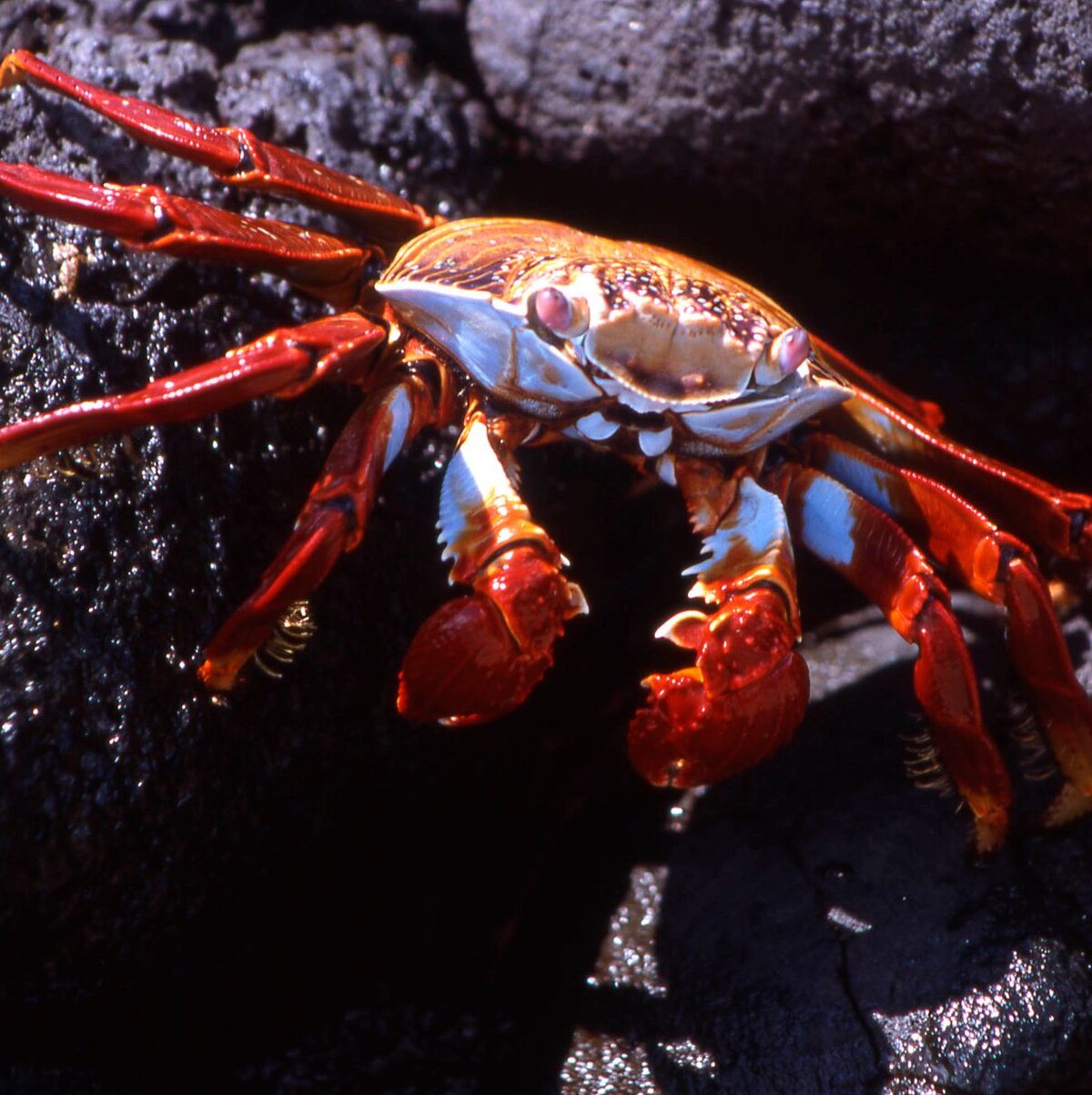
SALLY LIGHTFOOT CRAB
DESCRIPTION
Sally Lightfoot Crab, also known as the Galapagos Sally Lightfoot Crab, is a strikingly colorful species found primarily along the rocky shores of the Galapagos Islands. These crabs exhibit a vibrant coloration, typically featuring a reddish-orange body with blue and yellow accents, which helps them blend into their rocky environment. They are agile climbers and are often seen scuttling over rocks, where they forage for food and evade predators.
FUN FACTS
- Sally Lightfoot Crabs are known for their incredible speed and agility, allowing them to quickly escape from predators and navigate rocky terrains
- They also have a unique behavior of washing their claws in the water to keep them clean, which is essential for their feeding habits
- | These crabs are an important part of the Galapagos ecosystem, as they help control algae growth on rocks and serve as a food source for various predators
- Their vibrant colors not only serve as camouflage but also play a role in attracting mates during the breeding season
QUICK INFO
Lifespan5-10 years in the wild
Average Weight0.5-1 kg
Average Length10-15 cm
Diet TypeOmnivore
Social StructureThey can be found in groups, especially in areas with abundant food sources, but they are not strictly social.
Activity PatternDiurnal
Breeding SeasonYear-round, with peaks during warmer months
- Habitat
- These crabs inhabit rocky shorelines, often found in intertidal zones where they can easily access food and shelter. They thrive in areas with strong wave action, which helps to bring in nutrients.
- Biomes
- Coastal, Marine
- Native Range
- Sally Lightfoot Crabs are native to the Galapagos Islands and the western coasts of Central and South America.
- Continent
- South America
- Countries
- Ecuador, Peru, Chile
- Diet
- Sally Lightfoot Crabs are primarily scavengers, feeding on algae, detritus, and small invertebrates. They play a crucial role in their ecosystem by helping to clean up organic material along the shore.
- Diet Type
- Omnivore
- Favorite Food
- algae, detritus, small invertebrates
- Social Structure
- They can be found in groups, especially in areas with abundant food sources, but they are not strictly social.
- Activity Pattern
- Diurnal
- Group Size
- 5-30
- Territorial
- 0
 VU
VU
0.5-1 kg
Weight
10-15 cm
Length
- Coloration
- vibrant reddish-orange with blue and yellow accents
- Sexual Dimorphism
- Males are generally larger and have more pronounced claws than females.
- Lifespan
- 5-10 years in the wild
- Offspring per Birth
- up to 100
- Sexual Maturity
- 1-2 years
- Breeding Season
- Year-round, with peaks during warmer months
LC
Least Concern
IUCN Red List Status
- Population Status
- The population is currently stable, with no significant declines reported.
- Wild Population Estimate
- Unknown
- Population Trend
- Stable
- Endangered
- 0
- Threats
- Main threats include habitat destruction due to human activities and climate change. Invasive species also pose a risk to their populations.
- Predators
- Birds, larger crabs, and fish are known predators of Sally Lightfoot Crabs.
- Defense Mechanisms
- They use their speed and agility to escape predators, often retreating to crevices in the rocks.
- Found in Zoos
- Common