


SALVADORI'S PHEASANT
Lophophorus salvadorii
DESCRIPTION
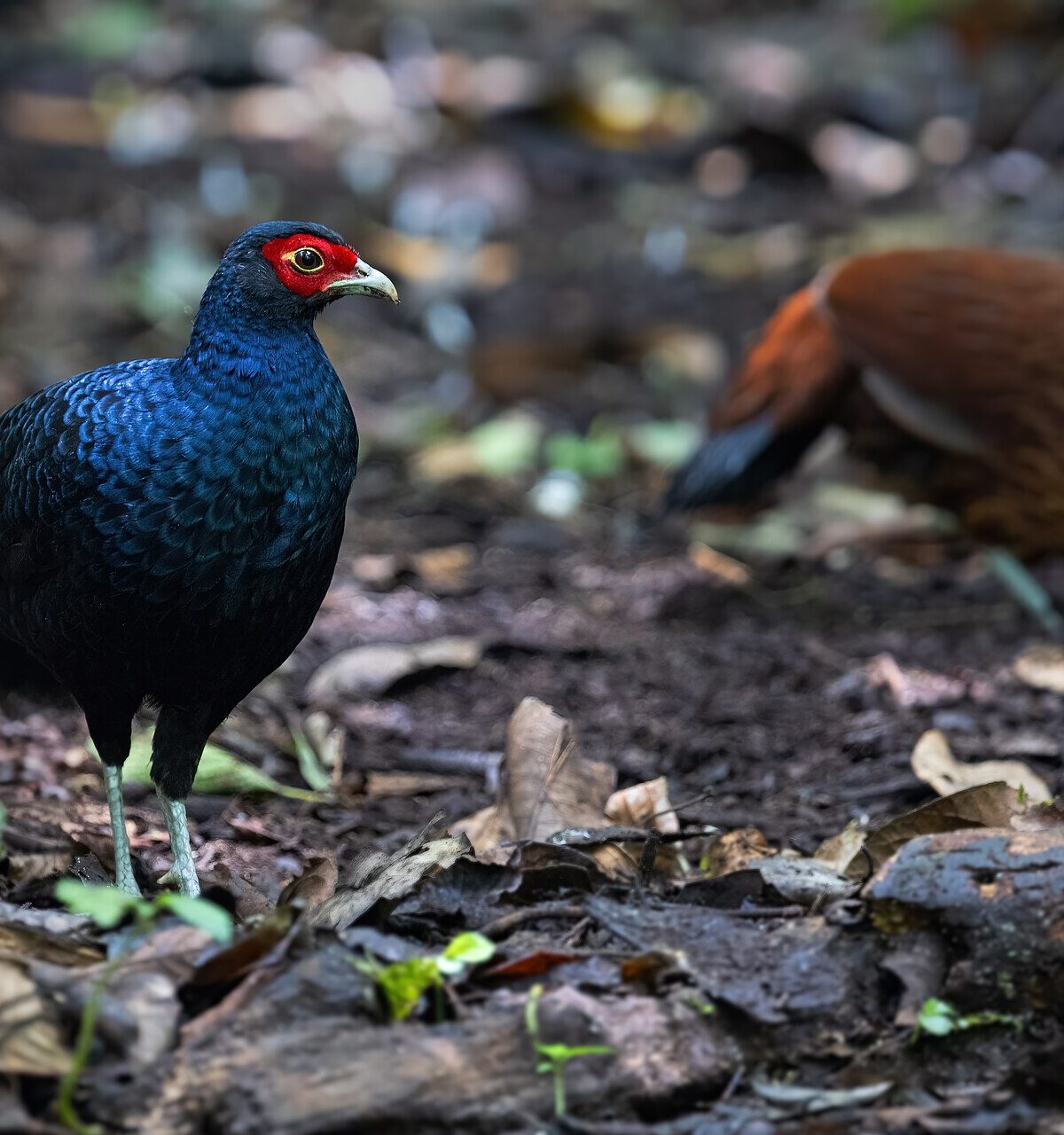
Salvadori's Pheasant (Lophophorus salvadorii) is a striking bird known for its vibrant plumage, featuring a mix of iridescent green, blue, and gold colors. Males are particularly notable for their long, flowing tail feathers and elaborate crest, while females are more subdued in coloration, primarily brown with some lighter markings. This species is native to the mountainous forests of New Guinea, where it is often found foraging on the forest floor and is known for its elusive behavior.
FUN FACTS
- Salvadori's Pheasant is named after the Italian ornithologist Tommaso Salvadori, who described the species in the 19th century
- This pheasant is not only known for its beauty but also for its unique courtship displays, where males perform elaborate dances to attract females, showcasing their vibrant plumage and long tails
- | Despite their stunning appearance, Salvadori's Pheasant is quite elusive and can be difficult to spot in the wild, often remaining hidden among the dense foliage of their forest habitat
- Their shy nature makes them a challenge for birdwatchers and researchers alike, adding to the intrigue surrounding this remarkable species
QUICK INFO
Lifespan10-15 years in the wild, up to 20 in captivity
Average Weight1.5-2.5 kg
Average Length70-90 cm
Diet TypeOmnivore
Social StructureSolitary or in pairs, often seen alone or with a mate.
Activity PatternDiurnal
Breeding SeasonSpring (September-November)
- Habitat
- This pheasant inhabits dense montane forests, often at elevations between 1,500 and 2,500 meters. It prefers areas with thick underbrush where it can find food and shelter from predators.
- Biomes
- Tropical Rainforest, Montane Forest
- Native Range
- Endemic to the mountainous regions of New Guinea, particularly in the central highlands.
- Continent
- Oceania
- Countries
- Papua New Guinea, Indonesia
- Diet
- Salvadori's Pheasant primarily feeds on seeds, fruits, and insects, foraging on the ground for food. Its diet reflects its omnivorous nature, allowing it to adapt to the availability of resources in its habitat.
- Diet Type
- Omnivore
- Favorite Food
- seeds, fruits, insects
- Social Structure
- Solitary or in pairs, often seen alone or with a mate.
- Activity Pattern
- Diurnal
- Group Size
- 1-2
- Territorial
- 1
 VU
VU
1.5-2.5 kg
Weight
70-90 cm
Length
- Coloration
- Males are iridescent green and blue with a long tail, while females are brown with lighter markings.
- Sexual Dimorphism
- Males are more colorful and larger than females.
- Lifespan
- 10-15 years in the wild, up to 20 in captivity
- Offspring per Birth
- 4-6 eggs
- Sexual Maturity
- 1-2 years
- Breeding Season
- Spring (September-November)
EN
Endangered
IUCN Red List Status
- Population Status
- The population of Salvadori's Pheasant is currently considered to be decreasing due to habitat loss.
- Wild Population Estimate
- Unknown, but believed to be declining
- Population Trend
- Decreasing
- Endangered
- 1
- Threats
- Main threats include habitat destruction due to logging and agricultural expansion, which reduces their natural habitat. Additionally, hunting poses a risk to their population.
- Predators
- Birds of prey, feral cats, and other carnivorous mammals may prey on Salvadori's Pheasant, particularly the young and vulnerable individuals.
- Defense Mechanisms
- They rely on their camouflage and secretive behavior to avoid detection by predators.
- Found in Zoos
- Uncommon