


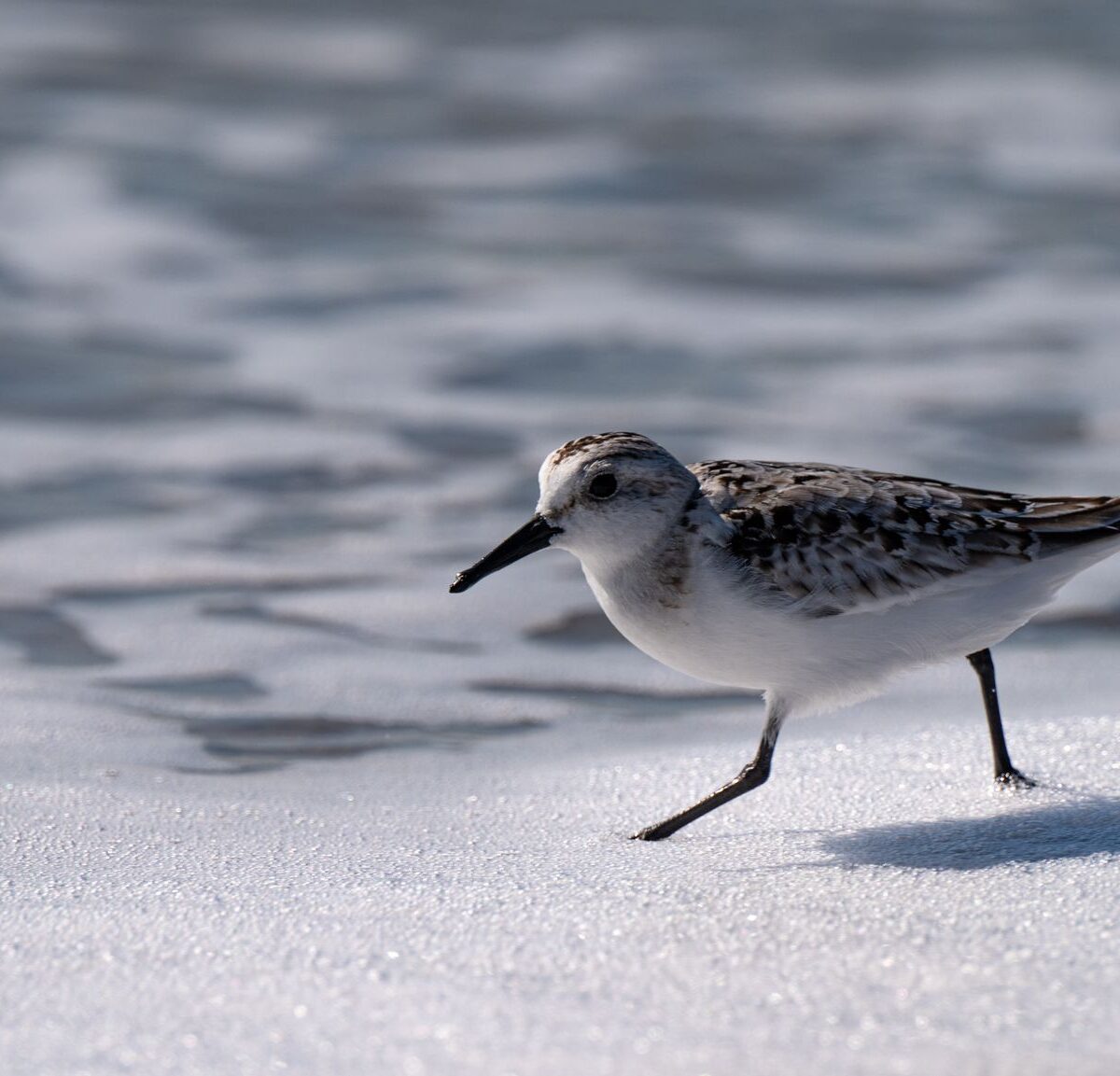
SANDERLING
Calidris alba
DESCRIPTION
Sanderling (Calidris alba) is a small shorebird known for its distinctive behavior of running along the beach in search of food. It has a compact body, short legs, and a straight bill, with a plumage that varies from sandy brown in summer to white and gray in winter. This species is often seen in flocks, foraging for invertebrates along the shoreline, and is known for its energetic and agile movements as it dodges incoming waves.
FUN FACTS
- Sanderlings are known for their unique foraging behavior, where they run in and out with the waves, a sight that captivates many beachgoers
- They are also remarkable migrators, traveling thousands of miles from their breeding grounds in the Arctic to wintering sites in warmer coastal regions
QUICK INFO
Lifespan5-10 years in the wild
Average Weight50-100 g
Average Length20-23 cm
Diet TypeCarnivore
Social Structuregroup — they are often found in flocks, especially during migration and feeding.
Activity PatternDiurnal
Breeding SeasonSpring (May-July)
- Habitat
- Sanderlings inhabit sandy beaches, mudflats, and coastal areas where they can find food along the shoreline. They are often seen in large groups during migration and breeding seasons.
- Biomes
- Coastal, Marine
- Native Range
- Sanderlings breed in the Arctic regions of North America and Eurasia and migrate to coastal areas around the world during the winter.
- Continent
- North America, Europe, Asia
- Countries
- Canada, United States, Greenland, Norway, Russia
- Diet
- Sanderlings primarily feed on small invertebrates such as crustaceans and mollusks found in the sand. They use their bills to probe into the substrate to find food.
- Diet Type
- Carnivore
- Favorite Food
- small invertebrates
- Social Structure
- group — they are often found in flocks, especially during migration and feeding.
- Activity Pattern
- Diurnal
- Group Size
- 20-100
- Territorial
- 0
 LC
LC
 DD
DD
50-100 g
Weight
20-23 cm
Length
- Coloration
- sandy brown above with white underparts
- Sexual Dimorphism
- males and females are similar in appearance, but males are slightly smaller.
- Lifespan
- 5-10 years in the wild
- Offspring per Birth
- 3-4
- Sexual Maturity
- 1 year
- Breeding Season
- Spring (May-July)
LC
Least Concern
IUCN Red List Status
- Population Status
- The population of Sanderlings is generally stable, but some local declines have been noted.
- Wild Population Estimate
- 100,000-200,000
- Population Trend
- Stable
- Endangered
- 0
- Threats
- Main threats to Sanderlings include habitat loss due to coastal development and disturbance from human activities. Climate change also poses a risk by affecting their breeding and feeding grounds.
- Predators
- Gulls, raptors, and foxes are known to prey on Sanderlings, especially during the breeding season when they are more vulnerable.
- Defense Mechanisms
- Sanderlings rely on their speed and agility to escape predators, often running away quickly when threatened.
- Found in Zoos
- Rare