


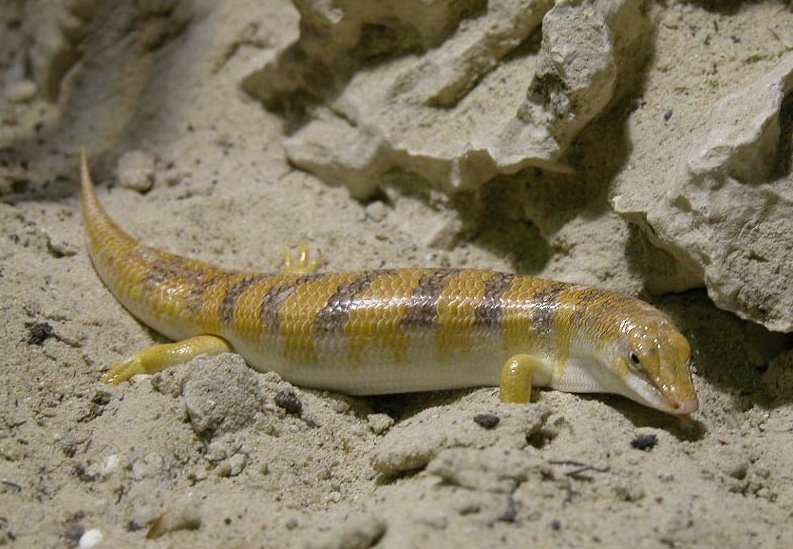
SANDFISH
Scincus scincus
DESCRIPTION
Sandfish (Scincus scincus) is commonly known as the desert skink. This unique lizard is adapted to life in sandy environments, featuring a streamlined body and smooth, shiny scales that allow it to burrow efficiently. Sandfish are known for their remarkable ability to swim through sand, using their limbs to push against the grains, which aids in their escape from predators and in hunting for prey.
FUN FACTS
- Sandfish are remarkable for their ability to swim through sand, a behavior that is not only fascinating but also essential for their survival in harsh desert environments
- They can bury themselves in seconds, making them difficult to spot in their natural habitat
- | Despite their name, Sandfish are not fish at all; they are reptiles that have adapted to a life in the sand, showcasing the incredible diversity of evolutionary adaptations in the animal kingdom
QUICK INFO
Lifespan5-10 years in the wild
Average Length15-20 cm
Diet TypeInsectivore
Social Structuresolitary, typically found alone except during mating season
Activity PatternNocturnal
Breeding SeasonSpring (April-June)
- Habitat
- Sandfish inhabit arid and semi-arid regions, particularly in sandy deserts where they can easily burrow. They prefer loose, dry sand that allows for their unique locomotion.
- Biomes
- Desert
- Native Range
- Sandfish are native to North Africa and parts of the Middle East, particularly in countries like Egypt and Libya.
- Continent
- Africa, Asia
- Countries
- Egypt, Libya, Sudan, Saudi Arabia
- Diet
- Sandfish primarily feed on small invertebrates, including insects and their larvae. They are opportunistic feeders, often foraging in the sand for food.
- Diet Type
- Insectivore
- Favorite Food
- insects, larvae
- Social Structure
- solitary, typically found alone except during mating season
- Activity Pattern
- Nocturnal
- Group Size
- 1
- Territorial
- 0
 VU
VU
 LC
LC
15-20 cm
Length
- Coloration
- light brown to yellowish with darker stripes
- Sexual Dimorphism
- males are generally smaller than females
- Lifespan
- 5-10 years in the wild
- Sexual Maturity
- 1-2 years
- Breeding Season
- Spring (April-June)
LC
Least Concern
IUCN Red List Status
- Population Status
- The population of Sandfish is currently stable, but habitat destruction poses a potential threat.
- Wild Population Estimate
- unknown
- Population Trend
- Stable
- Endangered
- 0
- Threats
- Main threats include habitat loss due to desertification and human encroachment. Additionally, climate change may impact their sandy habitats.
- Predators
- birds of prey, snakes, and larger lizards
- Defense Mechanisms
- Sandfish can quickly burrow into the sand to escape threats, using their specialized body shape to move efficiently.
- Found in Zoos
- Uncommon