


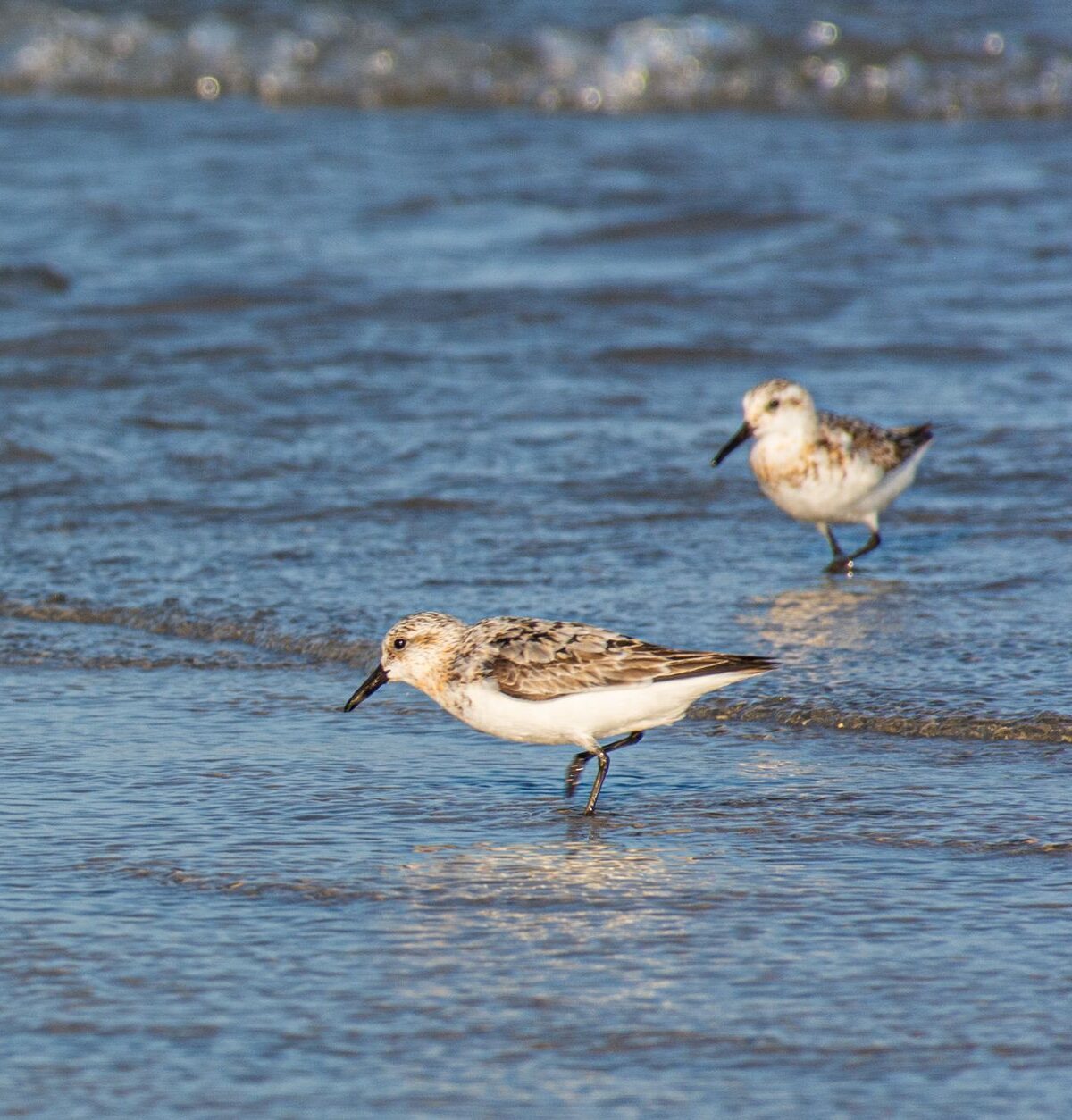
SANDPIPER
DESCRIPTION
Also called Plover and Curlew, Sandpipers are small to medium-sized shorebirds known for their long legs and slender bodies. They typically have a pointed bill, which they use to probe for food in mud and sand. Sandpipers are often seen in flocks along coastlines and wetlands, where they exhibit a characteristic feeding behavior of running back and forth along the shore.
FUN FACTS
- Sandpipers are known for their unique feeding technique called 'tidal foraging,' where they time their feeding with the ebb and flow of the tide to maximize food availability
- | Some species of Sandpipers are remarkable migrators, traveling thousands of miles from their breeding grounds in the Arctic to wintering areas in South America, showcasing their incredible endurance and navigation skills
QUICK INFO
Lifespan5-10 years in the wild
Average Weight50-200 g
Average Length15-30 cm
Diet TypeOmnivore
Social Structuregroup — Sandpipers often gather in flocks, especially during migration and feeding.
Activity PatternDiurnal
Breeding SeasonSpring (April-June)
- Habitat
- Sandpipers inhabit a variety of wetland environments, including beaches, mudflats, and marshes. They are often found in areas with shallow water where they can easily access their food sources.
- Biomes
- Wetlands, Coastal
- Native Range
- Sandpipers are found on every continent except Antarctica, with many species migrating long distances between breeding and wintering grounds.
- Continent
- North America, South America, Europe, Asia, Africa, Australia
- Countries
- United States, Canada, Mexico, Brazil, United Kingdom, Russia, Australia
- Diet
- Sandpipers primarily feed on invertebrates, such as worms, crustaceans, and insects, which they find by foraging in the mud or sand. They may also consume small fish and plant material depending on availability.
- Diet Type
- Omnivore
- Favorite Food
- invertebrates, crustaceans
- Social Structure
- group — Sandpipers often gather in flocks, especially during migration and feeding.
- Activity Pattern
- Diurnal
- Group Size
- 10-100
- Territorial
- 0
 VU
VU

 LC
LC
50-200 g
Weight
15-30 cm
Length
- Coloration
- typically brown or gray with streaks and spots for camouflage
- Sexual Dimorphism
- males and females are similar in appearance, though males may be slightly smaller
- Lifespan
- 5-10 years in the wild
- Offspring per Birth
- 3-4
- Sexual Maturity
- 1-2 years
- Breeding Season
- Spring (April-June)
LC
Least Concern
IUCN Red List Status
- Population Status
- Many species of Sandpipers have stable populations, though some are threatened due to habitat loss.
- Wild Population Estimate
- varies by species, generally in the millions
- Population Trend
- Stable
- Endangered
- 0
- Threats
- Main threats include habitat destruction due to coastal development and pollution. Climate change also poses a risk by altering their migratory patterns and breeding habitats.
- Predators
- birds of prey, foxes, raccoons, and larger fish
- Defense Mechanisms
- Sandpipers often rely on their speed and agility to escape predators, using quick movements to evade capture.
- Found in Zoos
- Uncommon