


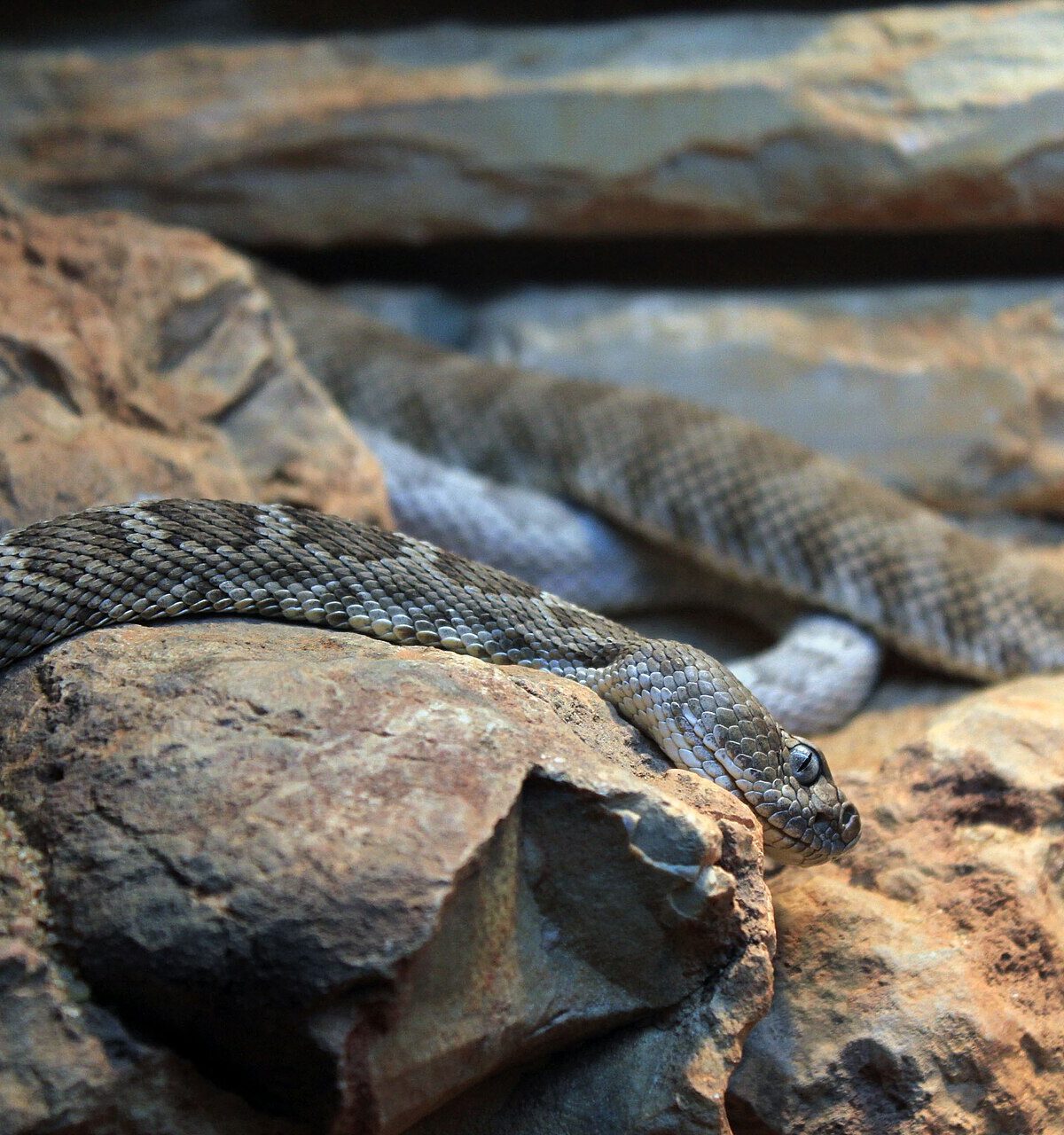
SANTA CATALINA ISLAND RATTLESNAKE
Crotalus catalinensis
DESCRIPTION
Santa Catalina Island Rattlesnake (Crotalus catalinensis) is commonly known as the Catalina rattlesnake. This species is characterized by its distinctive coloration, which typically includes shades of brown and gray with darker bands, providing excellent camouflage in its rocky island habitat. Behaviorally, it is primarily nocturnal, hunting for prey during the cooler hours of the night and retreating to crevices or burrows during the day to avoid the heat.
FUN FACTS
- The Santa Catalina Island Rattlesnake is a unique species that has adapted to the specific conditions of its island habitat, making it an important part of the local ecosystem
- Its venom is not only used for hunting but also plays a role in regulating its body temperature by aiding in digestion
- | Unlike many other rattlesnake species, the Santa Catalina Island Rattlesnake has a relatively small range, which makes it particularly vulnerable to environmental changes and habitat destruction
- Conservation efforts are crucial to ensure the survival of this distinctive species
QUICK INFO
Lifespan10-20 years in the wild
Average Weight0.5-1.5 kg
Average Length0.9-1.2 m
Diet TypeCarnivore
Social Structuresolitary
Activity PatternNocturnal
Breeding SeasonSpring (April-June)
- Habitat
- This rattlesnake inhabits rocky outcrops, scrublands, and coastal areas of Santa Catalina Island. Its habitat is characterized by a mix of dry vegetation and rocky terrain, which provides both shelter and hunting grounds.
- Biomes
- Mediterranean, Coastal
- Native Range
- Endemic to Santa Catalina Island, California, USA.
- Continent
- North America
- Countries
- United States
- Diet
- The Santa Catalina Island Rattlesnake primarily preys on small mammals, birds, and lizards. It uses its venom to immobilize its prey before consumption.
- Diet Type
- Carnivore
- Favorite Food
- small mammals, birds, lizards
- Social Structure
- solitary
- Activity Pattern
- Nocturnal
- Group Size
- 1
- Territorial
- 1
 VU
VU
0.5-1.5 kg
Weight
0.9-1.2 m
Length
- Coloration
- brown and gray with darker bands
- Sexual Dimorphism
- males are generally smaller than females
- Lifespan
- 10-20 years in the wild
- Gestation Period
- 6-7 months
- Offspring per Birth
- 3-15
- Sexual Maturity
- 2-3 years
- Breeding Season
- Spring (April-June)
LC
Least Concern
IUCN Red List Status
- Population Status
- The population is currently stable but localized to Santa Catalina Island.
- Wild Population Estimate
- unknown
- Population Trend
- Stable
- Endangered
- 0
- Threats
- Main threats include habitat loss due to development and predation by introduced species. Conservation efforts are focused on habitat protection and public education.
- Predators
- birds of prey, larger snakes, and mammals such as coyotes
- Defense Mechanisms
- The rattlesnake uses its rattle as a warning signal to deter potential threats. If threatened, it may also strike defensively.
- Found in Zoos
- Uncommon