


SATYR TRAGOPAN
Tragopan satyra
DESCRIPTION
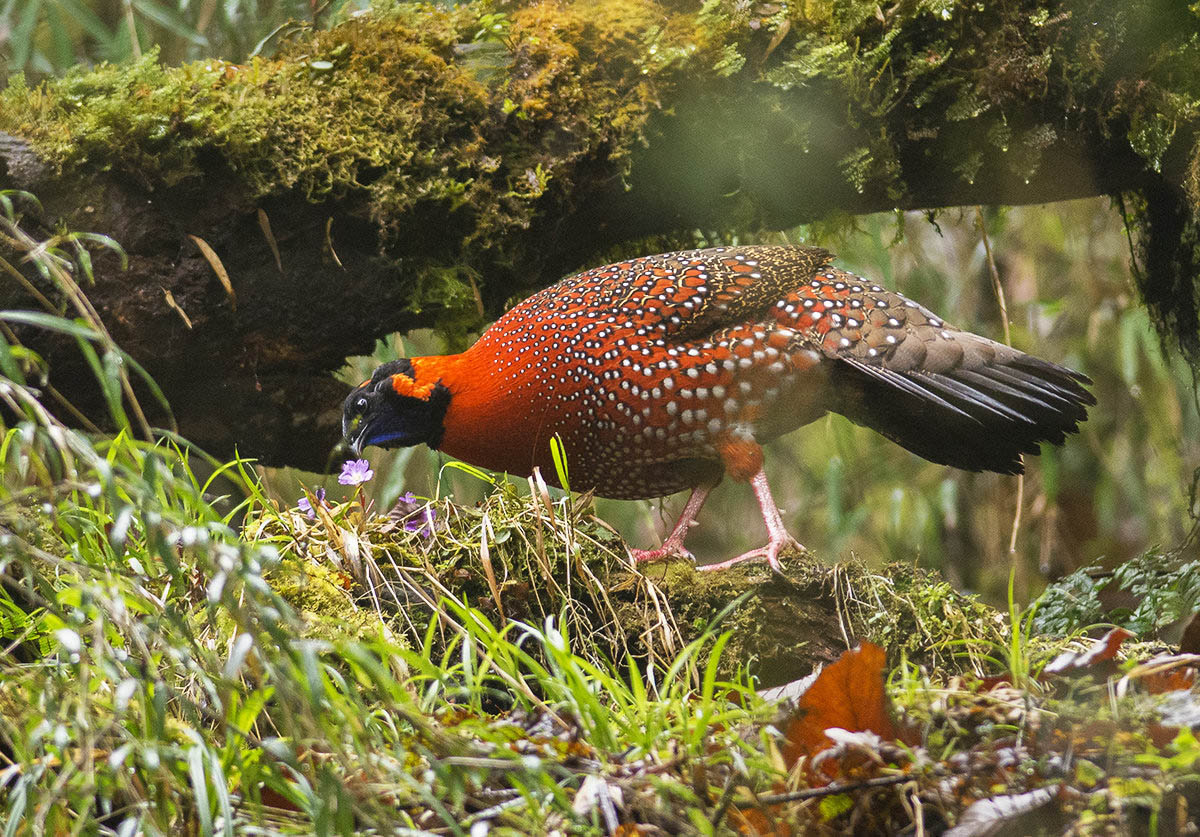
Satyr Tragopan (Tragopan satyra) is commonly known as the Himalayan Tragopan, a strikingly beautiful bird native to the mountainous regions of the Himalayas. Males are particularly notable for their vibrant plumage, featuring a mix of deep red, blue, and white, along with distinctive horn-like fleshy caruncles on their heads. These birds are known for their elaborate courtship displays, where males perform intricate dances and vocalizations to attract females during the breeding season.
FUN FACTS
- Satyr Tragopans are known for their elaborate courtship displays, which can include a series of loud calls and intricate movements that showcase their vibrant plumage
- These displays are not only a means of attracting females but also serve to establish dominance among males during the breeding season
- | The species is named after the mythical satyrs, which were half-man, half-goat creatures known for their love of music and dance, reflecting the bird's own captivating courtship rituals
- Their striking appearance and unique behaviors make them a favorite among birdwatchers and ornithologists alike
QUICK INFO
Lifespan10-15 years in the wild, up to 20 in captivity
Average Weight1.5-2.5 kg
Average Length60-70 cm
Diet TypeHerbivore
Social StructureThey are typically solitary or found in pairs, especially during the breeding season.
Activity PatternDiurnal
Breeding SeasonSpring (March-May)
- Habitat
- These birds inhabit temperate forests and shrublands, often at elevations ranging from 2,000 to 4,000 meters. They prefer areas with dense undergrowth for foraging and nesting.
- Biomes
- Temperate Forest, Montane Forest
- Native Range
- The native range of the Satyr Tragopan includes the eastern Himalayas, particularly in regions of India, Nepal, and Bhutan.
- Continent
- Asia
- Countries
- India, Nepal, Bhutan
- Diet
- Satyr Tragopans primarily feed on a variety of plant materials, including leaves, fruits, seeds, and flowers. They may also consume small invertebrates occasionally.
- Diet Type
- Herbivore
- Favorite Food
- leaves, fruits, seeds
- Social Structure
- They are typically solitary or found in pairs, especially during the breeding season.
- Activity Pattern
- Diurnal
- Group Size
- 1-2
- Territorial
- 1

1.5-2.5 kg
Weight
60-70 cm
Length
- Coloration
- Males are characterized by bright red plumage with blue and white markings, while females are more cryptically colored in browns and tans.
- Sexual Dimorphism
- Males are brightly colored, while females are more subdued in coloration.
- Lifespan
- 10-15 years in the wild, up to 20 in captivity
- Offspring per Birth
- 4-6 eggs
- Sexual Maturity
- 1 year
- Breeding Season
- Spring (March-May)
VU
Vulnerable
IUCN Red List Status
- Population Status
- The population of Satyr Tragopan is currently considered to be decreasing due to habitat loss and hunting pressures.
- Wild Population Estimate
- Unknown
- Population Trend
- Decreasing
- Endangered
- 1
- Threats
- Main threats include habitat destruction due to deforestation and human encroachment, as well as hunting for their striking plumage. These factors have led to a decline in their populations across their native range.
- Conservation Program
- Various conservation efforts are underway in protected areas within their range, but specific programs are not widely documented.
- Predators
- Main predators include large birds of prey and mammals such as leopards and foxes.
- Defense Mechanisms
- Satyr Tragopans rely on their cryptic coloration to blend into their surroundings, making them less visible to predators.
- Found in Zoos
- Uncommon