


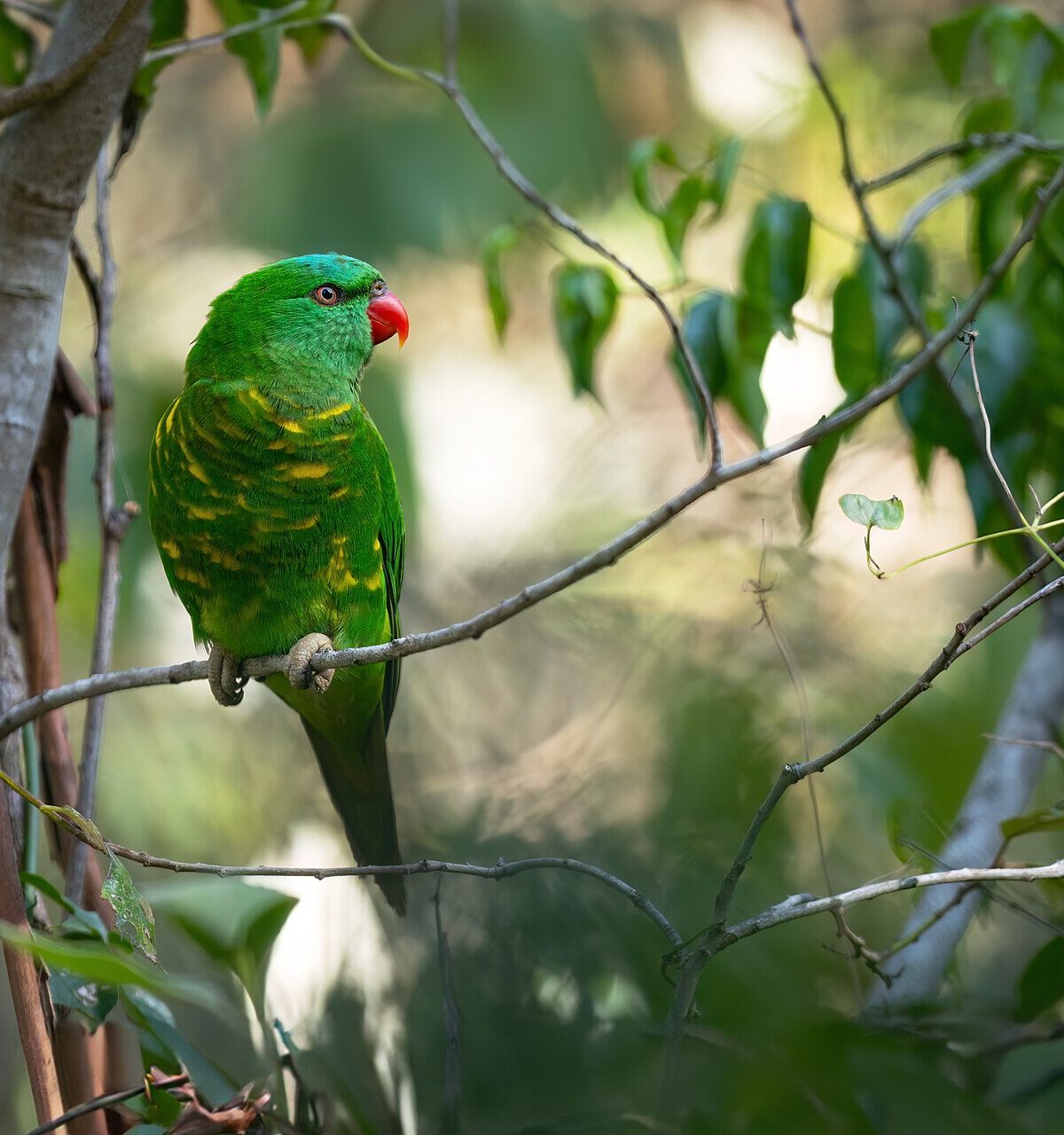
SCALY-BREASTED LORIKEET
Trichoglossus chlorolepidotus
DESCRIPTION
Scaly-breasted Lorikeet (Trichoglossus chlorolepidotus) is commonly known as the Green Lorikeet and Scaly-breasted Parrot. This vibrant parrot features a striking green plumage with distinctive yellow and blue markings, particularly on its breast and wings. Known for their playful and social behavior, these lorikeets are often seen in flocks, engaging in acrobatic displays and vocalizations that add to their lively presence in the wild.
FUN FACTS
- Scaly-breasted Lorikeets have a unique feeding adaptation that allows them to consume nectar efficiently, which is vital for their survival and the health of their ecosystem
- They play an important role in pollination, helping to maintain the biodiversity of their habitats
- | These birds are known for their intelligence and can learn to mimic sounds and words, making them popular pets
- Their playful nature and vibrant colors make them a favorite among bird enthusiasts and in aviculture
QUICK INFO
Lifespan15-20 years in the wild, up to 30 in captivity
Average Weight100-150 g
Average Length25-30 cm
Diet TypeHerbivore
Social StructureThey are typically found in groups, often seen foraging and roosting together.
Activity PatternDiurnal
Breeding SeasonSpring to early summer
- Habitat
- Scaly-breasted Lorikeets inhabit tropical and subtropical forests, often found in areas with abundant flowering plants. They prefer habitats that provide ample food sources and nesting sites.
- Biomes
- Tropical Rainforest, Subtropical Forest
- Native Range
- They are native to the eastern coast of Australia, particularly in Queensland and New South Wales.
- Continent
- Australia
- Countries
- Australia
- Diet
- They primarily feed on nectar, fruits, and flowers, utilizing their specialized tongues to extract food from blossoms. This diet is crucial for their role in pollination within their ecosystems.
- Diet Type
- Herbivore
- Favorite Food
- nectar, fruits, flowers
- Social Structure
- They are typically found in groups, often seen foraging and roosting together.
- Activity Pattern
- Diurnal
- Group Size
- 10-30
- Territorial
- 0

100-150 g
Weight
25-30 cm
Length
- Coloration
- Bright green with yellow and blue markings on the breast and wings.
- Lifespan
- 15-20 years in the wild, up to 30 in captivity
- Offspring per Birth
- 1-2
- Sexual Maturity
- 1-2 years
- Breeding Season
- Spring to early summer
LC
Least Concern
IUCN Red List Status
- Population Status
- The population is currently stable, but habitat loss poses a potential threat.
- Wild Population Estimate
- Not specifically estimated, but considered stable.
- Population Trend
- Stable
- Endangered
- 0
- Threats
- Main threats include habitat destruction due to logging and urban development. Additionally, competition for food and nesting sites with other species can impact their populations.
- Predators
- Natural predators include birds of prey and larger reptiles. They are also vulnerable to introduced species such as cats and foxes.
- Defense Mechanisms
- They rely on their agility and speed to evade predators, often using their ability to fly quickly through dense foliage.
- Compatible Animals
- Other lorikeets, small parrots
- Found in Zoos
- Common