


SCARLET-BREASTED LORIKEET
Trichoglossus forsteni
DESCRIPTION
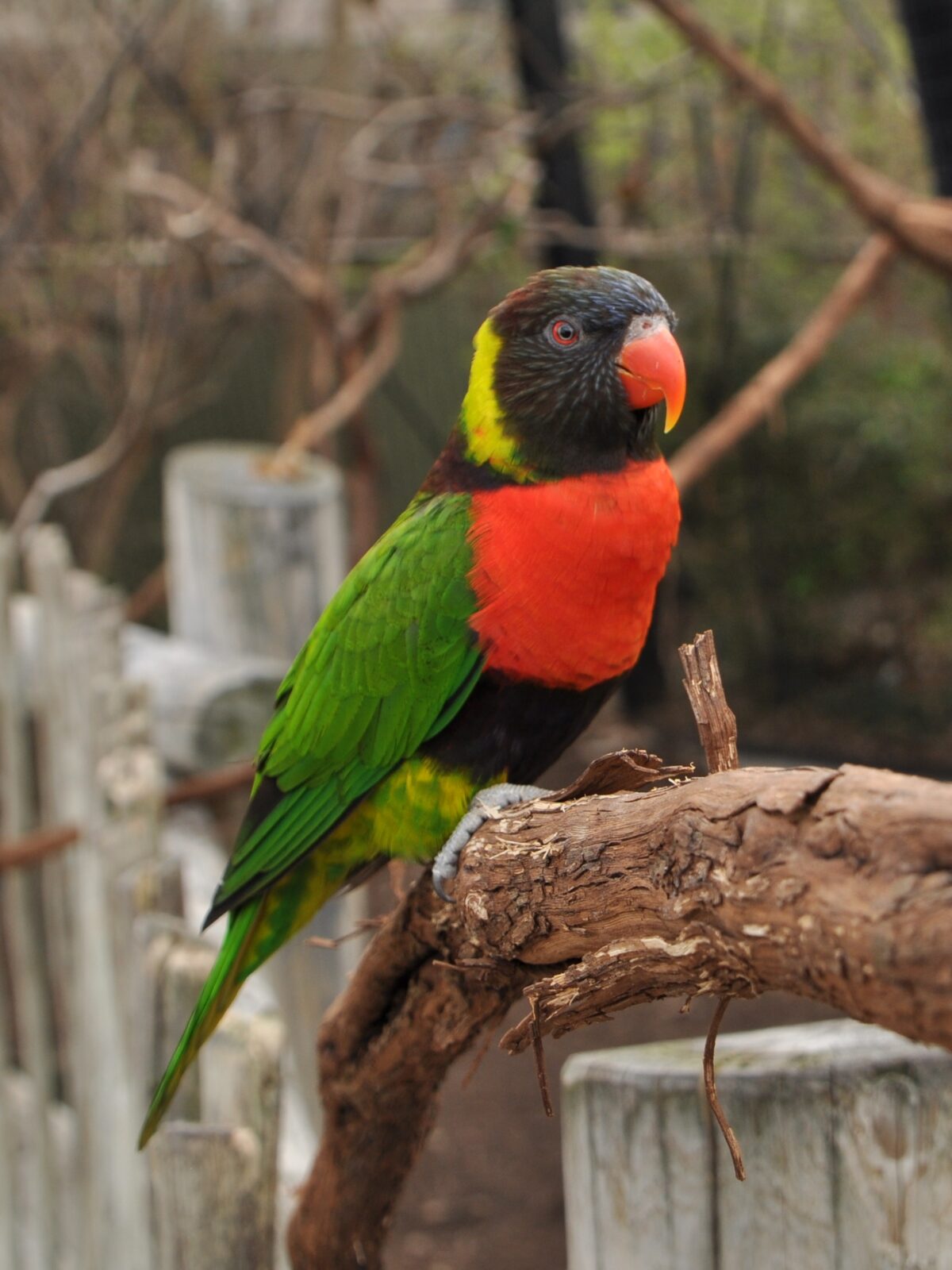
Scarlet-breasted Lorikeet (Trichoglossus forsteni), also known as Forsten's Lorikeet, is a vibrant parrot species characterized by its striking scarlet breast and green body. This small lorikeet exhibits a playful and social behavior, often seen in pairs or small groups as they forage for food. They are primarily found in the tropical forests of Indonesia, where they play a crucial role in pollination and seed dispersal within their ecosystem.
FUN FACTS
- Scarlet-breasted Lorikeets are known for their intelligence and ability to mimic sounds, making them popular in aviculture
- They have a unique feeding technique that allows them to extract nectar from flowers without damaging the plant, showcasing their ecological importance as pollinators.| These lorikeets are highly social and often engage in playful behaviors, such as chasing each other through the trees and hanging upside down while feeding
- Their vibrant colors and lively antics make them a favorite among bird watchers and enthusiasts
QUICK INFO
Lifespan10-15 years in the wild, up to 20 years in captivi
Average Weight70-100 g
Average Length20-25 cm
Diet TypeHerbivore
Social StructureThey are typically found in pairs or small groups, showcasing a social structure that encourages interaction and bonding.
Activity PatternDiurnal
Breeding SeasonSpring to early summer
- Habitat
- These lorikeets inhabit tropical rainforests, often found in areas with abundant flowering plants. They prefer dense foliage that provides both food and shelter.
- Biomes
- Tropical Rainforest
- Native Range
- Scarlet-breasted Lorikeets are native to the islands of Indonesia, particularly in the Maluku Islands.
- Continent
- Asia
- Countries
- Indonesia
- Diet
- Scarlet-breasted Lorikeets primarily feed on nectar, fruits, and flowers, utilizing their specialized tongues to extract these food sources. They are particularly fond of the nectar from various flowering plants.
- Diet Type
- Herbivore
- Favorite Food
- nectar, fruits, flowers
- Social Structure
- They are typically found in pairs or small groups, showcasing a social structure that encourages interaction and bonding.
- Activity Pattern
- Diurnal
- Group Size
- 2-10
- Territorial
- 0
 LC
LC
70-100 g
Weight
20-25 cm
Length
- Coloration
- They have a bright green body with a vivid scarlet breast and blue markings on the wings and head.
- Lifespan
- 10-15 years in the wild, up to 20 years in captivi
- Offspring per Birth
- 1-3
- Sexual Maturity
- 1-2 years
- Breeding Season
- Spring to early summer
LC
Least Concern
IUCN Red List Status
- Population Status
- The population of Scarlet-breasted Lorikeets is currently stable, but habitat loss poses a potential threat.
- Wild Population Estimate
- Unknown
- Population Trend
- Stable
- Endangered
- 0
- Threats
- The main threats to Scarlet-breasted Lorikeets include habitat destruction due to deforestation and the pet trade. Conservation efforts are needed to ensure their habitats remain protected.
- Predators
- Predators include larger birds of prey and snakes, which may target the young or unguarded individuals.
- Defense Mechanisms
- They often rely on their agility and ability to fly quickly to evade predators.
- Compatible Animals
- other small parrots, finches
- Found in Zoos
- Uncommon