


SCARLET MACAW
Ara macao
DESCRIPTION
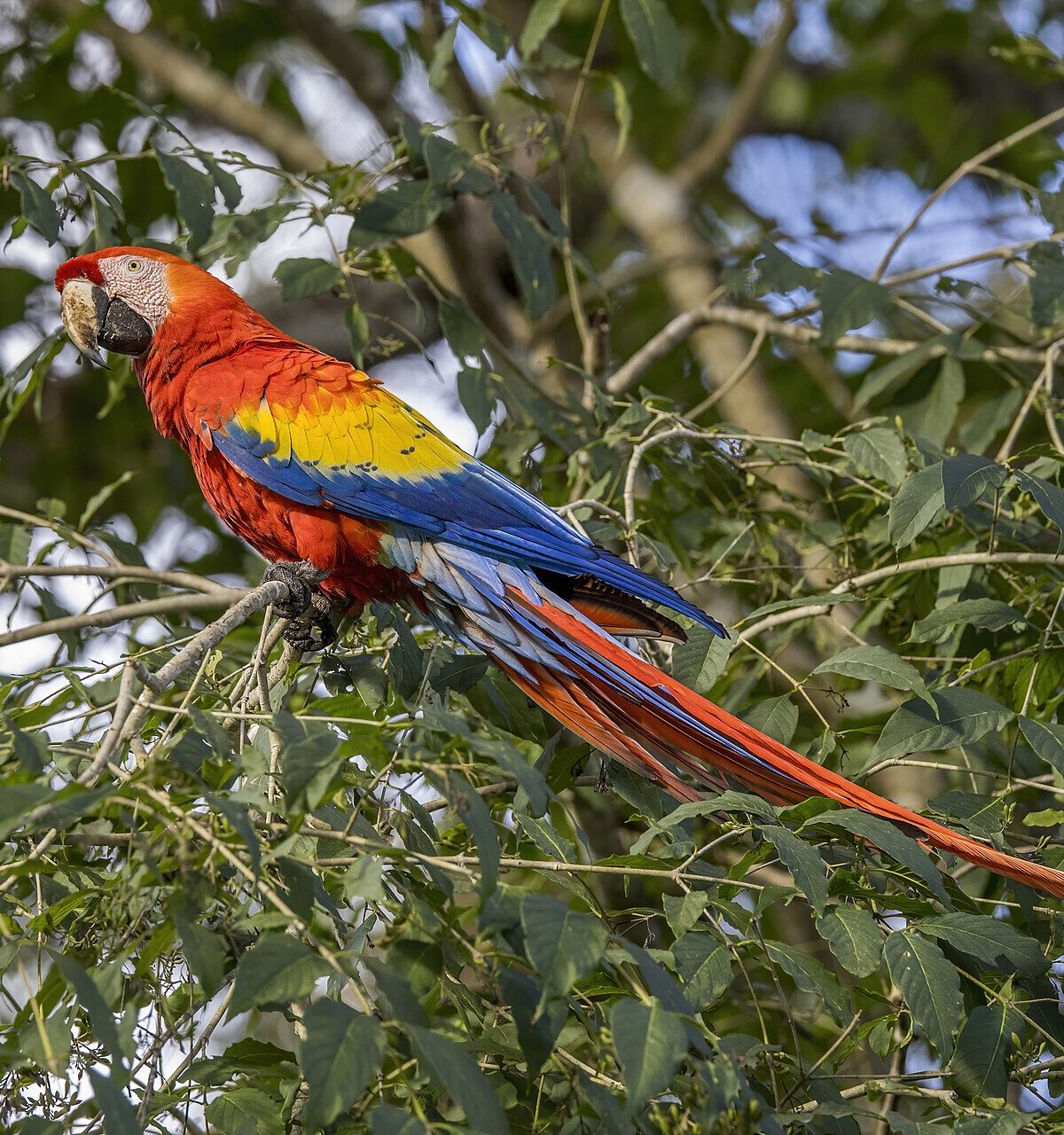
The Scarlet Macaw is a large, colorful parrot known for its vibrant red, yellow, and blue plumage. It has a long tail and a strong, curved beak that is well-adapted for cracking nuts and seeds. These birds are highly social and intelligent, often seen in pairs or small groups, and they communicate with a variety of vocalizations.
FUN FACTS
- Scarlet Macaws are known for their impressive vocal abilities and can mimic human speech and other sounds
- They also play a crucial role in their ecosystem by helping to disperse seeds, which aids in forest regeneration.|These birds have a unique social structure and often engage in mutual grooming, which strengthens their bonds and helps maintain social harmony within their groups
QUICK INFO
Lifespan40-50 years in the wild, up to 75 years in captivi
Average Weight900-1,200 g
Average Length81-96 cm
Diet TypeHerbivore
Social StructureScarlet Macaws are typically found in pairs or small groups, often forming strong bonds with their mates.
Activity PatternDiurnal
Breeding SeasonSpring (March-May)
- Habitat
- Scarlet Macaws inhabit tropical rainforests, where they can find abundant food sources and nesting sites. They prefer areas near rivers and lakes, which provide additional resources.
- Biomes
- Tropical Rainforest
- Native Range
- Scarlet Macaws are native to Central and South America, ranging from southern Mexico to Brazil.
- Continent
- North America, South America
- Countries
- Mexico, Belize, Guatemala, Honduras, Colombia, Venezuela, Brazil, Ecuador, Peru
- Diet
- Scarlet Macaws primarily eat fruits, nuts, and seeds, with a particular fondness for palm nuts. They also consume flowers and leaves, which provide essential nutrients.
- Diet Type
- Herbivore
- Favorite Food
- palm nuts, fruits, seeds
- Social Structure
- Scarlet Macaws are typically found in pairs or small groups, often forming strong bonds with their mates.
- Activity Pattern
- Diurnal
- Group Size
- 2-30
- Territorial
- 1
 VU
VU
 LC
LC
900-1,200 g
Weight
81-96 cm
Length
- Coloration
- Bright red body with blue and yellow wings and a long tail.
- Sexual Dimorphism
- Males and females are similar in appearance, making it difficult to distinguish between the sexes.
- Lifespan
- 40-50 years in the wild, up to 75 years in captivi
- Offspring per Birth
- 1-3
- Sexual Maturity
- 3-4 years
- Breeding Season
- Spring (March-May)
EN
Endangered
IUCN Red List Status
- Population Status
- The population of Scarlet Macaws is currently declining due to habitat loss and illegal trapping for the pet trade.
- Wild Population Estimate
- 50,000-100,000
- Population Trend
- Decreasing
- Endangered
- 1
- Threats
- Main threats include deforestation, habitat destruction, and illegal trapping for the pet trade. These factors have significantly impacted their populations in the wild.
- Conservation Program
- Various conservation programs are in place to protect their habitats and reduce illegal trapping.
- Predators
- Harpy Eagles, large snakes, and various raptors pose threats to juvenile Scarlet Macaws.
- Defense Mechanisms
- Scarlet Macaws use their strong beaks to defend themselves and can also fly away quickly to escape predators.
- Compatible Animals
- Other parrot species, small mammals, null
- Found in Zoos
- Common