


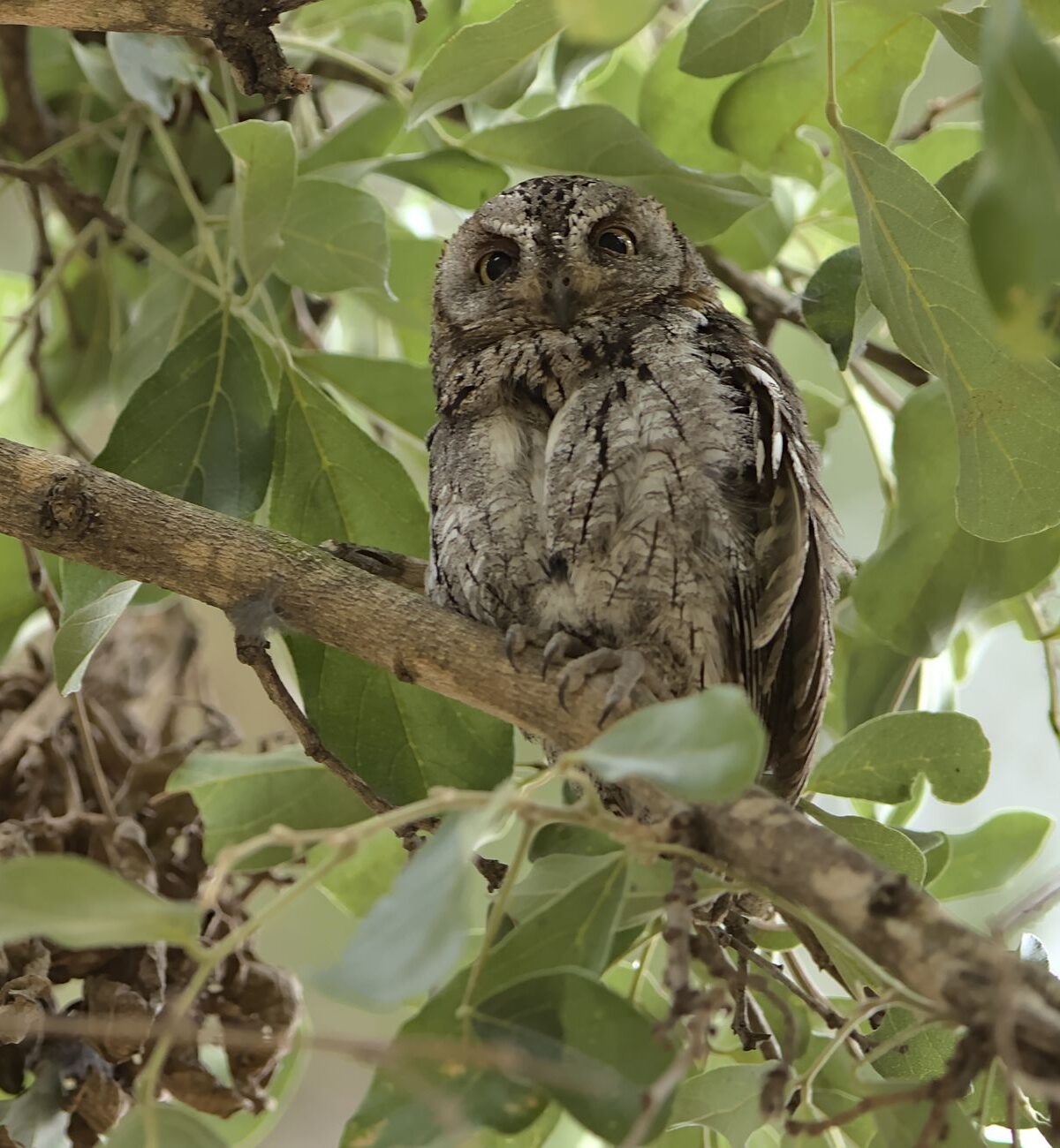
SCOPS OWL
Otus scops
DESCRIPTION
Scops Owl (Otus scops) is commonly known as the Eurasian Scops Owl and the Common Scops Owl. This small owl is characterized by its distinctive ear tufts and mottled gray-brown plumage, which provides excellent camouflage against tree bark. Primarily nocturnal, it is known for its soft, trilling calls that resonate through woodlands and urban areas alike, making it a familiar sound in its range.
FUN FACTS
- Scops Owls are known for their unique vocalizations, which can vary significantly between individuals, allowing for personal 'songs' that help in mate attraction
- | These owls have a remarkable ability to blend into their surroundings, making them nearly invisible when perched on tree branches, which is a crucial survival trait against predators
QUICK INFO
Lifespanup to 10 years in the wild
Average Weight150-200 g
Average Length21-24 cm
Diet TypeInsectivore
Social Structuresolitary, typically roosts alone except during breeding
Activity PatternNocturnal
Breeding SeasonSpring (April-June)
- Habitat
- Scops Owls inhabit a variety of wooded areas, including deciduous forests, orchards, and urban parks. They prefer habitats with plenty of trees for roosting and hunting.
- Biomes
- Temperate Forest, Mediterranean
- Native Range
- The native range of the Scops Owl extends across Europe, North Africa, and parts of Asia, particularly in the Mediterranean region.
- Continent
- Europe, Asia, Africa
- Countries
- Spain, Italy, Greece, Turkey, Egypt
- Diet
- Scops Owls primarily feed on insects and small vertebrates, including rodents and small birds. They hunt by perching quietly and swooping down to catch their prey.
- Diet Type
- Insectivore
- Favorite Food
- insects, small mammals
- Social Structure
- solitary, typically roosts alone except during breeding
- Activity Pattern
- Nocturnal
- Group Size
- 1-2
- Territorial
- 1
 LC
LC
150-200 g
Weight
21-24 cm
Length
- Coloration
- mottled gray-brown with lighter underparts
- Sexual Dimorphism
- males and females are similar in appearance
- Lifespan
- up to 10 years in the wild
- Offspring per Birth
- 2-5
- Sexual Maturity
- 1 year
- Breeding Season
- Spring (April-June)
LC
Least Concern
IUCN Red List Status
- Population Status
- The population of Scops Owls is currently stable in many areas, although local declines have been noted due to habitat loss.
- Wild Population Estimate
- 100,000-1,000,000
- Population Trend
- Stable
- Endangered
- 0
- Threats
- Main threats to Scops Owls include habitat destruction due to urbanization and agricultural expansion. Additionally, they face risks from pesticide use, which can reduce their food supply.
- Predators
- larger birds of prey, domestic cats
- Defense Mechanisms
- Scops Owls rely on their excellent camouflage and silent flight to avoid detection by predators.
- Found in Zoos
- Uncommon