


SCOTTISH WILDCAT
DESCRIPTION
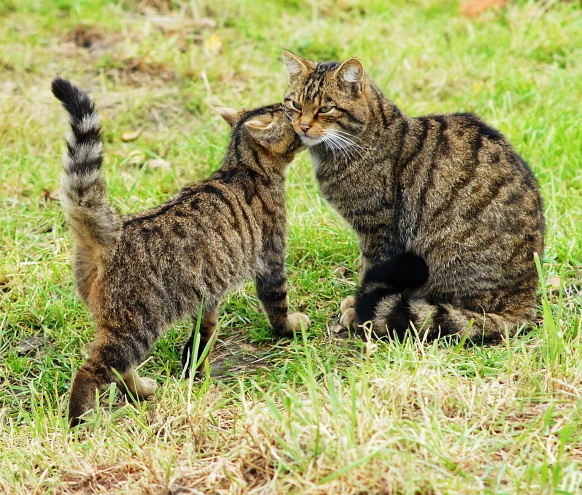
Also called the Highland Tiger, the Scottish Wildcat is a small, elusive feline native to Scotland. It has a distinctive appearance with a thick, bushy tail, a tabby-like coat with dark stripes, and a robust build, making it well-adapted to its rugged habitat. This solitary and territorial animal is primarily nocturnal, hunting small mammals and birds in the wild, and plays a crucial role in the ecosystem as a predator.
FUN FACTS
- Scottish Wildcats are often mistaken for domestic cats due to their appearance, but they are a distinct species with unique behaviors and adaptations
- They are considered a symbol of Scotland's natural heritage, and efforts to conserve them are vital for maintaining biodiversity in the region.| Unlike many other wildcats, Scottish Wildcats have a unique genetic makeup that makes them particularly vulnerable to hybridization with domestic cats, which poses a significant threat to their survival as a distinct species
QUICK INFO
Lifespan10-15 years in the wild, up to 20 years in captivi
Average Weight3.5-6.5 kg
Average Length50-75 cm
Diet TypeCarnivore
Social Structuresolitary, typically living alone except during mating season or when a mother is raising her young
Activity PatternNocturnal
Breeding SeasonSpring (March-May)
- Habitat
- Scottish Wildcats inhabit a variety of environments, including forests, moorlands, and grasslands. They prefer areas with dense cover for hunting and shelter.
- Biomes
- Temperate Forest, Grassland
- Native Range
- The native range of the Scottish Wildcat is limited to the Scottish Highlands and parts of the Scottish lowlands.
- Continent
- Europe
- Countries
- United Kingdom
- Diet
- The Scottish Wildcat primarily preys on small mammals, such as rabbits and rodents, as well as birds. It is an adept hunter, using stealth and agility to catch its prey.
- Diet Type
- Carnivore
- Favorite Food
- Rabbits, rodents
- Social Structure
- solitary, typically living alone except during mating season or when a mother is raising her young
- Activity Pattern
- Nocturnal
- Group Size
- 1
- Territorial
- 1
3.5-6.5 kg
Weight
50-75 cm
Length
- Coloration
- The coat is typically a sandy or grayish color with dark stripes and spots, providing excellent camouflage in their natural habitat.
- Sexual Dimorphism
- Males are generally larger than females.
- Lifespan
- 10-15 years in the wild, up to 20 years in captivi
- Gestation Period
- 63-68 days
- Offspring per Birth
- 2-5
- Sexual Maturity
- 1-2 years
- Breeding Season
- Spring (March-May)
EN
Endangered
IUCN Red List Status
- Population Status
- The population of Scottish Wildcats is critically low, with estimates suggesting fewer than 400 individuals remain in the wild.
- Wild Population Estimate
- Less than 400
- Population Trend
- Decreasing
- Endangered
- 1
- Threats
- Main threats to the Scottish Wildcat include habitat loss, hybridization with domestic cats, and road accidents. Conservation efforts are crucial to prevent further decline.
- Conservation Program
- Scottish Wildcat Action, a partnership aimed at conserving the species and its habitat.
- Predators
- Humans are the primary threat, but young wildcats may be vulnerable to larger birds of prey.
- Defense Mechanisms
- Scottish Wildcats rely on their camouflage and stealth to avoid detection by predators and humans.
- Found in Zoos
- Rare