


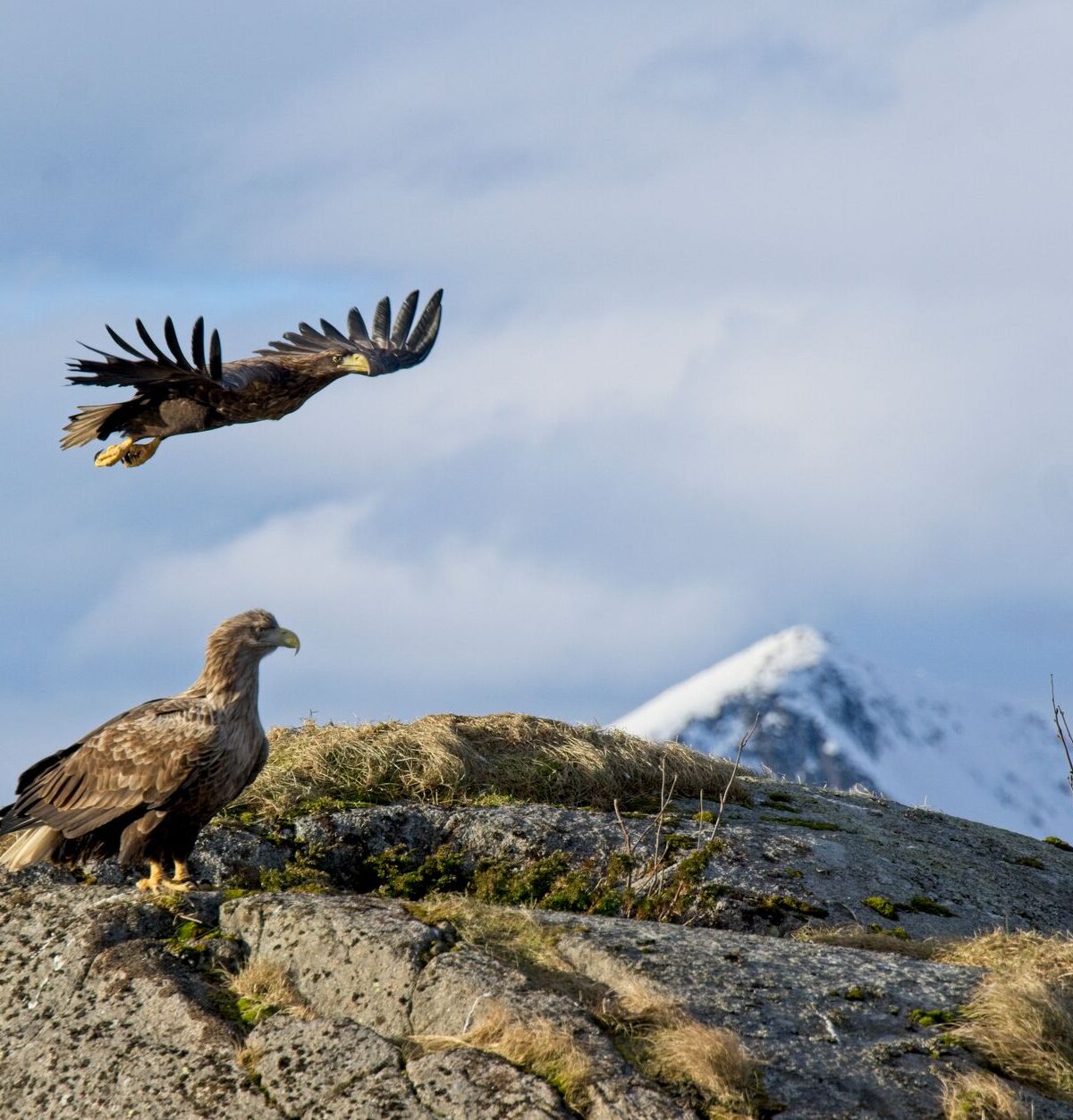
SEA EAGLE
DESCRIPTION
Also called the White-tailed Eagle and Bald Eagle, the Sea Eagle is a large bird of prey known for its impressive wingspan and striking appearance. It typically features a white head and tail with a dark brown body and wings, making it easily recognizable. Sea Eagles are skilled hunters, often seen soaring over water bodies in search of fish, their primary food source, and are known for their powerful talons and keen eyesight.
FUN FACTS
- Sea Eagles can dive at speeds of up to 100 km/h when hunting for fish, showcasing their incredible agility and strength
- | They have a unique hunting technique where they can snatch fish from the water's surface while flying just above it, demonstrating their remarkable precision and skill
QUICK INFO
Lifespan20-30 years in the wild
Average Weight3-6.3 kg
Average Length66-102 cm
Diet TypePiscivore
Social Structurepair, often seen in monogamous pairs during breeding season
Activity PatternDiurnal
Breeding SeasonSpring (March-May)
- Habitat
- Sea Eagles inhabit coastal regions, lakes, and rivers, often nesting near large bodies of water. They prefer areas with abundant food supply and tall trees for nesting.
- Biomes
- Wetlands, Coastal, Freshwater
- Native Range
- Sea Eagles are found across Europe, Asia, and North America, particularly in regions with large water bodies.
- Continent
- Europe, Asia, North America
- Countries
- Norway, Sweden, Russia, United States, Canada
- Diet
- Sea Eagles primarily feed on fish, but they also consume birds and small mammals when fish is scarce.
- Diet Type
- Piscivore
- Favorite Food
- fish
- Social Structure
- pair, often seen in monogamous pairs during breeding season
- Activity Pattern
- Diurnal
- Group Size
- 1-2
- Territorial
- 1
 LC
LC
3-6.3 kg
Weight
66-102 cm
Length
- Coloration
- dark brown body with a white head and tail
- Sexual Dimorphism
- females are generally larger than males
- Lifespan
- 20-30 years in the wild
- Offspring per Birth
- 1-3
- Sexual Maturity
- 4-5 years
- Breeding Season
- Spring (March-May)
LC
Least Concern
IUCN Red List Status
- Population Status
- The population of Sea Eagles is currently stable in many regions, although some areas face threats.
- Wild Population Estimate
- 50,000-100,000
- Population Trend
- Stable
- Endangered
- 0
- Threats
- Main threats include habitat destruction, pollution, and hunting. These factors can significantly impact their breeding success and food availability.
- Conservation Program
- Various conservation programs are in place to protect their habitats and monitor populations.
- Predators
- Golden Eagles, large mammals such as bears may pose a threat to eggs or young chicks.
- Defense Mechanisms
- Sea Eagles use their size and powerful talons to defend against threats, and they can be quite aggressive when protecting their nests.
- Compatible Animals
- other birds of prey, waterfowl
- Found in Zoos
- Uncommon