


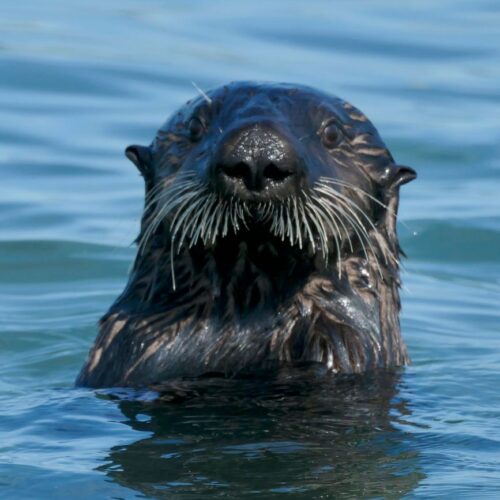
SEA OTTER
DESCRIPTION
Sea otters are marine mammals known for their thick fur and playful behavior. They are the smallest marine mammal and play a crucial role in their ecosystem by maintaining kelp forest health.
FUN FACTS
- Sea otters have the densest fur of any animal, with up to a million hair follicles per square inch | They can hold their breath for up to 5 minutes while diving | Sea otters have a unique way of using tools, often seen using rocks to crack open shellfish
QUICK INFO
Lifespan15-20 years in the wild, up to 30 in captivity
Average Weight50-100 lbs
Average Length4-5 feet
Diet TypeCarnivore
Social Structuregroup — they often form rafts of up to 20 individuals.
Activity PatternDiurnal
Breeding SeasonYear-round, with peaks in spring and fall
- Habitat
- Sea otters inhabit coastal waters, particularly in kelp forests and near rocky shorelines. They are often found in shallow waters where they can easily dive for food.
- Biomes
- Marine, Coastal
- Native Range
- North Pacific Ocean, from Alaska to California, and parts of Russia and Japan.
- Continent
- North America, Asia
- Countries
- United States, Canada, Russia, Japan
- Diet
- Sea otters primarily eat sea urchins, crabs, clams, and fish. They are known to use tools, such as rocks, to crack open hard-shelled prey.
- Diet Type
- Carnivore
- Favorite Food
- sea urchins, crabs
- Social Structure
- group — they often form rafts of up to 20 individuals.
- Activity Pattern
- Diurnal
- Group Size
- 5-20
- Territorial
- 0
 VU
VU
 LC
LC
50-100 lbs
Weight
4-5 feet
Length
- Coloration
- dark brown to light brown fur, with a lighter face and underbelly
- Sexual Dimorphism
- males are generally larger than females
- Lifespan
- 15-20 years in the wild, up to 30 in captivity
- Gestation Period
- 6 months
- Offspring per Birth
- 1
- Sexual Maturity
- 3-5 years
- Breeding Season
- Year-round, with peaks in spring and fall
EN
Endangered
IUCN Red List Status
- Population Status
- The population of sea otters has been recovering in some areas due to conservation efforts, but they remain vulnerable in others.
- Wild Population Estimate
- 3,000-100,000
- Population Trend
- Increasing
- Endangered
- 1
- Threats
- Main threats include oil spills, habitat loss, and predation by orcas. Climate change also poses a risk to their habitat.
- Conservation Program
- Various conservation programs exist, including habitat protection and rehabilitation efforts.
- Predators
- Orcas, sharks
- Defense Mechanisms
- They use their thick fur for insulation and can dive to escape predators.
- Found in Zoos
- Common