


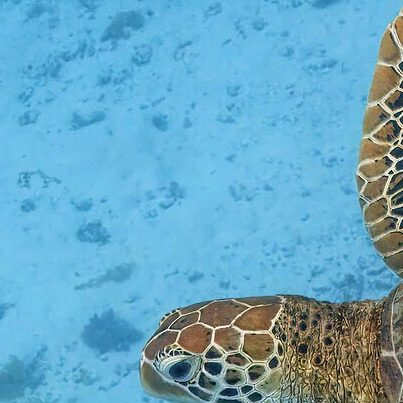
SEA TURTLE
DESCRIPTION
Sea turtles are large marine reptiles known for their distinctive shells and long migrations. They are ancient creatures that have existed for over 100 million years.
FUN FACTS
- Sea turtles can hold their breath for several hours while resting | They have a unique ability to navigate across vast ocean distances | Some species can weigh over 900 kg
QUICK INFO
Lifespan50-100 years in the wild
Average Weight150-250 kg
Average Length1.0-2.5 m
Diet TypeOmnivore
Social Structuresolitary, typically found alone except during mating
Activity PatternDiurnal
Breeding SeasonSpring to early summer
- Habitat
- Sea turtles inhabit warm and temperate ocean waters, often found in coastal areas, coral reefs, and open seas. They require sandy beaches for nesting.
- Biomes
- Marine, Coastal
- Native Range
- Sea turtles are found in oceans worldwide, from tropical to subtropical regions.
- Continent
- North America, South America, Africa, Asia, Australia, Europe
- Countries
- United States, Mexico, Australia, Brazil, South Africa, Japan
- Diet
- Sea turtles primarily feed on a variety of marine organisms, including jellyfish, seaweed, and crustaceans. Their diet can vary significantly depending on the species.
- Diet Type
- Omnivore
- Favorite Food
- jellyfish, seagrass
- Social Structure
- solitary, typically found alone except during mating
- Activity Pattern
- Diurnal
- Group Size
- 1-5
- Territorial
- 0
 LC
LC
 LC
LC
150-250 kg
Weight
1.0-2.5 m
Length
- Coloration
- varies by species, generally includes shades of green, brown, and gray
- Sexual Dimorphism
- males typically have longer tails and are smaller than females
- Lifespan
- 50-100 years in the wild
- Offspring per Birth
- 50-200
- Sexual Maturity
- 20-30 years
- Breeding Season
- Spring to early summer
EN
Endangered
IUCN Red List Status
- Population Status
- Many species are threatened or endangered due to habitat loss and human activities.
- Wild Population Estimate
- 20,000-25,000 nesting females for some species
- Population Trend
- Decreasing
- Endangered
- 1
- Threats
- Main threats include habitat destruction, poaching, and entanglement in fishing gear. Climate change also impacts nesting sites.
- Conservation Program
- Various international agreements and local conservation efforts are in place to protect nesting sites and reduce bycatch.
- Predators
- Sharks, large fish, and humans
- Defense Mechanisms
- Sea turtles rely on their hard shells for protection and can also dive deep to escape predators.
- Found in Zoos
- Uncommon