


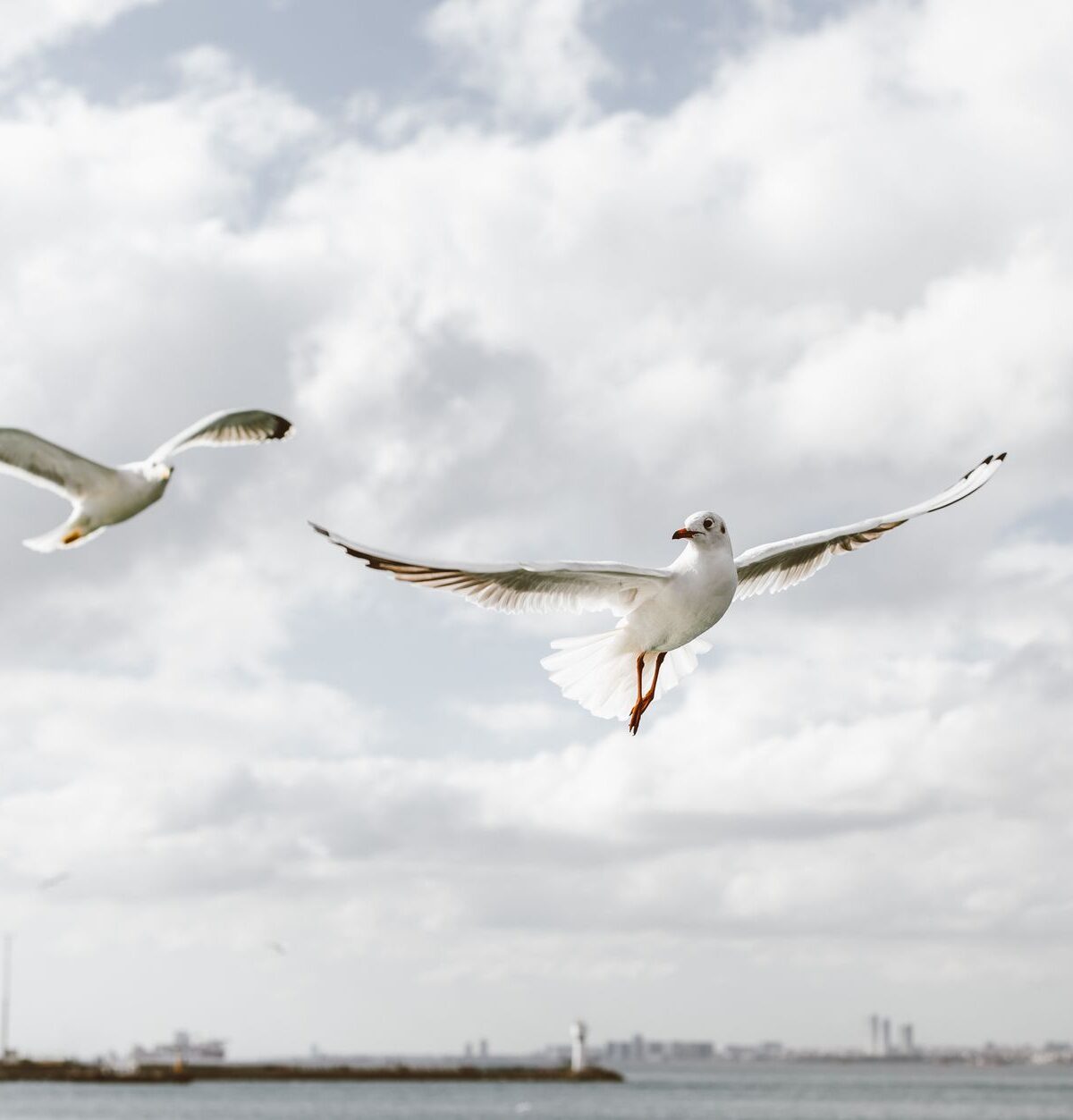
SEAGULL
DESCRIPTION
Seagull, also known as the Gull, is a versatile bird commonly found along coastlines and inland areas. They are characterized by their long wings, webbed feet, and a distinctive call that is often associated with seaside environments. Seagulls exhibit a range of behaviors, including scavenging and foraging, and are known for their intelligence and adaptability in various habitats.
FUN FACTS
- Seagulls are known for their remarkable intelligence, often using tools to obtain food, such as dropping shellfish on hard surfaces to crack them open
- | They have a unique way of communicating, with different calls serving various purposes, including alerting others to danger or signaling the presence of food
QUICK INFO
Lifespan10-15 years in the wild, up to 30 in captivity
Average Weight0.3-2.5 kg
Average Length30-70 cm
Diet TypeOmnivore
Social Structuregroup — they often form large colonies for nesting and feeding.
Activity PatternDiurnal
Breeding SeasonSpring (March-June)
- Habitat
- Seagulls thrive in coastal regions, often nesting on cliffs, beaches, and islands. They can also be found in urban areas where food is readily available.
- Biomes
- Coastal, Urban
- Native Range
- Seagulls are found worldwide, except for extreme polar regions and some oceanic islands.
- Continent
- North America, Europe, Asia, Africa, Australia
- Countries
- United States, Canada, United Kingdom, Australia, France, Japan
- Diet
- Seagulls are opportunistic feeders, consuming a wide variety of food items including fish, crustaceans, and human food scraps. Their diet can vary significantly based on their habitat and availability of food sources.
- Diet Type
- Omnivore
- Favorite Food
- fish, crustaceans, human food scraps
- Social Structure
- group — they often form large colonies for nesting and feeding.
- Activity Pattern
- Diurnal
- Group Size
- 10-100
- Territorial
- 0
 LC
LC
 CR
CR
0.3-2.5 kg
Weight
30-70 cm
Length
- Coloration
- Typically white with gray or black wings and a yellow or red bill.
- Sexual Dimorphism
- Males are generally larger than females.
- Lifespan
- 10-15 years in the wild, up to 30 in captivity
- Offspring per Birth
- 1-3
- Sexual Maturity
- 3-4 years
- Breeding Season
- Spring (March-June)
LC
Least Concern
IUCN Red List Status
- Population Status
- Seagull populations are generally stable, though some species may face local declines.
- Wild Population Estimate
- Millions globally
- Population Trend
- Stable
- Endangered
- 0
- Threats
- Main threats include habitat loss, pollution, and human disturbance. Some species may also be affected by climate change and overfishing.
- Predators
- Eagles, hawks, foxes, and larger birds of prey.
- Defense Mechanisms
- Seagulls often use loud calls and aggressive posturing to defend their nests and territory.
- Compatible Animals
- Ducks, swans, other seabirds
- Found in Zoos
- Uncommon