


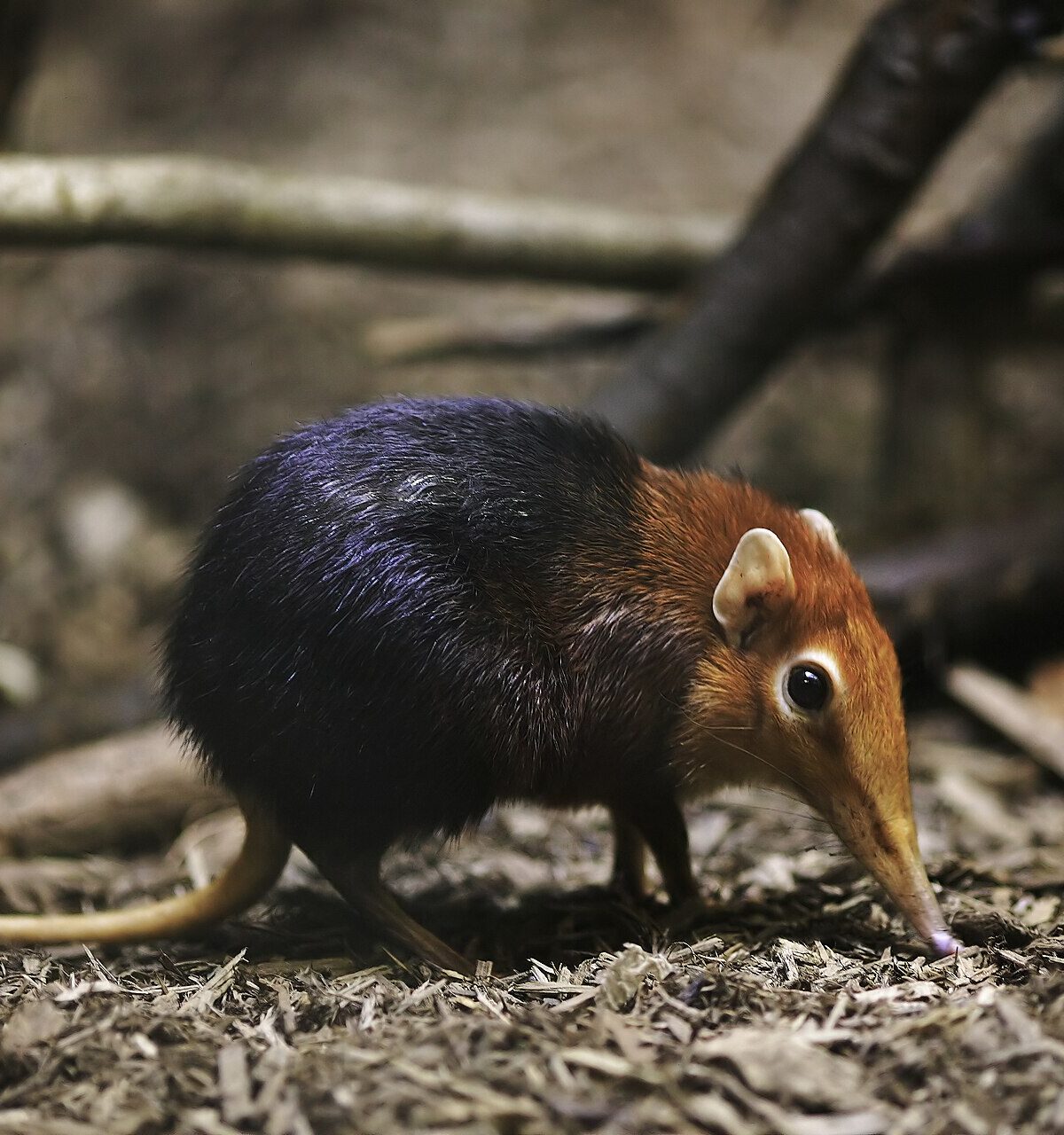
SENGI
Macroscelididae
DESCRIPTION
Sengi (Macroscelididae), commonly known as the elephant shrew, is a small, insectivorous mammal characterized by its elongated snout and large ears. These creatures exhibit a unique combination of features reminiscent of both shrews and elephants, hence their name. They are primarily active during the day, foraging for insects and other small invertebrates in their habitats, which range from forests to savannas.
FUN FACTS
- Sengi are not actually shrews, despite their name; they belong to their own unique order called Macroscelidea
- They have a remarkable ability to jump and can leap distances up to three times their body length! | Sengi have a highly developed sense of smell, which they use to locate food and navigate their environment
- Their long snouts are not just for show; they are equipped with sensitive whiskers that help them detect movement and changes in their surroundings
QUICK INFO
Lifespan4-6 years in the wild, up to 10 years in captivity
Average Weight0.5-1.5 kg
Average Length25-45 cm
Diet TypeInsectivore
Social Structuresolitary, occasionally forming pairs during breeding
Activity PatternDiurnal
Breeding SeasonYear-round, with peaks depending on the region
- Habitat
- Sengi inhabit a variety of environments, including grasslands, forests, and scrublands. They prefer areas with dense vegetation that provides cover from predators.
- Biomes
- Savanna, Tropical Rainforest, Grassland
- Native Range
- Sengi are native to Africa, found in various regions across the continent.
- Continent
- Africa
- Countries
- South Africa, Kenya, Tanzania, Madagascar, Mozambique
- Diet
- Sengi primarily feeds on insects, worms, and other small invertebrates, using its keen sense of smell to locate food. They may also consume some plant material occasionally.
- Diet Type
- Insectivore
- Favorite Food
- insects
- Social Structure
- solitary, occasionally forming pairs during breeding
- Activity Pattern
- Diurnal
- Group Size
- 1-2
- Territorial
- 1
 VU
VU
 LC
LC
0.5-1.5 kg
Weight
25-45 cm
Length
- Coloration
- fur is typically brown or gray with lighter underparts
- Lifespan
- 4-6 years in the wild, up to 10 years in captivity
- Gestation Period
- 50-60 days
- Offspring per Birth
- 1-2
- Sexual Maturity
- 6-12 months
- Breeding Season
- Year-round, with peaks depending on the region
LC
Least Concern
IUCN Red List Status
- Population Status
- Population status varies by species, with some being more common than others.
- Wild Population Estimate
- unknown
- Population Trend
- Stable
- Endangered
- 0
- Threats
- Main threats include habitat loss due to agriculture and urbanization. Additionally, they face predation from various carnivores.
- Predators
- birds of prey, snakes, small carnivores
- Defense Mechanisms
- Sengi rely on their speed and agility to escape predators, often using quick, darting movements.
- Found in Zoos
- Uncommon