


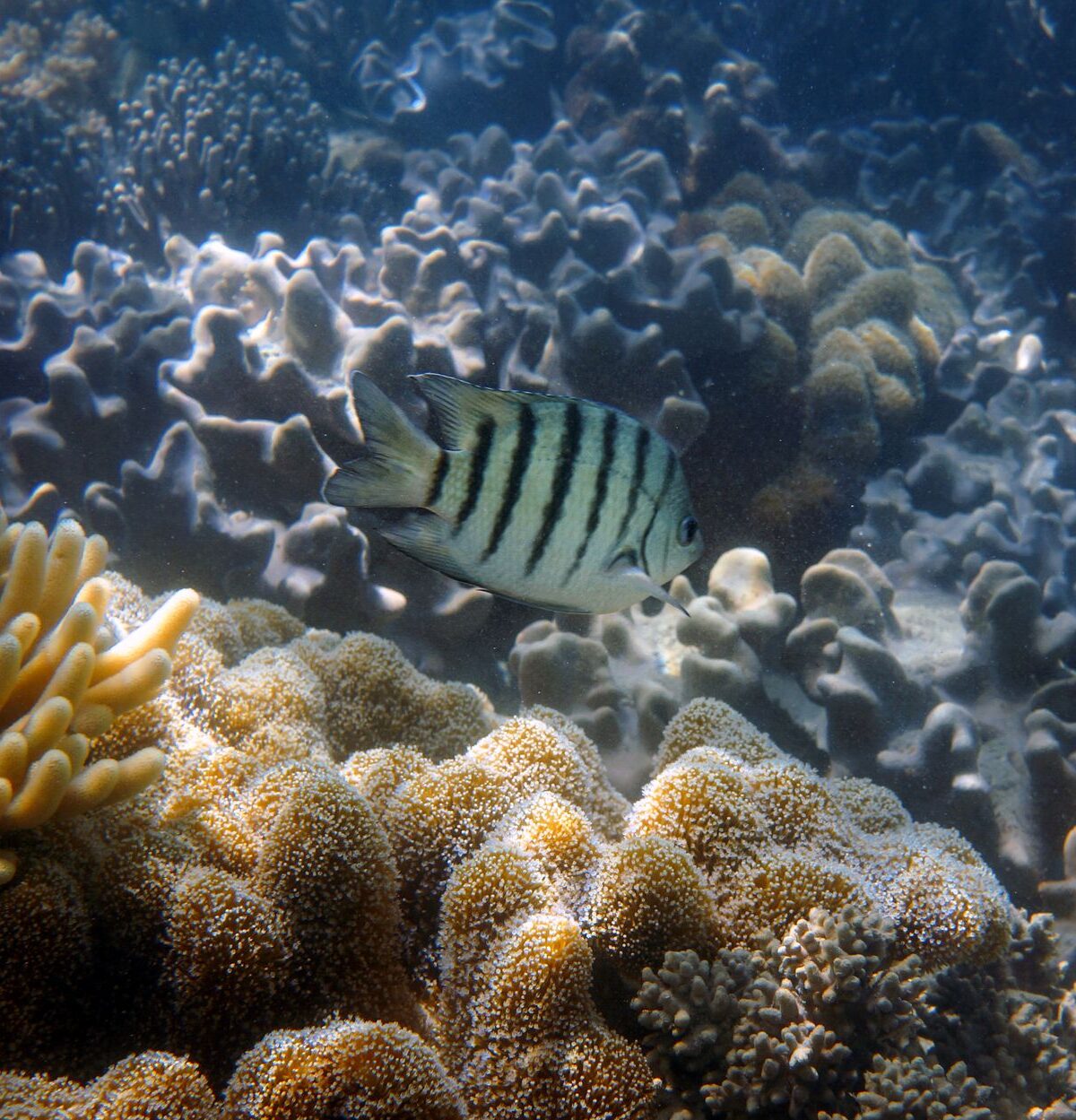
SERGEANT MAJOR
DESCRIPTION
Sergeant Major is a small, brightly colored fish known for its distinctive vertical black stripes on a yellow body. This species is often found in shallow waters of coral reefs, where it exhibits a curious and bold behavior, frequently approaching divers and snorkelers. They are social fish, often seen in groups, and play an important role in the reef ecosystem by grazing on algae and providing food for larger predators.
FUN FACTS
- Sergeant Majors are known for their unique breeding behavior, where males will guard and care for the eggs after they are laid
- They can change their coloration based on their mood and environment, becoming more vibrant when excited or threatened.| These fish are often used in aquariums due to their striking appearance and relatively easy care requirements
- They are also popular among snorkelers and divers, as they are curious and often approach humans
QUICK INFO
Lifespan5-7 years in the wild.
Average Length15-20 cm
Diet TypeOmnivore
Social StructureThey are typically found in groups, often forming schools for protection and social interaction.
Activity PatternDiurnal
Breeding SeasonSpring to early summer
- Habitat
- Sergeant Majors inhabit warm, shallow waters of coral reefs and rocky areas. They prefer environments with plenty of cover and food sources.
- Biomes
- Coral Reef, Coastal
- Native Range
- They are native to the tropical and subtropical waters of the Western Atlantic, including the Caribbean Sea and the Gulf of Mexico.
- Continent
- North America, South America
- Countries
- United States, Mexico, Bahamas, Cuba, Jamaica
- Diet
- Sergeant Majors primarily feed on algae, zooplankton, and small invertebrates. They are known to graze on algae growing on coral and rocks.
- Diet Type
- Omnivore
- Favorite Food
- algae, zooplankton
- Social Structure
- They are typically found in groups, often forming schools for protection and social interaction.
- Activity Pattern
- Diurnal
- Group Size
- 10-50
- Territorial
- 1

15-20 cm
Length
- Coloration
- Bright yellow body with 5-6 vertical black stripes.
- Sexual Dimorphism
- Males are generally more colorful during breeding season.
- Lifespan
- 5-7 years in the wild.
- Sexual Maturity
- 1-2 years
- Breeding Season
- Spring to early summer
LC
Least Concern
IUCN Red List Status
- Population Status
- The population of Sergeant Majors is currently stable and not considered threatened.
- Population Trend
- Stable
- Endangered
- 0
- Threats
- Main threats include habitat loss due to coral reef degradation and pollution. Overfishing can also impact their populations in certain areas.
- Predators
- Larger fish, such as groupers and barracudas, as well as some species of sharks.
- Defense Mechanisms
- They use their schooling behavior to confuse predators and can also exhibit aggressive displays to defend their territory.
- Found in Zoos
- Common