


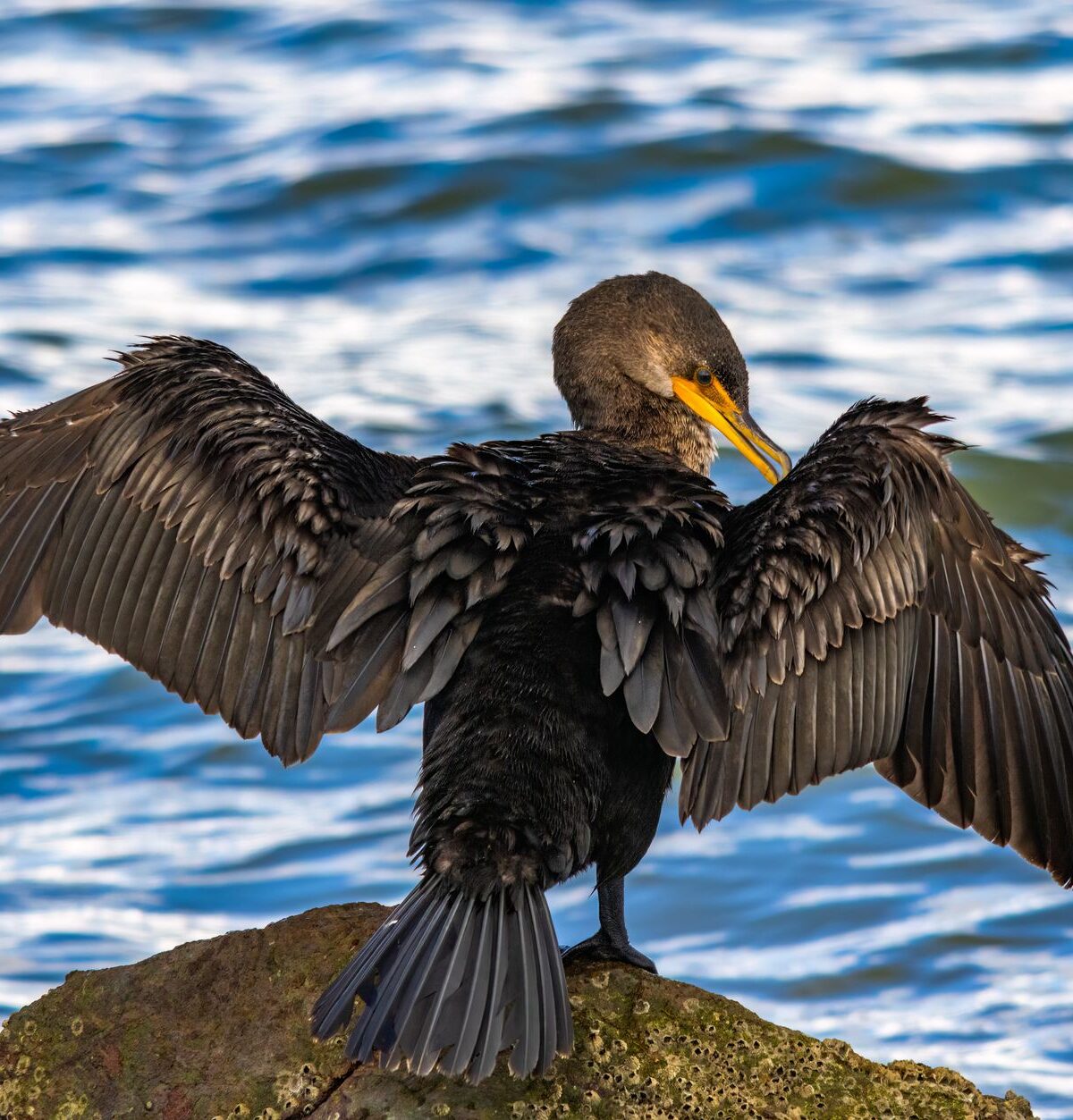
SHAG
Phalacrocorax aristotelis
DESCRIPTION
Shag (Phalacrocorax aristotelis) is commonly known as the European Shag and the Black Shag. This seabird is characterized by its long neck, slender body, and distinctive greenish-black plumage, which can appear glossy in sunlight. Shags are often seen diving for fish, showcasing their adept swimming abilities and are known for their social behavior, often nesting in colonies on coastal cliffs.
FUN FACTS
- Shags are known for their unique drying behavior; after diving, they often spread their wings to dry in the sun, which is a distinctive sight
- Additionally, they have a fascinating courtship display that includes elaborate vocalizations and posturing, making them quite a spectacle during the breeding season
QUICK INFO
Lifespan10-15 years in the wild
Average Weight1-2 kg
Average Length65-75 cm
Diet TypePiscivore
Social Structuregroup — they often nest in colonies and can be seen foraging together.
Activity PatternDiurnal
Breeding SeasonSpring (April-June)
- Habitat
- Shags inhabit coastal areas, particularly rocky shorelines and islands where they can find suitable nesting sites. They prefer locations with abundant fish populations.
- Biomes
- Marine, Coastal
- Native Range
- Shags are found along the coasts of Europe and parts of North Africa, particularly in the Mediterranean Sea.
- Continent
- Europe, Africa
- Countries
- United Kingdom, Ireland, Norway, France, Spain, Italy, Greece
- Diet
- Shags primarily feed on fish, which they catch while diving underwater. They are skilled hunters, often foraging in shallow waters.
- Diet Type
- Piscivore
- Favorite Food
- small fish
- Social Structure
- group — they often nest in colonies and can be seen foraging together.
- Activity Pattern
- Diurnal
- Group Size
- 10-50
- Territorial
- 0
 LC
LC
 LC
LC
 LC
LC
1-2 kg
Weight
65-75 cm
Length
- Coloration
- glossy greenish-black plumage with a distinctive crest during the breeding season
- Sexual Dimorphism
- males are generally larger than females
- Lifespan
- 10-15 years in the wild
- Offspring per Birth
- 3-5
- Sexual Maturity
- 2-3 years
- Breeding Season
- Spring (April-June)
LC
Least Concern
IUCN Red List Status
- Population Status
- The population of Shags is currently stable, although local declines have been noted in some areas due to environmental changes.
- Wild Population Estimate
- 100,000-200,000
- Population Trend
- Stable
- Endangered
- 0
- Threats
- Main threats to Shags include habitat degradation, pollution, and competition with fisheries for food resources. Climate change also poses a risk to their breeding habitats.
- Predators
- Gulls, eagles, and large raptors are known to prey on Shags, particularly their eggs and chicks.
- Defense Mechanisms
- Shags often rely on their ability to dive and swim quickly to evade predators.
- Found in Zoos
- Uncommon