


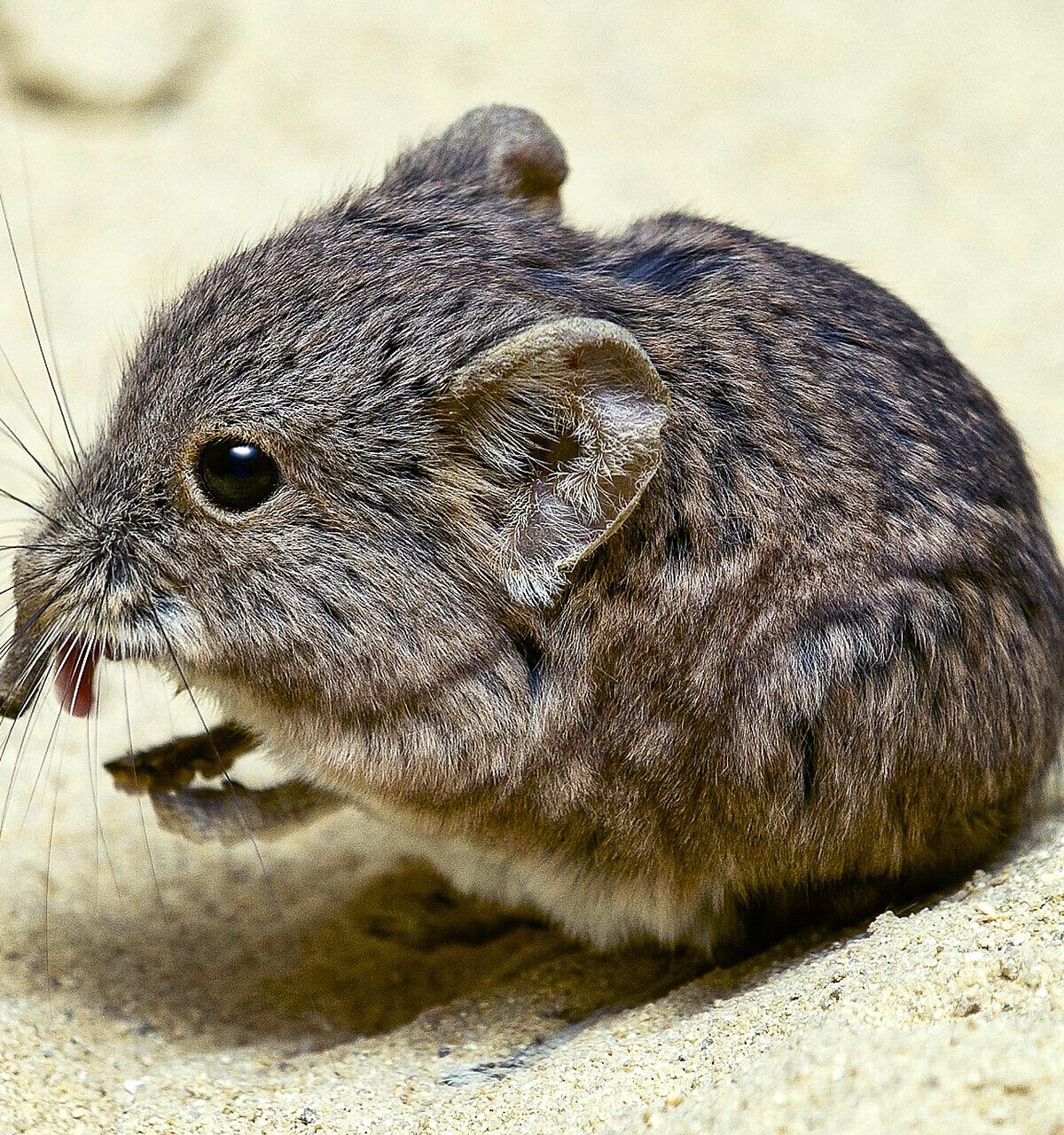
SHORT-EARED ELEPHANT SHREW
Macroscelides proboscideus
DESCRIPTION
Short-eared Elephant Shrew (Macroscelides proboscideus) is a small mammal characterized by its long snout and large ears, resembling a miniature elephant. This species has a slender body covered in coarse fur, typically brown or gray in color, which helps it blend into its natural habitat. It is primarily nocturnal, foraging for food at night and exhibiting a range of behaviors including hopping and running to evade predators.
FUN FACTS
- Short-eared Elephant Shrews are not actually shrews but belong to a unique order of mammals called Macroscelidea, which are more closely related to elephants and manatees than to true shrews
- They have a highly developed sense of smell, which they use to locate food and navigate their environment, making them quite adept at foraging in the wild.| Despite their small size, Short-eared Elephant Shrews are known for their impressive agility and speed, capable of making quick turns and jumps to evade predators
- Their long ears are not just for show; they help them detect sounds from a distance, alerting them to potential dangers in their surroundings
QUICK INFO
Lifespanup to 5 years in the wild
Average Weight0.5-1 kg
Average Length25-30 cm
Diet TypeInsectivore
Social Structuresolitary, occasionally seen in pairs during breeding
Activity PatternNocturnal
Breeding SeasonYear-round, with peaks in spring and summer
- Habitat
- This species inhabits a variety of environments, including savannas, grasslands, and scrub forests. They prefer areas with dense vegetation that provides cover from predators.
- Biomes
- Savanna, Grassland, Scrubland
- Native Range
- Short-eared Elephant Shrew is native to parts of southern Africa, particularly in regions of Namibia, Botswana, and South Africa.
- Continent
- Africa
- Countries
- Namibia, Botswana, South Africa
- Diet
- Short-eared Elephant Shrews primarily feed on insects, small invertebrates, and plant material. They use their keen sense of smell to locate food in the leaf litter and underbrush.
- Diet Type
- Insectivore
- Favorite Food
- insects, small invertebrates
- Social Structure
- solitary, occasionally seen in pairs during breeding
- Activity Pattern
- Nocturnal
- Group Size
- 1-2
- Territorial
- 0
 VU
VU
 LC
LC
0.5-1 kg
Weight
25-30 cm
Length
- Coloration
- brown or gray fur with a lighter underbelly
- Sexual Dimorphism
- males are slightly larger than females
- Lifespan
- up to 5 years in the wild
- Gestation Period
- 60-70 days
- Offspring per Birth
- 1-2
- Sexual Maturity
- 6-12 months
- Breeding Season
- Year-round, with peaks in spring and summer
LC
Least Concern
IUCN Red List Status
- Population Status
- The population status of Short-eared Elephant Shrew is currently stable, although habitat loss poses a potential threat.
- Wild Population Estimate
- unknown
- Population Trend
- Stable
- Endangered
- 0
- Threats
- Main threats include habitat destruction due to agriculture and urban development. Additionally, they may be affected by predation from domestic animals.
- Predators
- birds of prey, snakes, small carnivores
- Defense Mechanisms
- They rely on their speed and agility to escape from predators, often using quick, darting movements.
- Found in Zoos
- Rare