


SIAMANG
Symphalangus syndactylus
DESCRIPTION
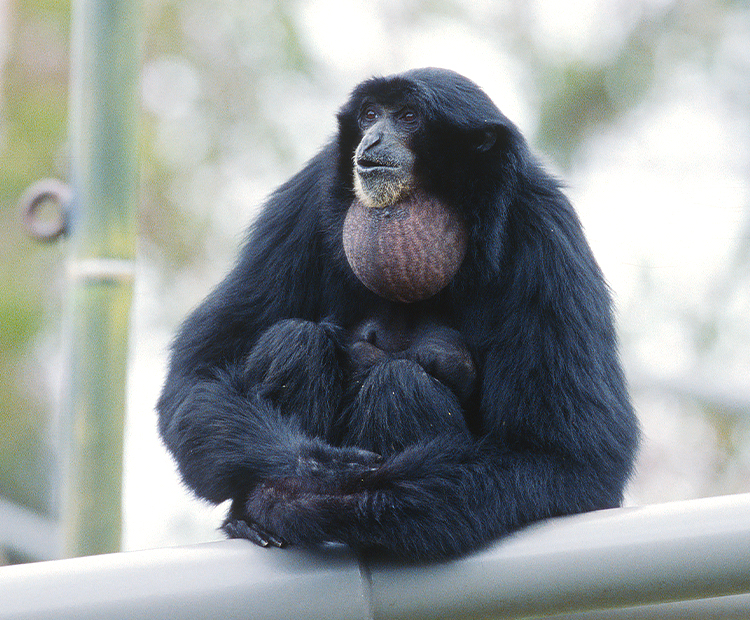
The Siamang is a large species of gibbon known for its distinctive throat pouch, which it uses to produce loud calls. They are highly social and are often found swinging through the trees in their forest habitats.
FUN FACTS
- Siamangs can leap up to 10 meters between trees | They are the largest of the gibbons | Their calls can be heard over long distances, sometimes up to 3 kilometers
QUICK INFO
Lifespan20-30 years in the wild, up to 40 in captivity
Average Weight11-14 kg
Average Length0.7-1.0 m
Diet TypeHerbivore
Social StructureThey live in small family groups, typically consisting of a mated pair and their offspring.
Activity PatternDiurnal
Breeding SeasonYear-round
- Habitat
- Siamangs inhabit tropical rainforests, often in hilly or mountainous regions. They prefer areas with abundant trees for climbing and feeding.
- Biomes
- Tropical Rainforest
- Native Range
- Southeast Asia, primarily found in the Malay Peninsula and Sumatra.
- Continent
- Asia
- Countries
- Malaysia, Indonesia, Thailand
- Diet
- Siamangs primarily eat fruit, leaves, and flowers. They are known to consume a variety of plant materials, making them important seed dispersers in their ecosystem.
- Diet Type
- Herbivore
- Favorite Food
- Fruits, leaves
- Social Structure
- They live in small family groups, typically consisting of a mated pair and their offspring.
- Activity Pattern
- Diurnal
- Group Size
- 2-6
- Territorial
- 1
 VU
VU
 LC
LC
11-14 kg
Weight
0.7-1.0 m
Length
- Coloration
- Black fur with a lighter face and throat pouch.
- Sexual Dimorphism
- Males and females are similar in size and coloration.
- Lifespan
- 20-30 years in the wild, up to 40 in captivity
- Gestation Period
- 7-8 months
- Offspring per Birth
- 1
- Sexual Maturity
- 4-5 years
- Breeding Season
- Year-round
EN
Endangered
IUCN Red List Status
- Population Status
- The population is currently declining due to habitat loss and hunting.
- Wild Population Estimate
- Unknown
- Population Trend
- Decreasing
- Endangered
- 1
- Threats
- Main threats include deforestation and illegal hunting. Habitat destruction for agriculture and logging significantly impacts their populations.
- Predators
- Large birds of prey, snakes
- Defense Mechanisms
- Siamangs use loud vocalizations to warn off potential threats and can also flee quickly into the trees.
- Found in Zoos
- Common