


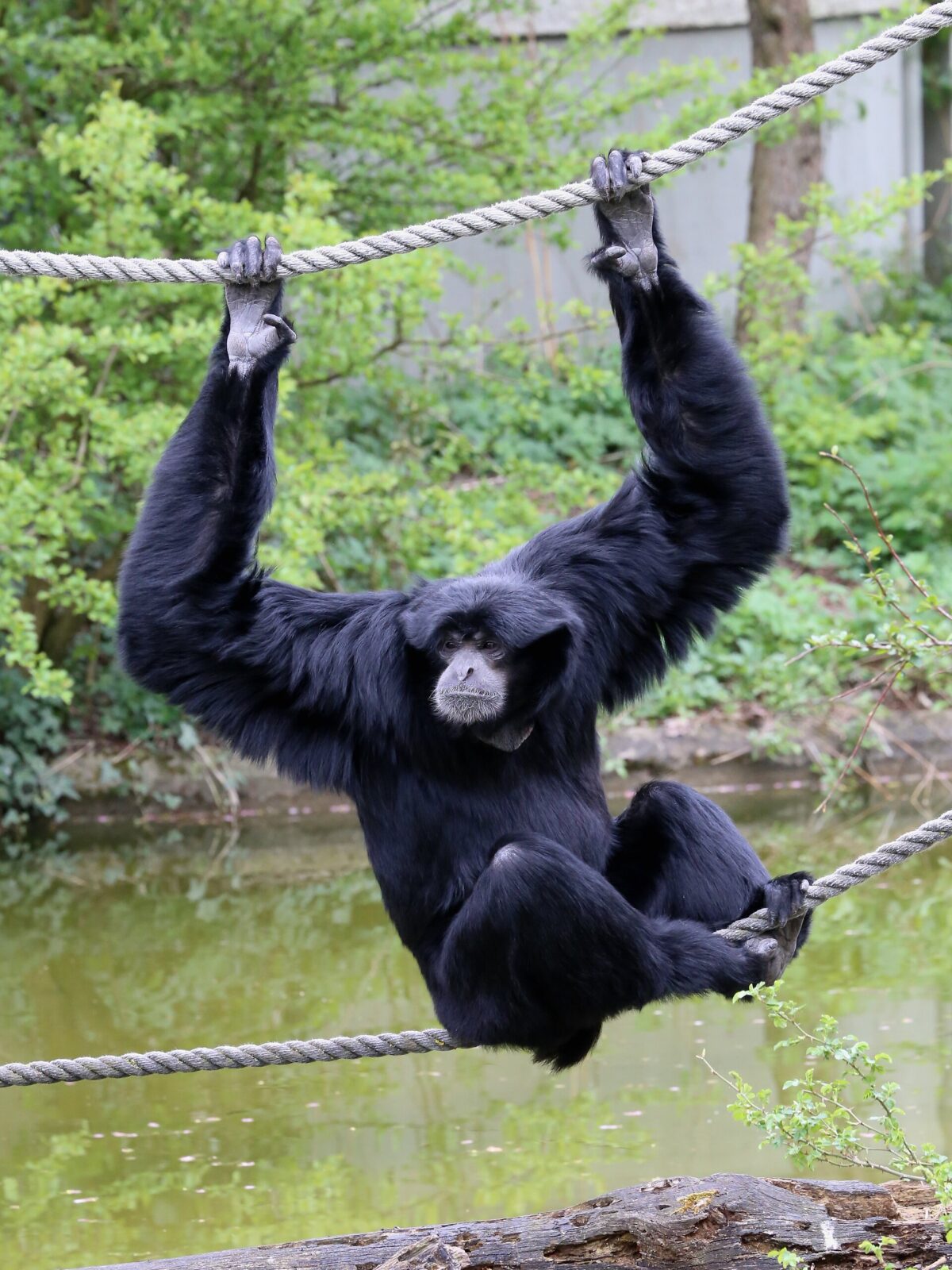
SIAMANGS
Symphalangus syndactylus
DESCRIPTION
Siamangs (Symphalangus syndactylus) are large gibbons known for their distinctive throat pouch, which they use to produce loud calls that can be heard over long distances. They have long arms and a black fur coat, with some individuals displaying a lighter coloration. These primates are highly social and live in family groups, often engaging in acrobatic displays as they move through the trees of their forest habitats.
FUN FACTS
- Siamangs are known for their impressive vocal abilities, with their throat pouch allowing them to produce deep, resonant calls that can travel over 2 miles in the forest
- They are also one of the largest species of gibbons, and their long arms and strong hands make them exceptional climbers and swingers in the treetops.|Siamangs are monogamous and form strong pair bonds, often seen grooming each other and caring for their young together
- Their social structure is unique among gibbons, as they often engage in synchronized singing, which strengthens their family bonds and establishes territory
QUICK INFO
Lifespan20-30 years in the wild, up to 40 in captivity
Average Weight11-14 kg
Average Length0.8-1.0 m
Diet TypeHerbivore
Social StructureSiamangs typically live in small family groups consisting of a mated pair and their offspring. They exhibit strong pair bonds and cooperative parenting.
Activity PatternDiurnal
Breeding SeasonYear-round
- Habitat
- Siamangs inhabit tropical rainforests, often found in the canopy layer where they can easily swing from branch to branch. They prefer areas with abundant fruiting trees and dense foliage.
- Biomes
- Tropical Rainforest
- Native Range
- Siamangs are native to the forests of Southeast Asia, particularly in Malaysia, Indonesia, and Thailand.
- Continent
- Asia
- Countries
- Malaysia, Indonesia, Thailand
- Diet
- Siamangs primarily eat fruit, leaves, and flowers, with a preference for ripe fruits. They are known to consume a variety of plant materials, making them important seed dispersers in their ecosystem.
- Diet Type
- Herbivore
- Favorite Food
- ripe fruits, leaves
- Social Structure
- Siamangs typically live in small family groups consisting of a mated pair and their offspring. They exhibit strong pair bonds and cooperative parenting.
- Activity Pattern
- Diurnal
- Group Size
- 2-6
- Territorial
- 1
 VU
VU
 LC
LC
11-14 kg
Weight
0.8-1.0 m
Length
- Coloration
- black fur with a lighter face and throat pouch
- Sexual Dimorphism
- males are slightly larger than females
- Lifespan
- 20-30 years in the wild, up to 40 in captivity
- Gestation Period
- 210 days
- Offspring per Birth
- 1
- Sexual Maturity
- 4-5 years
- Breeding Season
- Year-round
EN
Endangered
IUCN Red List Status
- Population Status
- Siamangs are currently facing population declines due to habitat loss and hunting.
- Wild Population Estimate
- unknown
- Population Trend
- Decreasing
- Endangered
- 1
- Threats
- The main threats to Siamangs include deforestation for agriculture and logging, as well as hunting for the pet trade. These pressures have led to significant habitat loss and fragmentation.
- Conservation Program
- Various conservation programs are in place to protect their habitats and raise awareness about their plight.
- Predators
- large birds of prey, snakes, and occasionally larger mammals such as leopards
- Defense Mechanisms
- Siamangs use their vocalizations to warn off potential threats and can also display aggressive behaviors if threatened.
- Compatible Animals
- other gibbons, small monkeys
- Found in Zoos
- Common