


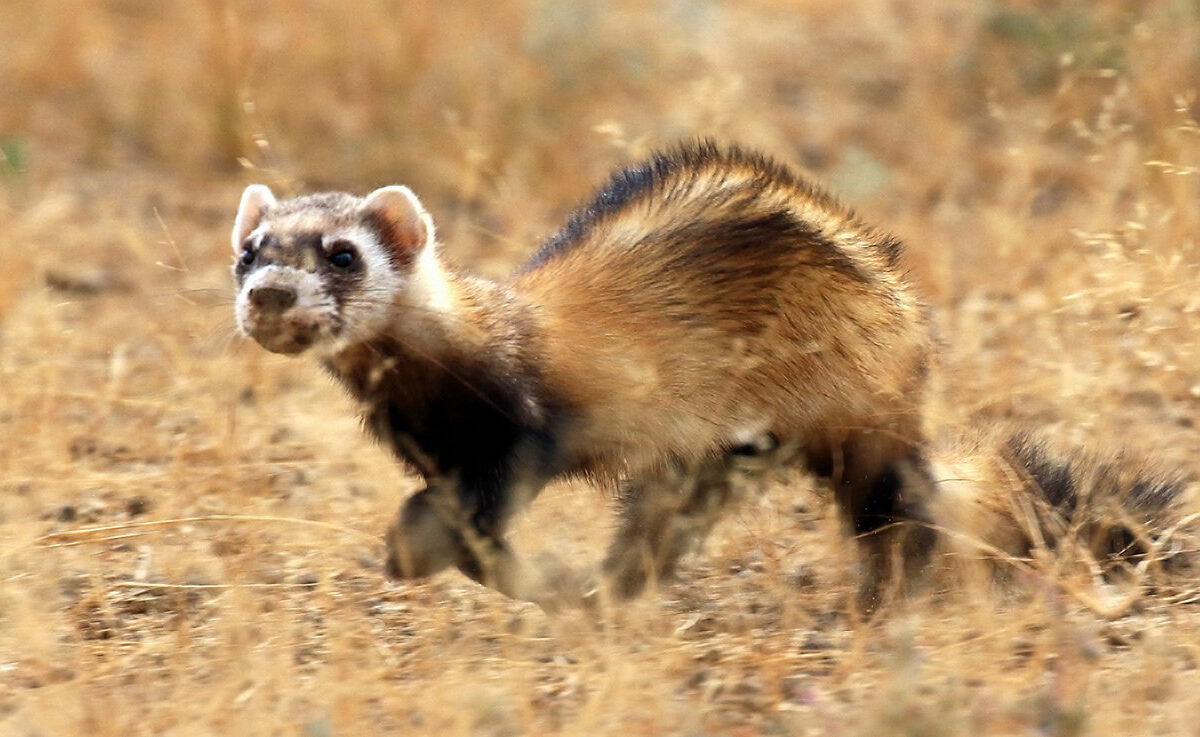
SIBERIAN POLECAT
Mustela eversmanii
DESCRIPTION
Siberian Polecat (Mustela eversmanii) is commonly known as Eversmann's Polecat and Steppe Polecat. This small carnivorous mammal has a slender body, short legs, and a bushy tail, typically exhibiting a coat that ranges from light brown to dark brown with a paler underbelly. They are known for their playful behavior and are often seen foraging alone or in pairs, displaying a high level of agility and curiosity in their natural habitats.
FUN FACTS
- Siberian Polecats are known for their impressive burrowing skills, often creating extensive tunnel systems that can be used for nesting and storing food
- They have a unique social structure, where males may engage in playful wrestling and chasing, showcasing their agility and strength in a non-aggressive manner
QUICK INFO
Lifespan3-6 years in the wild, up to 10 years in captivity
Average Weight1-2 kg
Average Length30-50 cm
Diet TypeCarnivore
Social Structuresolitary, occasionally forming pairs during breeding season
Activity PatternNocturnal
Breeding SeasonSpring (April-June)
- Habitat
- Siberian Polecats inhabit a variety of environments, including grasslands, steppes, and forest edges. They prefer areas with ample cover for hunting and burrowing.
- Biomes
- Grassland, Temperate Forest
- Native Range
- They are native to parts of Central Asia, including regions of Russia, Kazakhstan, and Mongolia.
- Continent
- Asia, Europe
- Countries
- Russia, Kazakhstan, Mongolia, Ukraine
- Diet
- Siberian Polecats primarily feed on small mammals, birds, and insects, showcasing their adaptability in hunting. They are opportunistic feeders and will also consume fruits and vegetables when necessary.
- Diet Type
- Carnivore
- Favorite Food
- small mammals, birds, insects
- Social Structure
- solitary, occasionally forming pairs during breeding season
- Activity Pattern
- Nocturnal
- Group Size
- 1-2
- Territorial
- 1

 VU
LC
VU
LC
1-2 kg
Weight
30-50 cm
Length
- Coloration
- light to dark brown fur with a paler underbelly
- Sexual Dimorphism
- males are generally larger than females
- Lifespan
- 3-6 years in the wild, up to 10 years in captivity
- Gestation Period
- 50-60 days
- Offspring per Birth
- 2-6
- Sexual Maturity
- 1 year
- Breeding Season
- Spring (April-June)
LC
Least Concern
IUCN Red List Status
- Population Status
- The population of Siberian Polecats is currently stable, although habitat loss poses a potential threat.
- Wild Population Estimate
- unknown
- Population Trend
- Stable
- Endangered
- 0
- Threats
- Main threats include habitat destruction due to agricultural expansion and urbanization. Additionally, they face risks from hunting and trapping.
- Predators
- foxes, birds of prey, domestic dogs
- Defense Mechanisms
- Siberian Polecats can emit a strong-smelling musk as a defense mechanism against predators.
- Found in Zoos
- Uncommon