


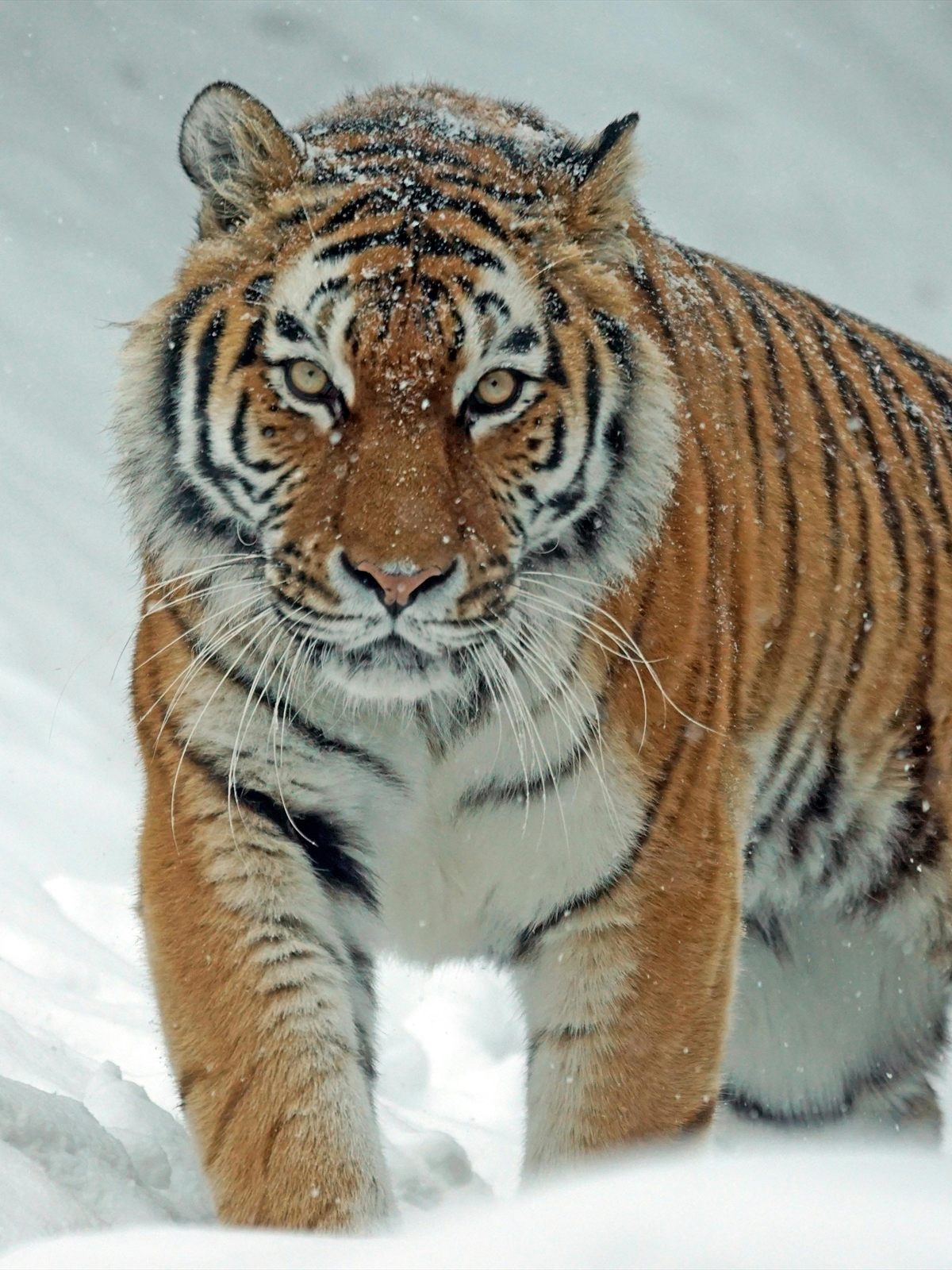
SIBERIAN TIGER
Panthera tigris altaica
DESCRIPTION
Also called the Amur Tiger, the Siberian Tiger is the largest subspecies of tiger, characterized by its thick fur and pale orange coat with black stripes. These magnificent creatures are solitary and primarily nocturnal, relying on their keen senses to hunt in the dense forests and grasslands of their native habitat. They play a crucial role in their ecosystem as apex predators, helping to maintain the balance of prey populations.
FUN FACTS
- Siberian Tigers are known for their incredible strength and can take down prey much larger than themselves, such as adult elk
- They are also excellent swimmers, often crossing rivers and lakes in search of food or territory
- | The stripes on a Siberian Tiger's coat are unique to each individual, much like human fingerprints, allowing researchers to identify them in the wild
- These stripes not only provide camouflage in their natural habitat but also play a role in social interactions among tigers
QUICK INFO
Lifespan10-15 years in the wild, up to 20 years in captivi
Average Weight180-306 kg
Average Length2.3-3.3 m
Diet TypeCarnivore
Social StructureSolitary, with males and females coming together only for mating.
Activity PatternNocturnal
Breeding SeasonWinter (January-March)
- Habitat
- Siberian Tigers inhabit temperate forests, grasslands, and mountainous regions, where they can find ample cover for hunting. They prefer areas with a mix of dense vegetation and open spaces.
- Biomes
- Temperate Forest, Taiga
- Native Range
- The native range of the Siberian Tiger includes the Russian Far East, particularly the Primorye region, and parts of northeastern China.
- Continent
- Asia
- Countries
- Russia, China
- Diet
- Siberian Tigers are carnivorous and primarily hunt large ungulates such as deer and wild boar. They are known for their stealth and power, often stalking their prey before launching a surprise attack.
- Diet Type
- Carnivore
- Favorite Food
- Deer, wild boar
- Social Structure
- Solitary, with males and females coming together only for mating.
- Activity Pattern
- Nocturnal
- Group Size
- 1
- Territorial
- 1
180-306 kg
Weight
2.3-3.3 m
Length
1.0 m at shoulder
Height (Shoulder)
- Coloration
- Pale orange coat with black stripes and a lighter underbelly.
- Sexual Dimorphism
- Males are generally larger than females.
- Lifespan
- 10-15 years in the wild, up to 20 years in captivi
- Gestation Period
- 93-112 days
- Offspring per Birth
- 2-4
- Sexual Maturity
- 3-4 years
- Breeding Season
- Winter (January-March)
EN
Endangered
IUCN Red List Status
- Population Status
- The Siberian Tiger population is critically low, with conservation efforts ongoing to protect this majestic species.
- Wild Population Estimate
- Around 500 individuals
- Population Trend
- Increasing
- Endangered
- 1
- Threats
- Main threats include habitat loss due to logging and human encroachment, as well as poaching for their fur and body parts. Conservation efforts are crucial to mitigate these threats.
- Conservation Program
- The Amur Tiger Conservation Program focuses on habitat protection and anti-poaching measures.
- Defense Mechanisms
- Siberian Tigers rely on their strength, agility, and camouflage to evade threats and hunt effectively.
- Found in Zoos
- Uncommon