


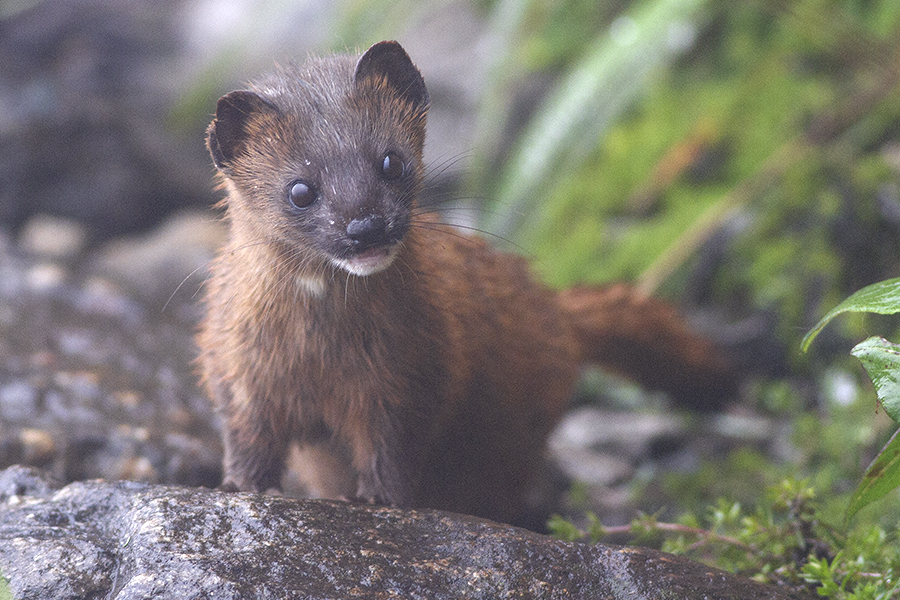
SIBERIAN WEASEL
Mustela sibirica
DESCRIPTION
Siberian Weasel (Mustela sibirica) is a small carnivorous mammal known for its slender body and long tail. It has a fur coat that varies in color from light brown to dark brown, often with a lighter underbelly. This species is primarily solitary and is known for its agility and ability to adapt to various environments, making it an effective predator in its habitat.
FUN FACTS
- Siberian Weasels are known for their remarkable agility and can run at high speeds to catch their prey
- They are also excellent climbers, often seen scaling trees in search of birds or nests
- | These weasels have a unique way of communicating with each other, using a series of chirps and growls to convey different messages
- Their playful nature often leads them to engage in social play, especially during the breeding season
QUICK INFO
Lifespan5-10 years in the wild, up to 12 years in captivit
Average Weight1-2 kg
Average Length30-50 cm
Diet TypeCarnivore
Social StructureSolitary, with individuals typically living alone except during mating season or when a mother is raising her young.
Activity PatternNocturnal
Breeding SeasonSpring (April-June)
- Habitat
- Siberian Weasels inhabit a variety of environments, including forests, grasslands, and agricultural areas. They prefer areas with ample cover for hunting and denning.
- Biomes
- Temperate Forest, Grassland, Agricultural Land
- Native Range
- The native range of the Siberian Weasel extends across parts of East Asia, including Siberia, Mongolia, and northern China.
- Continent
- Asia
- Countries
- Russia, Mongolia, China, Kazakhstan, North Korea
- Diet
- The Siberian Weasel primarily feeds on small mammals, birds, and insects. It is an opportunistic hunter, often taking advantage of the availability of prey in its environment.
- Diet Type
- Carnivore
- Favorite Food
- small mammals, birds, insects
- Social Structure
- Solitary, with individuals typically living alone except during mating season or when a mother is raising her young.
- Activity Pattern
- Nocturnal
- Group Size
- 1
- Territorial
- 1
 LC
LC

1-2 kg
Weight
30-50 cm
Length
- Coloration
- Light to dark brown fur with a lighter underbelly.
- Sexual Dimorphism
- Males are generally larger than females.
- Lifespan
- 5-10 years in the wild, up to 12 years in captivit
- Gestation Period
- 30-35 days
- Offspring per Birth
- 3-6
- Sexual Maturity
- 1 year
- Breeding Season
- Spring (April-June)
LC
Least Concern
IUCN Red List Status
- Population Status
- The population of Siberian Weasels is currently stable, but habitat loss poses a potential threat.
- Wild Population Estimate
- Unknown
- Population Trend
- Stable
- Endangered
- 0
- Threats
- Main threats include habitat destruction due to agriculture and urbanization. Additionally, they may face competition from other carnivores and hunting pressures.
- Predators
- Eagles, foxes, larger carnivores
- Defense Mechanisms
- Siberian Weasels use their agility and speed to escape predators, often hiding in burrows or dense vegetation.
- Found in Zoos
- Uncommon