


SIDEWINDER
Crotalus cerastes
DESCRIPTION
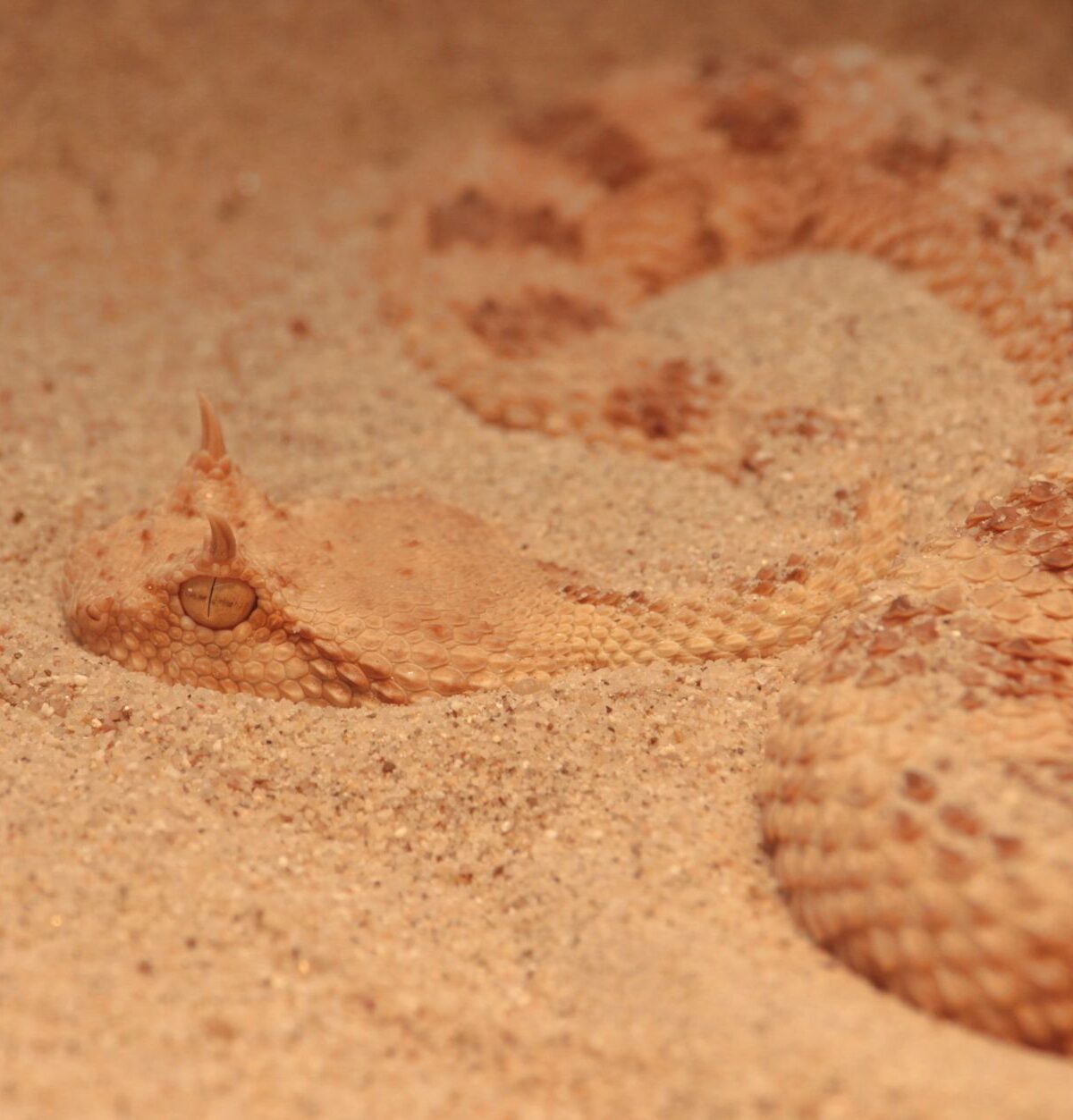
Sidewinder (Crotalus cerastes) is commonly known as the Horned Rattlesnake due to the distinctive horn-like scales above its eyes. This species is characterized by its unique method of locomotion, moving sideways across sandy terrain, which helps it navigate its desert habitat. Sidewinders are well-camouflaged with a light tan or gray coloration that blends seamlessly with the sandy environment, allowing them to ambush prey effectively.
FUN FACTS
- Sidewinders are known for their unique sidewinding movement, which allows them to travel across hot sand without overheating
- This method of locomotion is not only efficient but also minimizes contact with the hot ground
- | The Sidewinder's rattle is a warning signal to potential predators, and it can produce a sound even when it is not fully grown, making it an effective deterrent against threats
QUICK INFO
Lifespan10-20 years in the wild, up to 25 in captivity
Average Weight0.5-1.5 kg
Average Length0.6-1.2 m
Diet TypeCarnivore
Social Structuresolitary, typically found alone except during mating season
Activity PatternNocturnal
Breeding SeasonSpring (March-May)
- Habitat
- Sidewinders inhabit sandy deserts and arid regions, where they can easily burrow into the sand for shelter. They prefer areas with sparse vegetation that provide both cover and hunting opportunities.
- Biomes
- Desert
- Native Range
- The native range of the Sidewinder includes the southwestern United States and northwestern Mexico.
- Continent
- North America
- Countries
- United States, Mexico
- Diet
- Sidewinders primarily feed on small mammals, lizards, and birds. They use their heat-sensing pits to detect warm-blooded prey in their arid surroundings.
- Diet Type
- Carnivore
- Favorite Food
- small mammals, lizards
- Social Structure
- solitary, typically found alone except during mating season
- Activity Pattern
- Nocturnal
- Group Size
- 1
- Territorial
- 0
 VU
VU
0.5-1.5 kg
Weight
0.6-1.2 m
Length
- Coloration
- light tan or gray with darker blotches
- Sexual Dimorphism
- males are generally smaller than females
- Lifespan
- 10-20 years in the wild, up to 25 in captivity
- Gestation Period
- 90-100 days
- Offspring per Birth
- 5-15
- Sexual Maturity
- 2-3 years
- Breeding Season
- Spring (March-May)
LC
Least Concern
IUCN Red List Status
- Population Status
- The population of Sidewinders is currently stable, but they face habitat loss due to urban development.
- Wild Population Estimate
- unknown
- Population Trend
- Stable
- Endangered
- 0
- Threats
- Main threats include habitat destruction and road mortality. Additionally, they are sometimes targeted by humans due to fear of venomous snakes.
- Predators
- Birds of prey, larger snakes, and mammals such as coyotes.
- Defense Mechanisms
- Sidewinders use their camouflage to avoid detection and can deliver a venomous bite if threatened.
- Found in Zoos
- Uncommon