


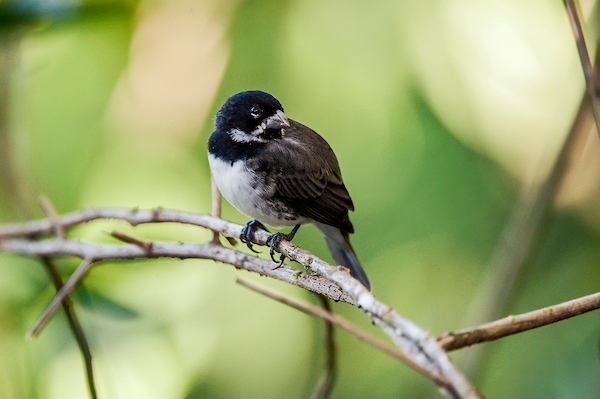
SILVER-BILLED TANAGER
Sporophila caerulescens
DESCRIPTION
Silver-billed Tanager (Sporophila caerulescens) is a striking bird known for its distinctive silver bill and vibrant plumage. This species exhibits a mix of bright yellow and green feathers, making it visually appealing and easily recognizable in its natural habitat. Typically found in open woodlands and shrubby areas, the Silver-billed Tanager is known for its social behavior, often seen in small flocks foraging for food.
FUN FACTS
- The Silver-billed Tanager is known for its beautiful song, which is often heard during the breeding season as males attract mates
- Interestingly, these birds have been observed engaging in cooperative breeding, where non-breeding individuals help care for the young, enhancing the survival rate of the offspring.| Despite their vibrant appearance, Silver-billed Tanagers are often overlooked in favor of more colorful species, yet they play a crucial role in their ecosystem by aiding in seed dispersal and maintaining plant diversity
QUICK INFO
Lifespan5-10 years in the wild
Average Weight20-30 g
Average Length15-18 cm
Diet TypeOmnivore
Social Structuregroup — they are often found in small flocks, which helps them in foraging and avoiding predators.
Activity PatternDiurnal
Breeding SeasonSpring to early summer
- Habitat
- This species prefers open woodlands, edges of forests, and shrubby areas where it can find ample food sources. It is often seen in areas with dense vegetation that provides cover and nesting sites.
- Biomes
- Tropical Rainforest, Savanna
- Native Range
- The Silver-billed Tanager is native to parts of Central and South America, particularly in regions such as Colombia, Venezuela, and Ecuador.
- Continent
- South America
- Countries
- Colombia, Venezuela, Ecuador
- Diet
- The Silver-billed Tanager primarily feeds on seeds, fruits, and occasionally insects. Its diet is well-suited to its habitat, allowing it to thrive in various environments.
- Diet Type
- Omnivore
- Favorite Food
- seeds and fruits
- Social Structure
- group — they are often found in small flocks, which helps them in foraging and avoiding predators.
- Activity Pattern
- Diurnal
- Group Size
- 5-15
- Territorial
- 0
 LC
LC
 VU
VU
20-30 g
Weight
15-18 cm
Length
- Coloration
- The Silver-billed Tanager has a bright yellow body with greenish wings and a distinctive silver bill.
- Sexual Dimorphism
- males and females are similar in appearance, though males may have slightly brighter coloration.
- Lifespan
- 5-10 years in the wild
- Offspring per Birth
- 2-4 eggs
- Sexual Maturity
- 1 year
- Breeding Season
- Spring to early summer
LC
Least Concern
IUCN Red List Status
- Population Status
- The population of Silver-billed Tanagers is currently stable, with no immediate threats to their numbers.
- Wild Population Estimate
- unknown
- Population Trend
- Stable
- Endangered
- 0
- Threats
- Habitat loss due to deforestation and agricultural expansion poses a threat to the Silver-billed Tanager. However, they are currently not facing significant population declines.
- Predators
- snakes, birds of prey, and larger mammals that may prey on their nests.
- Defense Mechanisms
- They rely on their agility and ability to quickly hide in dense foliage to evade predators.
- Found in Zoos
- Uncommon