


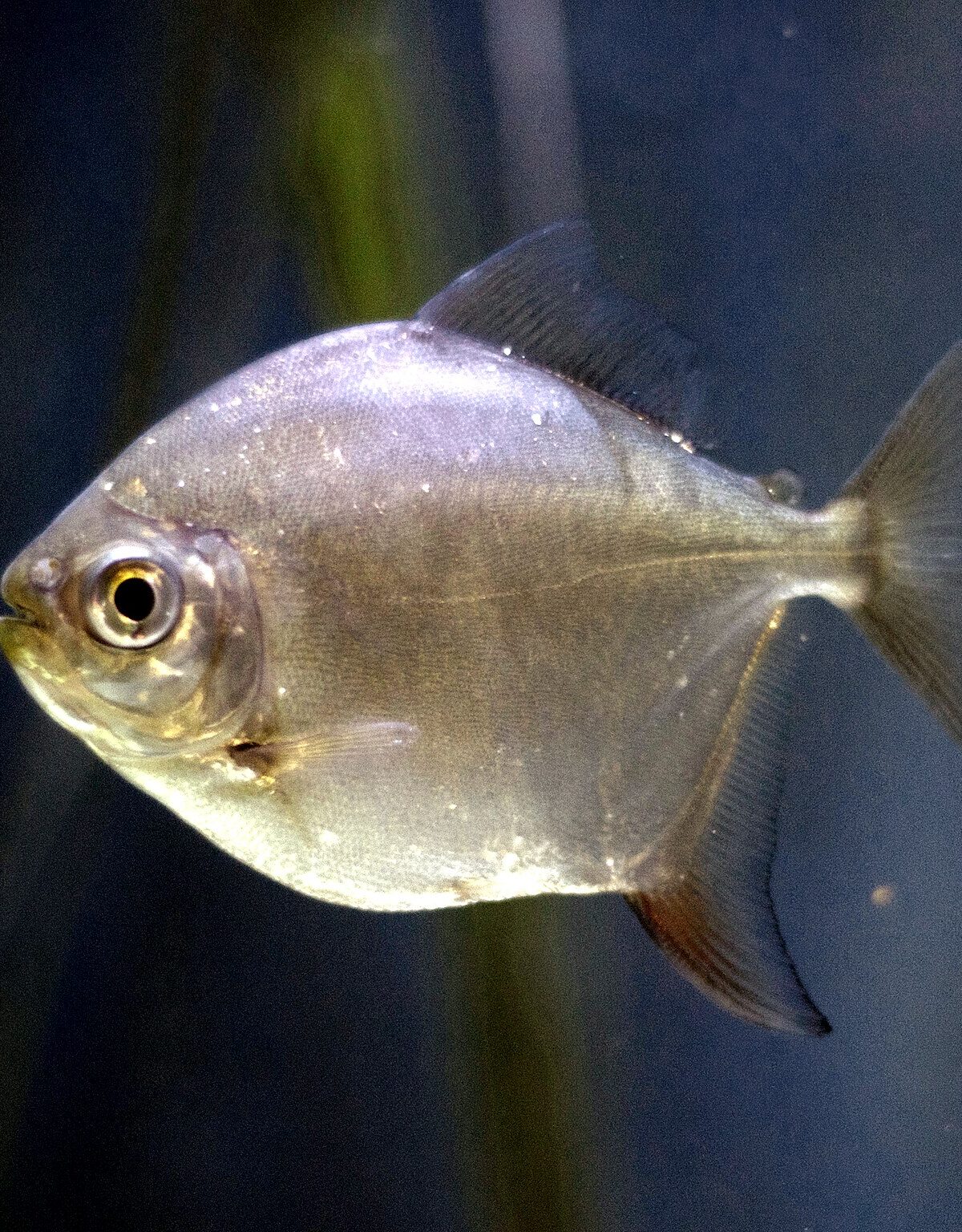
SILVER DOLLAR
Metynnis argenteus
DESCRIPTION
Silver Dollar (Metynnis argenteus) is a freshwater fish known for its distinctive, disc-shaped body and silvery coloration, which gives it its name. This species is often found in schools, exhibiting social behavior that enhances its safety from predators. In the wild, they inhabit slow-moving waters, such as rivers and lakes, where they can find ample vegetation and cover.
FUN FACTS
- Silver Dollars are popular in the aquarium trade due to their striking appearance and peaceful nature, making them ideal for community tanks
- They are also known for their ability to adapt to various water conditions, which contributes to their popularity among aquarists
- | In the wild, Silver Dollars can grow larger than in captivity, reaching lengths of up to 25 cm
- Their unique shape and shimmering scales make them a fascinating species to observe, both in the wild and in aquariums
QUICK INFO
Lifespan10-15 years in captivity
Average Weight0.5-1 kg
Average Length15-20 cm
Diet TypeHerbivore
Social Structuregroup — they are often found in schools, which can consist of several individuals for safety and social interaction.
Activity PatternDiurnal
Breeding SeasonYear-round in optimal conditions
- Habitat
- They thrive in freshwater habitats, particularly in slow-moving rivers, lakes, and floodplains. These environments provide abundant vegetation and shelter, which are crucial for their survival.
- Biomes
- Freshwater, Tropical Rainforest
- Native Range
- Silver Dollars are native to the Amazon Basin in South America, particularly in countries like Brazil, Peru, and Colombia.
- Continent
- South America
- Countries
- Brazil, Peru, Colombia
- Diet
- Silver Dollars primarily feed on plant material, including aquatic vegetation and algae, but they may also consume small invertebrates. Their diet reflects their herbivorous nature, which is essential for their growth and health.
- Diet Type
- Herbivore
- Favorite Food
- aquatic plants, algae
- Social Structure
- group — they are often found in schools, which can consist of several individuals for safety and social interaction.
- Activity Pattern
- Diurnal
- Group Size
- 5-30
- Territorial
- 0
 VU
VU
0.5-1 kg
Weight
15-20 cm
Length
- Coloration
- silvery body with a flat, disc-like shape and a slightly darker edge
- Sexual Dimorphism
- males are generally smaller and more slender than females
- Lifespan
- 10-15 years in captivity
- Offspring per Birth
- 100-200 eggs
- Sexual Maturity
- 1-2 years
- Breeding Season
- Year-round in optimal conditions
LC
Least Concern
IUCN Red List Status
- Population Status
- The population is currently stable in the wild, but habitat destruction poses a potential threat.
- Wild Population Estimate
- unknown
- Population Trend
- Stable
- Endangered
- 0
- Threats
- Main threats include habitat loss due to deforestation and pollution in their native waters. Overfishing can also impact local populations, although they are not currently considered endangered.
- Predators
- Larger fish species, birds, and aquatic mammals can prey on Silver Dollars, particularly when they are young.
- Defense Mechanisms
- They rely on their schooling behavior to confuse predators and increase their chances of survival.
- Compatible Animals
- tetras, angelfish, catfish
- Found in Zoos
- Common