


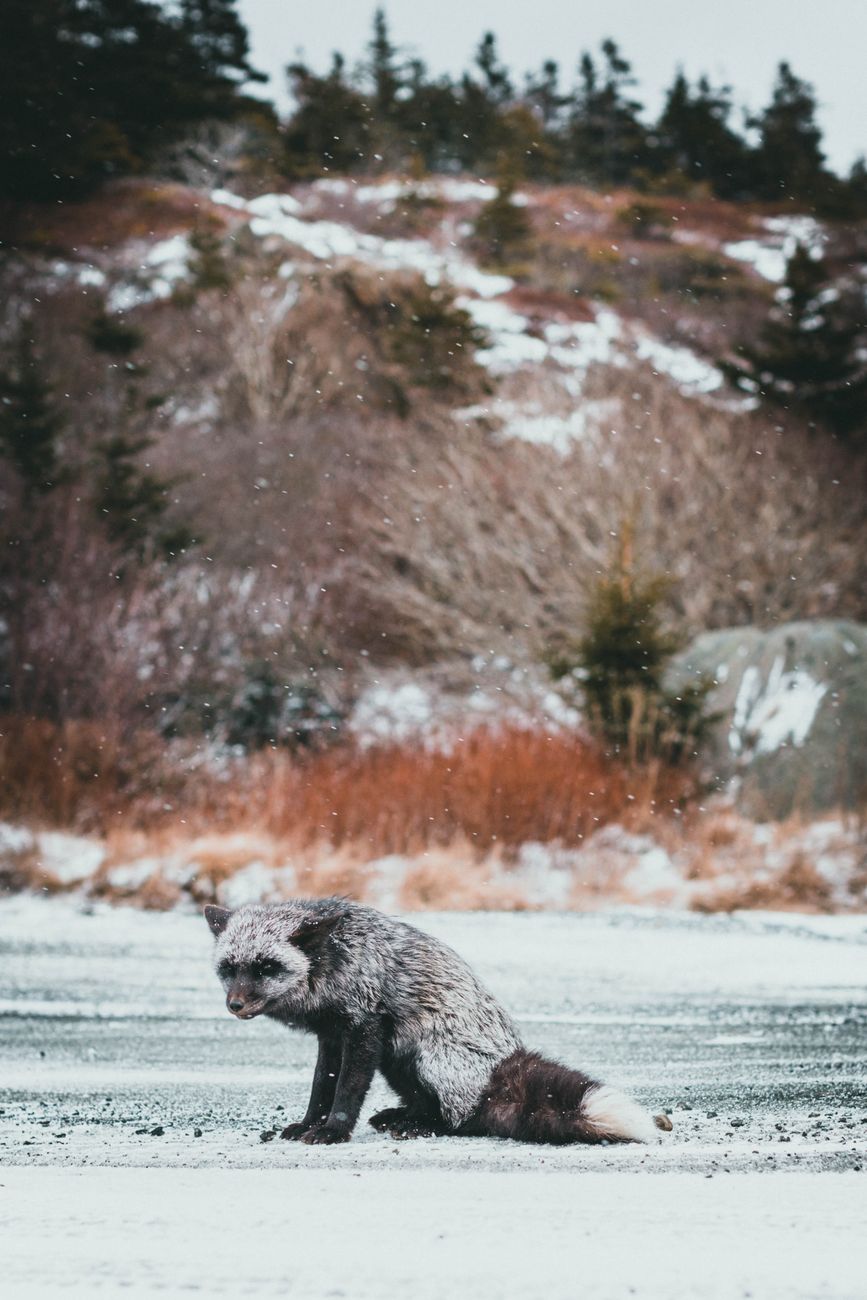
SILVER FOX
DESCRIPTION
Also called Black Fox and Arctic Fox, the Silver Fox is a melanistic form of the red fox, characterized by its striking silver-gray fur. This coloration is a result of a genetic mutation that affects the pigmentation of the fur, giving it a shimmering appearance. Silver Foxes are known for their intelligence and adaptability, often exhibiting playful behavior and complex social interactions in the wild.
FUN FACTS
- Silver Foxes are often bred for their unique coloration in fur farms, which has led to a variety of color morphs
- Interestingly, they have been domesticated in some regions, leading to the creation of the domesticated Silver Fox, which exhibits different behavioral traits compared to their wild counterparts
- | The Silver Fox is known for its vocalizations, which include barks, howls, and screams, used for communication with other foxes
- These sounds can vary significantly depending on the context, such as during mating season or when establishing territory
QUICK INFO
Lifespan3-6 years in the wild, up to 10 years in captivity
Average Weight3.6-6.8 kg
Average Length45-90 cm
Diet TypeOmnivore
Social Structuresolitary, typically living alone except during mating season or when raising young
Activity PatternNocturnal
Breeding SeasonWinter (January-March)
- Habitat
- Silver Foxes inhabit a variety of environments, including forests, grasslands, and tundra. They are highly adaptable and can thrive in both rural and urban areas.
- Biomes
- Temperate Forest, Tundra, Grassland
- Native Range
- Silver Foxes are native to North America and parts of Eurasia.
- Continent
- North America, Europe, Asia
- Countries
- Canada, United States, Russia
- Diet
- Silver Foxes primarily eat small mammals, birds, and fruits. They are opportunistic feeders and will scavenge when necessary.
- Diet Type
- Omnivore
- Favorite Food
- small mammals, birds, fruits
- Social Structure
- solitary, typically living alone except during mating season or when raising young
- Activity Pattern
- Nocturnal
- Group Size
- 1-2
- Territorial
- 1
 LC
LC
3.6-6.8 kg
Weight
45-90 cm
Length
- Coloration
- silver-gray fur with a black undercoat
- Sexual Dimorphism
- males are generally larger than females
- Lifespan
- 3-6 years in the wild, up to 10 years in captivity
- Gestation Period
- 52 days
- Offspring per Birth
- 4-6
- Sexual Maturity
- 10-12 months
- Breeding Season
- Winter (January-March)
LC
Least Concern
IUCN Red List Status
- Population Status
- The population of Silver Foxes is generally stable, but local populations can be affected by habitat loss and hunting.
- Wild Population Estimate
- unknown
- Population Trend
- Stable
- Endangered
- 0
- Threats
- Main threats include habitat destruction and hunting. In some areas, they are hunted for their fur, which can impact local populations.
- Predators
- Wolves, coyotes, and large birds of prey are known predators of Silver Foxes.
- Defense Mechanisms
- Silver Foxes rely on their agility and keen senses to evade predators, often using their speed and stealth to escape.
- Compatible Animals
- none
- Found in Zoos
- Common