


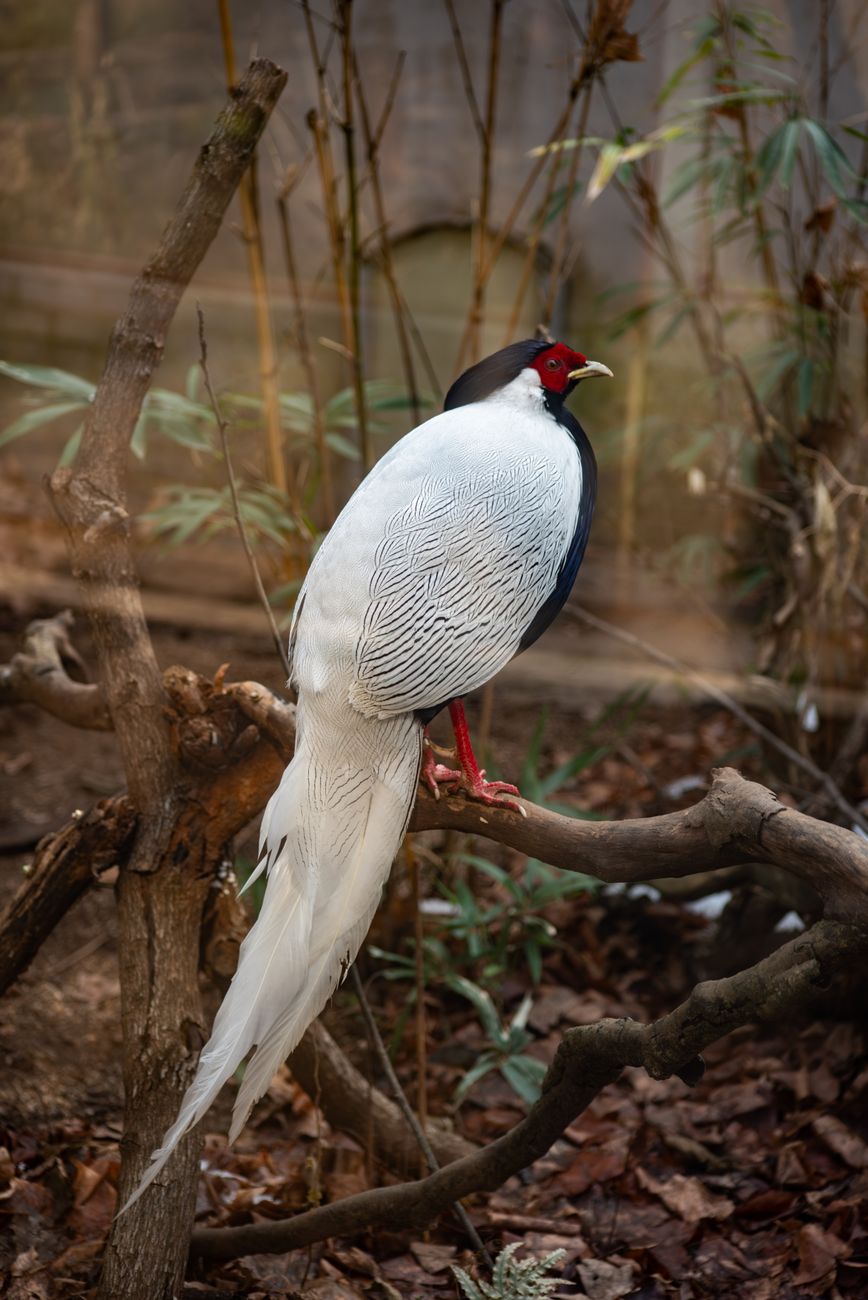
SILVER PHEASANT
Lophura nycthemera
DESCRIPTION
Silver Pheasant (Lophura nycthemera) is a striking bird known for its beautiful plumage, which features a predominantly white body with a long, flowing tail and a distinctive black crest. Males are particularly notable for their iridescent blue and green feathers, while females are more subdued in coloration, typically brown and mottled for camouflage. This species is often found in dense forests and is known for its shy and elusive behavior, preferring to stay hidden among the underbrush.
FUN FACTS
- Silver Pheasants are known for their elaborate courtship displays, where males will puff up their feathers and perform a series of calls to attract females
- Additionally, they are often considered a symbol of beauty and grace in various cultures, leading to their popularity in aviculture and ornamental bird collections
QUICK INFO
Lifespan5-10 years in the wild, up to 15 in captivity
Average Weight1-1.5 kg
Average Length70-80 cm
Diet TypeOmnivore
Social StructureThey are typically solitary or found in pairs, especially during the breeding season.
Activity PatternDiurnal
Breeding SeasonSpring (March-May)
- Habitat
- Silver Pheasants inhabit dense, moist forests, often near streams or rivers. They prefer areas with thick undergrowth for cover and foraging.
- Biomes
- Tropical Rainforest, Temperate Forest
- Native Range
- This species is native to the mountainous regions of Southeast Asia, particularly in countries like China, Vietnam, and Laos.
- Continent
- Asia
- Countries
- China, Vietnam, Laos, Myanmar
- Diet
- Silver Pheasants primarily feed on seeds, fruits, and insects, foraging on the forest floor. They are known to scratch the ground to uncover hidden food sources.
- Diet Type
- Omnivore
- Favorite Food
- seeds, fruits, insects
- Social Structure
- They are typically solitary or found in pairs, especially during the breeding season.
- Activity Pattern
- Diurnal
- Group Size
- 1-5
- Territorial
- 0
 LC
LC
 LC
LC
1-1.5 kg
Weight
70-80 cm
Length
- Coloration
- Males have a striking white body with black and iridescent blue-green accents, while females are brown and mottled.
- Sexual Dimorphism
- Males are more colorful and larger than females.
- Lifespan
- 5-10 years in the wild, up to 15 in captivity
- Offspring per Birth
- 5-12 eggs
- Sexual Maturity
- 1 year
- Breeding Season
- Spring (March-May)
LC
Least Concern
IUCN Red List Status
- Population Status
- The population is currently stable, but habitat loss poses a threat.
- Wild Population Estimate
- Unknown
- Population Trend
- Stable
- Endangered
- 0
- Threats
- Main threats include habitat destruction due to deforestation and hunting. These factors have led to localized declines in certain areas.
- Predators
- Main predators include large birds of prey, snakes, and mammals such as foxes and wild cats.
- Defense Mechanisms
- Silver Pheasants rely on their camouflage and ability to remain hidden to avoid predators.
- Compatible Animals
- none
- Found in Zoos
- Uncommon