


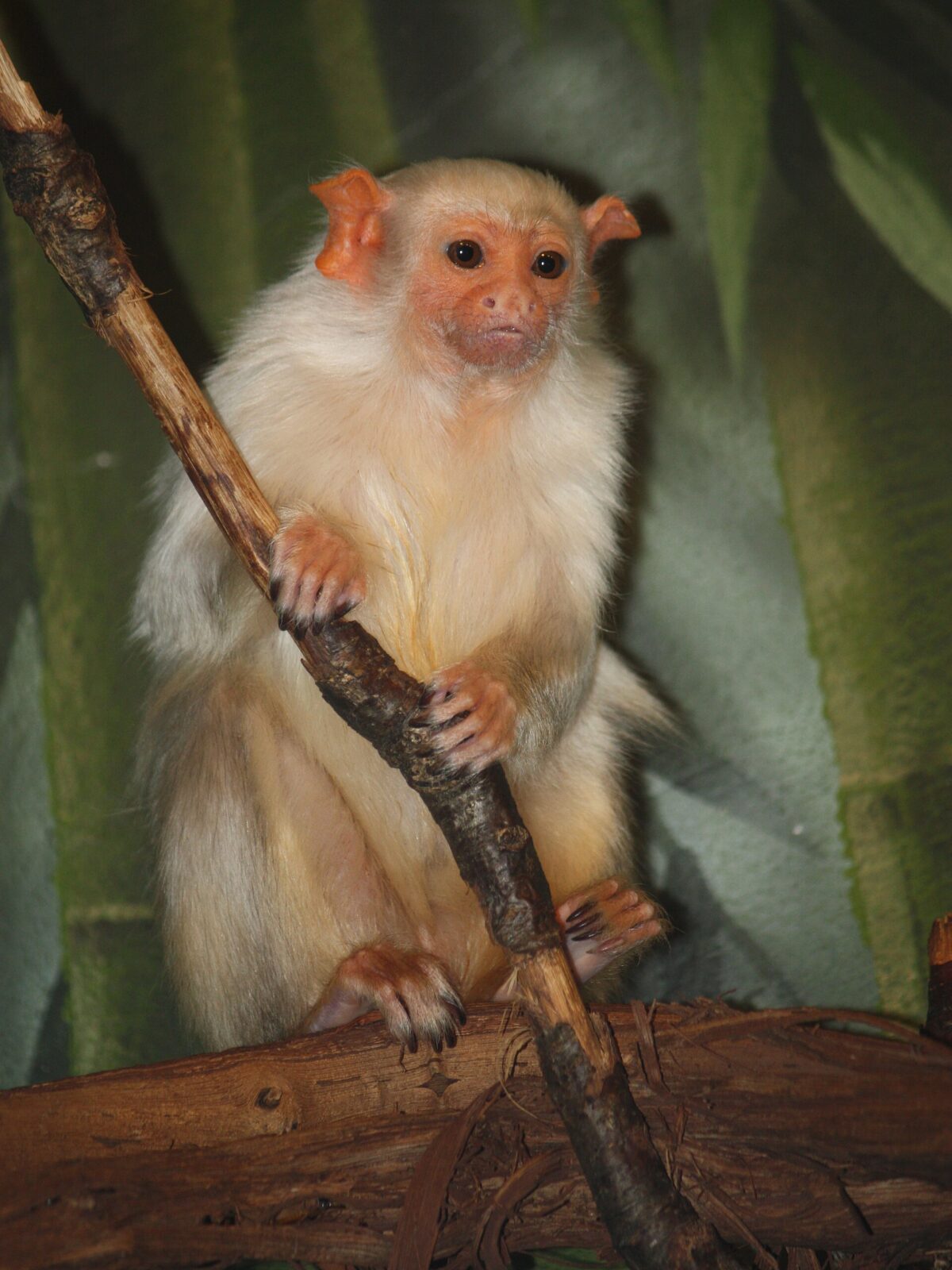
SILVERY MARMOSET
Mico argentatus
DESCRIPTION
Silvery Marmoset (Mico argentatus) is also known as the Silver Marmoset, characterized by its striking silvery-gray fur and distinctive facial markings. This small primate exhibits a lively and social behavior, often seen leaping between branches in its forest habitat. They are known for their vocalizations, which play a crucial role in maintaining group cohesion and communication within their social structure.
FUN FACTS
- Silvery Marmosets are known for their complex social structures, which can include cooperative breeding where older siblings help care for younger ones
- This behavior not only strengthens family bonds but also increases the survival rate of the offspring
- | These marmosets have a unique way of communicating with each other, using a variety of vocalizations that can indicate different emotions or alerts
- Their ability to convey messages through sound is crucial for maintaining group dynamics and ensuring safety in their dense forest environment
QUICK INFO
Lifespan10-15 years in the wild, up to 20 years in captivi
Average Weight300-500 g
Average Length25-30 cm
Diet TypeOmnivore
Social Structuregroup — they typically live in small family groups consisting of a breeding pair and their offspring.
Activity PatternDiurnal
Breeding SeasonYear-round, with peaks depending on environmental conditions
- Habitat
- Silvery Marmosets inhabit tropical rainforests, particularly in areas with dense vegetation. They prefer the upper canopy where they can easily find food and evade predators.
- Biomes
- Tropical Rainforest
- Native Range
- They are native to the Amazon rainforest, specifically in parts of Brazil.
- Continent
- South America
- Countries
- Brazil
- Diet
- Silvery Marmosets primarily consume a diet of fruits, insects, and small vertebrates. They are known to forage in trees, using their dexterous hands to extract food from crevices.
- Diet Type
- Omnivore
- Favorite Food
- fruits, insects
- Social Structure
- group — they typically live in small family groups consisting of a breeding pair and their offspring.
- Activity Pattern
- Diurnal
- Group Size
- 4-15
- Territorial
- 1
 VU
VU
 LC
LC
300-500 g
Weight
25-30 cm
Length
- Coloration
- silvery-gray fur with darker facial markings
- Sexual Dimorphism
- males and females are similar in size and appearance
- Lifespan
- 10-15 years in the wild, up to 20 years in captivi
- Gestation Period
- 145 days
- Offspring per Birth
- 1-3
- Sexual Maturity
- 1-2 years
- Breeding Season
- Year-round, with peaks depending on environmental conditions
LC
Least Concern
IUCN Red List Status
- Population Status
- The population is currently stable, but habitat loss poses a potential threat.
- Wild Population Estimate
- Unknown
- Population Trend
- Stable
- Endangered
- 0
- Threats
- Main threats include habitat destruction due to deforestation and fragmentation of their rainforest habitat. Additionally, they face risks from the illegal pet trade.
- Predators
- Birds of prey, snakes, and larger mammals can pose threats to Silvery Marmosets.
- Defense Mechanisms
- They rely on their agility and social structure to evade predators, often using alarm calls to warn others of danger.
- Compatible Animals
- other small primates, such as tamarins
- Found in Zoos
- Uncommon