


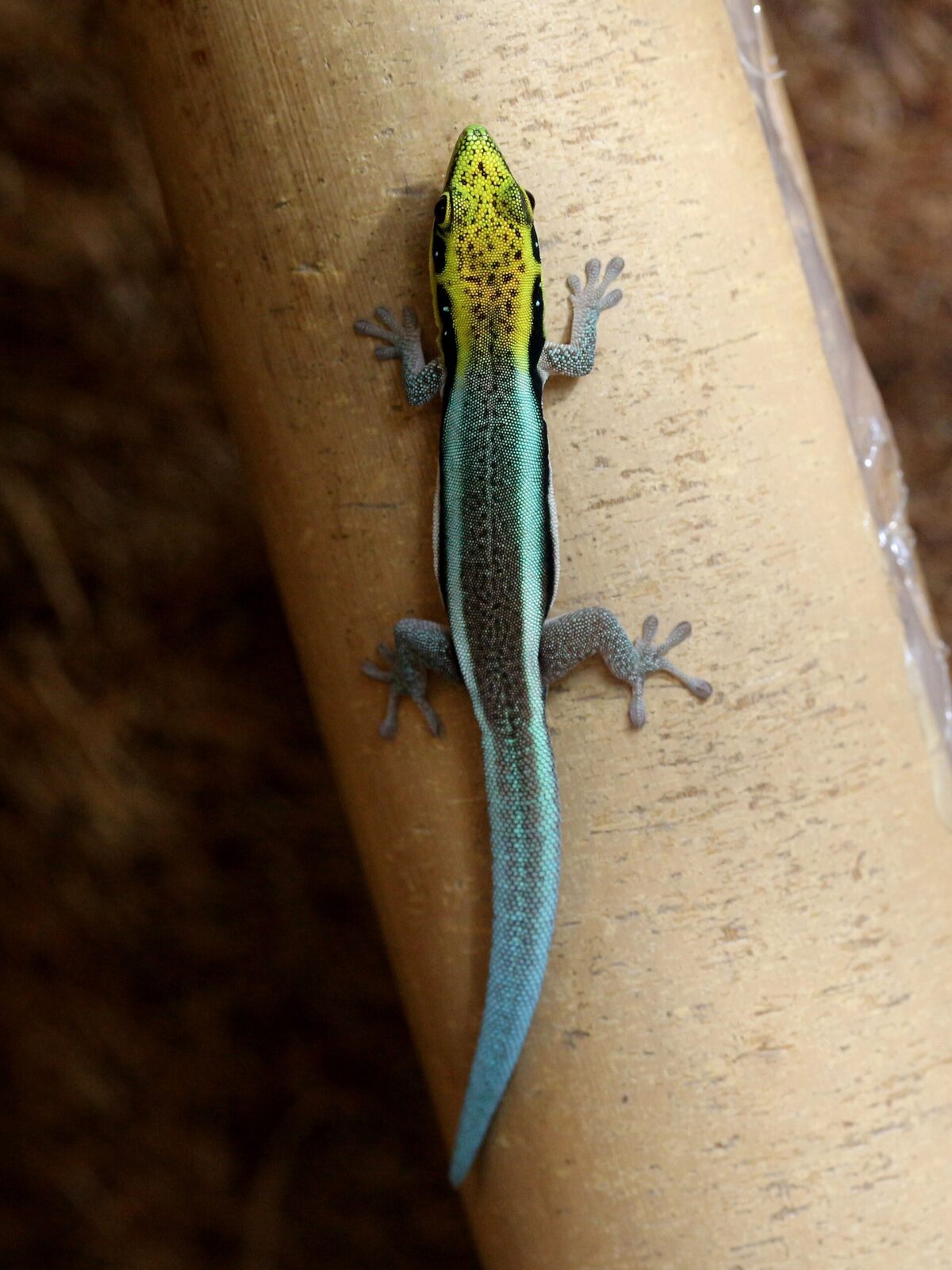
SKY BLUE DAY GECKO
Phelsuma klemmeri
DESCRIPTION
Sky Blue Day Gecko (Phelsuma klemmeri) is commonly known as Klemmer's Day Gecko. This striking species is characterized by its vibrant blue coloration, which can vary in intensity among individuals. They are primarily arboreal, spending much of their time in trees and shrubs, where they exhibit a diurnal lifestyle, actively foraging for food during the day.
FUN FACTS
- Sky Blue Day Geckos are known for their unique ability to change color slightly based on their mood and environmental conditions, which helps them blend into their surroundings
- Additionally, they have a specialized toe structure that allows them to climb smooth surfaces effortlessly, making them adept at navigating their arboreal habitats
QUICK INFO
Lifespan5-10 years in the wild, up to 15 years in captivit
Average Length15-20 cm
Diet TypeOmnivore
Social Structuresolitary, occasionally seen in pairs during breeding
Activity PatternDiurnal
Breeding SeasonSpring to early summer
- Habitat
- Sky Blue Day Geckos inhabit tropical forests and shrublands, often found in areas with plenty of vegetation. They prefer warm, humid environments that provide ample cover and food sources.
- Biomes
- Tropical Rainforest, Temperate Forest
- Native Range
- This species is native to Madagascar, specifically found in the eastern rainforests of the island.
- Continent
- Africa
- Countries
- Madagascar
- Diet
- They primarily feed on insects and nectar, showcasing a preference for small invertebrates. This diet allows them to thrive in their natural habitat, where food sources are abundant.
- Diet Type
- Omnivore
- Favorite Food
- insects, nectar
- Social Structure
- solitary, occasionally seen in pairs during breeding
- Activity Pattern
- Diurnal
- Group Size
- 1-2
- Territorial
- 0
 VU
VU
 LC
LC
15-20 cm
Length
- Coloration
- vibrant blue with greenish-yellow spots
- Sexual Dimorphism
- males are typically larger and more brightly colored than females
- Lifespan
- 5-10 years in the wild, up to 15 years in captivit
- Offspring per Birth
- 2-4
- Sexual Maturity
- 1-2 years
- Breeding Season
- Spring to early summer
LC
Least Concern
IUCN Red List Status
- Population Status
- The population is currently stable, but habitat loss poses a potential threat.
- Wild Population Estimate
- unknown
- Population Trend
- Stable
- Endangered
- 0
- Threats
- Main threats include habitat destruction due to deforestation and human encroachment. These factors can lead to a decline in suitable living conditions and food availability.
- Predators
- birds of prey, snakes, and larger reptiles
- Defense Mechanisms
- They can drop their tails to escape predators, which can later regenerate.
- Found in Zoos
- Uncommon