


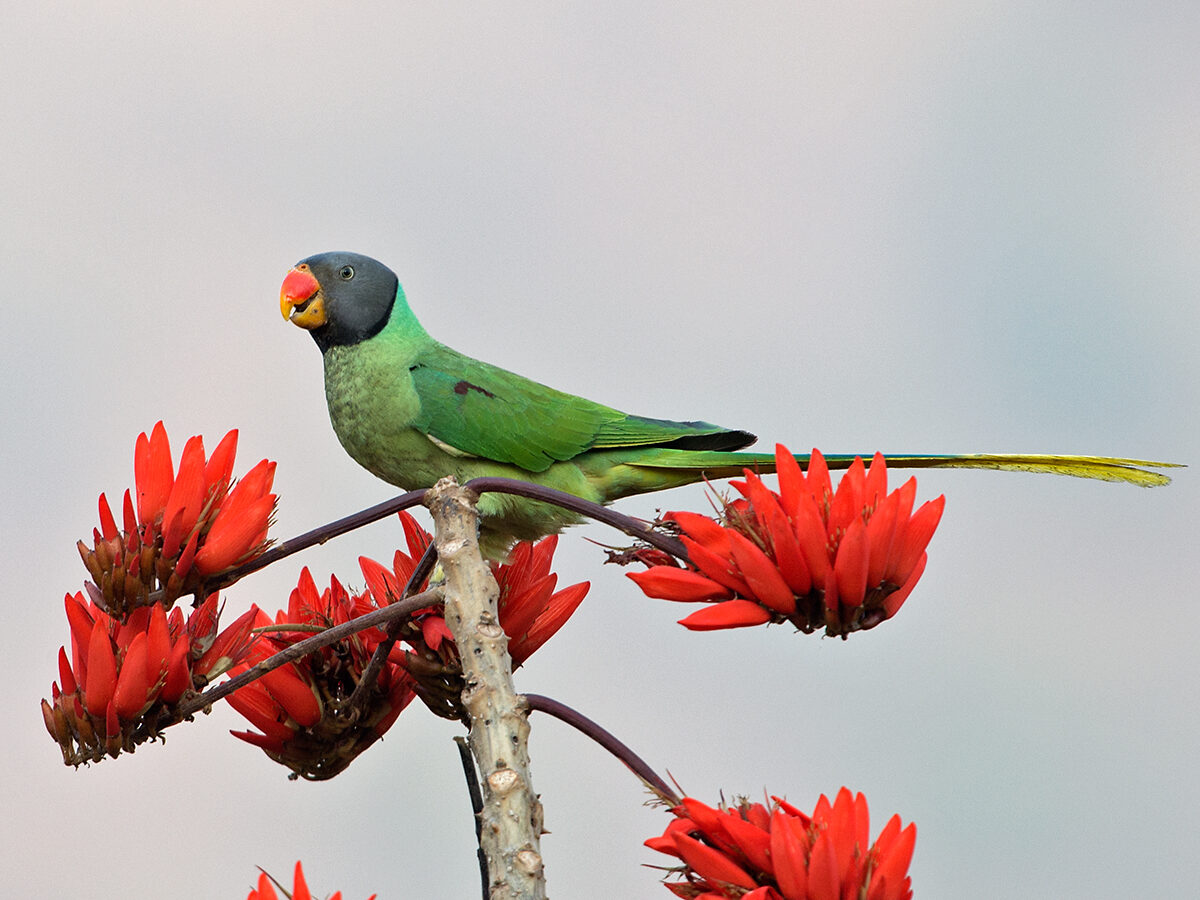
SLATY-HEADED PARAKEET
Psittacula himalayana
DESCRIPTION
Slaty-headed Parakeet (Psittacula himalayana) is commonly known as the Himalayan Parakeet and is characterized by its distinctive slate-gray head and neck, contrasting with a vibrant green body. This medium-sized parakeet exhibits a long, pointed tail and a slightly curved beak, which is typical of the parrot family. They are social birds often found in flocks, displaying playful behavior and engaging in vocalizations that include a variety of chirps and whistles.
FUN FACTS
- Slaty-headed Parakeets are known for their intelligence and ability to mimic sounds, including human speech, making them popular among bird enthusiasts
- They also play a crucial role in their ecosystem by helping to disperse seeds, which contributes to forest regeneration and biodiversity.| These parakeets are highly social and often engage in mutual grooming, which strengthens social bonds within their flocks
- Their playful nature and vibrant colors make them a favorite among bird watchers and photographers
QUICK INFO
Lifespan15-20 years in the wild, up to 30 in captivity
Average Weight120-150 g
Average Length30-35 cm
Diet TypeHerbivore
Social StructureThey are typically found in pairs or small groups, often forming larger flocks outside of the breeding season.
Activity PatternDiurnal
Breeding SeasonSpring (March-May)
- Habitat
- These parakeets inhabit subtropical and tropical forests, as well as open woodlands and cultivated areas. They prefer areas with abundant trees for nesting and foraging.
- Biomes
- Tropical Rainforest, Temperate Forest
- Native Range
- The native range of the Slaty-headed Parakeet includes the Himalayan foothills and parts of northern India, Nepal, and Bhutan.
- Continent
- Asia
- Countries
- India, Nepal, Bhutan
- Diet
- Slaty-headed Parakeets primarily feed on seeds, fruits, and nuts, often foraging in trees and shrubs. They are known to enjoy a variety of plant materials, which they skillfully crack open with their strong beaks.
- Diet Type
- Herbivore
- Favorite Food
- seeds, fruits, nuts
- Social Structure
- They are typically found in pairs or small groups, often forming larger flocks outside of the breeding season.
- Activity Pattern
- Diurnal
- Group Size
- 5-30
- Territorial
- 0
 LC
LC
120-150 g
Weight
30-35 cm
Length
- Coloration
- The Slaty-headed Parakeet has a slate-gray head and neck, with a bright green body and a long, pointed tail that is green with blue tips.
- Sexual Dimorphism
- Males and females are similar in appearance, but males tend to have slightly brighter coloration.
- Lifespan
- 15-20 years in the wild, up to 30 in captivity
- Offspring per Birth
- 3-5
- Sexual Maturity
- 2-3 years
- Breeding Season
- Spring (March-May)
LC
Least Concern
IUCN Red List Status
- Population Status
- The population of Slaty-headed Parakeets is currently stable, but they face habitat loss in some areas.
- Wild Population Estimate
- 50,000-100,000
- Population Trend
- Stable
- Endangered
- 0
- Threats
- Main threats include habitat destruction due to deforestation and agricultural expansion. They are also sometimes captured for the pet trade, which can impact local populations.
- Predators
- Natural predators include birds of prey such as hawks and eagles, as well as snakes that may target their nests.
- Defense Mechanisms
- They often use their agility and speed to evade predators, and their vocalizations can serve as an alarm to warn other flock members.
- Compatible Animals
- other parakeets, small parrots
- Found in Zoos
- Uncommon