


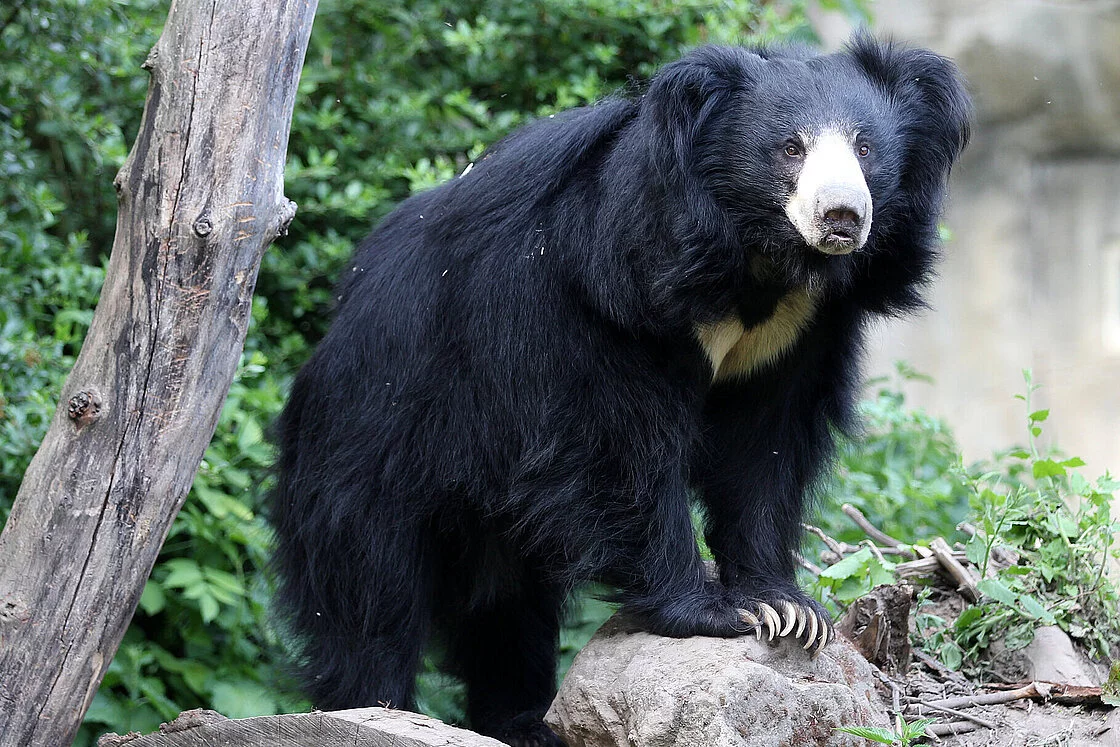
SLOTH BEAR
DESCRIPTION
The Sloth Bear is a medium-sized bear species native to the Indian subcontinent. It is characterized by its shaggy black fur, long snout, and a unique diet primarily consisting of insects and fruits.
FUN FACTS
- Sloth Bears are known for their unique feeding behavior, using their lips to suck up insects | They can consume up to 20,000 insects in a single night | Unlike other bears, they do not hibernate
QUICK INFO
Lifespan20-30 years in the wild, up to 35 in captivity
Average Weight80-140 kg
Average Length1.5-2.1 m
Diet TypeInsectivore
Social Structuresolitary, typically live alone except for mothers with cubs
Activity PatternNocturnal
Breeding SeasonYear-round, with peaks during the monsoon season
- Habitat
- Sloth Bears inhabit a variety of forested areas, including tropical and subtropical forests. They are also found in grasslands and scrublands.
- Biomes
- Tropical Rainforest, Savanna, Grassland
- Native Range
- The Sloth Bear is found across the Indian subcontinent, including India, Nepal, Bhutan, and Sri Lanka.
- Continent
- Asia
- Countries
- India, Nepal, Bhutan, Sri Lanka
- Diet
- Sloth Bears primarily feed on termites, ants, and various fruits. They use their long claws to dig into termite mounds and ant hills.
- Diet Type
- Insectivore
- Favorite Food
- termites, fruits
- Social Structure
- solitary, typically live alone except for mothers with cubs
- Activity Pattern
- Nocturnal
- Group Size
- 1
- Territorial
- 0
80-140 kg
Weight
1.5-2.1 m
Length
1.0 m at shoulder
Height (Shoulder)
- Coloration
- shaggy black fur with a distinctive white or cream-colored V-shaped marking on the chest
- Sexual Dimorphism
- males are generally larger than females
- Lifespan
- 20-30 years in the wild, up to 35 in captivity
- Gestation Period
- 210 days
- Offspring per Birth
- 1-2
- Sexual Maturity
- 3-4 years
- Breeding Season
- Year-round, with peaks during the monsoon season
VU
Vulnerable
IUCN Red List Status
- Population Status
- The population is currently declining due to habitat loss and poaching.
- Wild Population Estimate
- 10,000-20,000
- Population Trend
- Decreasing
- Endangered
- 1
- Threats
- Main threats include habitat destruction, poaching for body parts, and human-wildlife conflict. Their habitats are increasingly fragmented due to agriculture and urbanization.
- Conservation Program
- Various local conservation programs aimed at habitat protection and awareness
- Defense Mechanisms
- They can defend themselves with their strong claws and teeth, and they may also make loud vocalizations to scare off threats.
- Found in Zoos
- Uncommon