


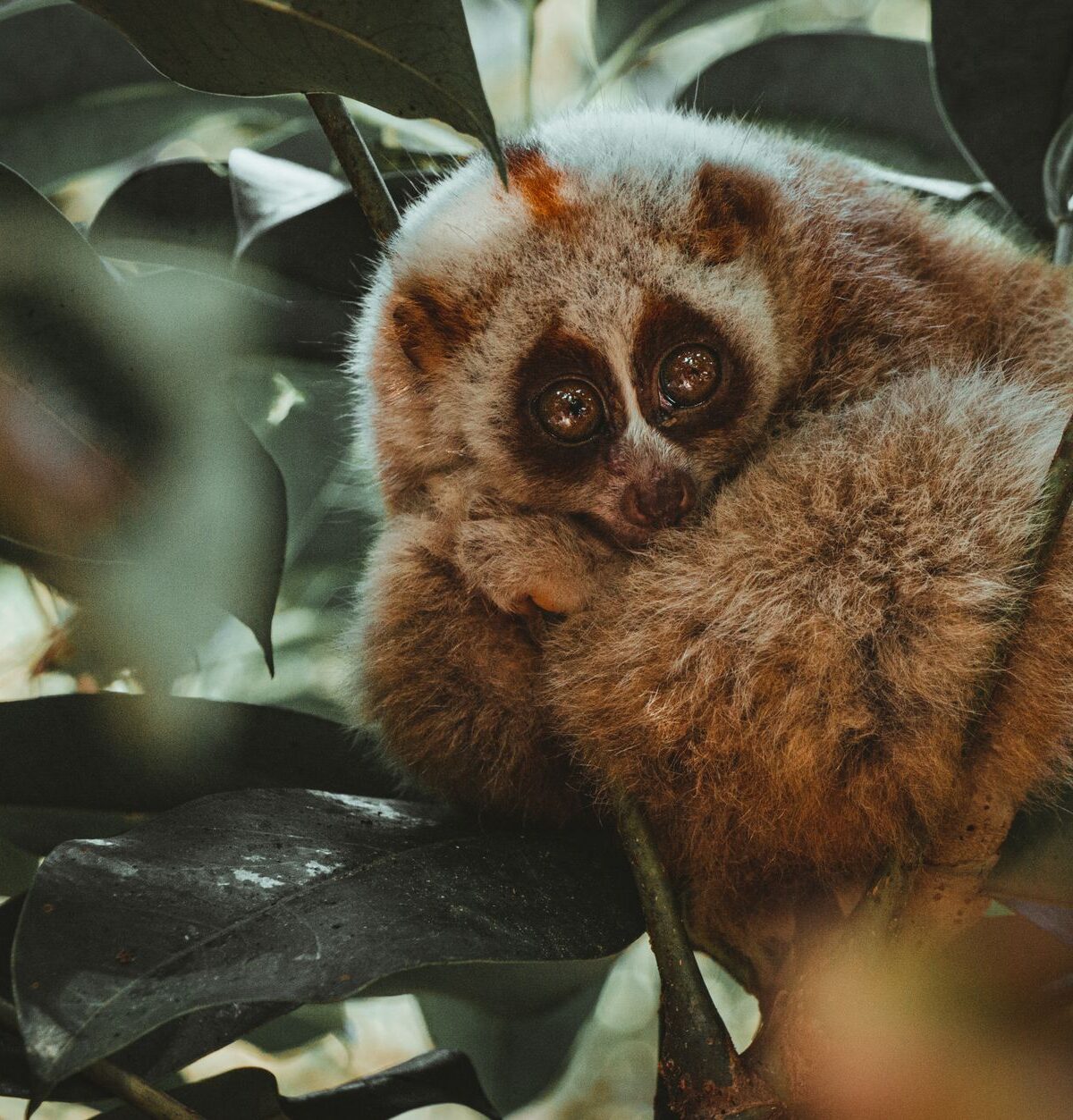
SLOW LORIS
DESCRIPTION
Slow Loris is commonly known as the Pottos and Nycticebus, which are small, nocturnal primates found in Southeast Asia. They have large, round eyes that provide excellent night vision and a distinctive slow, deliberate movement that helps them avoid detection by predators. Their unique appearance is complemented by a soft, dense fur that varies in color from gray to brown, often with lighter patches on their faces and limbs.
FUN FACTS
- Slow Lorises have a unique method of locomotion, moving slowly and deliberately to avoid detection by predators, which is a fascinating adaptation for their survival
- Additionally, they are one of the few venomous mammals, as their elbow secretion can cause allergic reactions in humans and is used as a defense mechanism against threats
QUICK INFO
Lifespan10-15 years in the wild, up to 20 years in captivi
Average Weight0.5-1.0 kg
Average Length25-38 cm
Diet TypeOmnivore
Social Structuresolitary, though they may occasionally be seen in pairs during mating season.
Activity PatternNocturnal
Breeding SeasonYear-round, with peaks depending on the region
- Habitat
- Slow Lorises inhabit tropical and subtropical forests, often preferring areas with dense vegetation for cover. They are arboreal, spending most of their time in trees where they can find food and avoid ground predators.
- Biomes
- Tropical Rainforest, Subtropical Forest
- Native Range
- Southeast Asia, including countries like Indonesia, Malaysia, Thailand, and Vietnam.
- Continent
- Asia
- Countries
- Indonesia, Malaysia, Thailand, Vietnam, India
- Diet
- Slow Lorises primarily consume a diet of fruits, leaves, and insects, with a particular preference for gum from trees. They have a specialized digestive system that allows them to process these foods efficiently.
- Diet Type
- Omnivore
- Favorite Food
- fruits, tree gum, insects
- Social Structure
- solitary, though they may occasionally be seen in pairs during mating season.
- Activity Pattern
- Nocturnal
- Group Size
- 1-2
- Territorial
- 1
 VU
VU
 LC
LC
0.5-1.0 kg
Weight
25-38 cm
Length
- Coloration
- soft, dense fur that ranges from gray to brown with lighter patches
- Sexual Dimorphism
- males are generally larger than females
- Lifespan
- 10-15 years in the wild, up to 20 years in captivi
- Gestation Period
- 6 months
- Offspring per Birth
- 1-2
- Sexual Maturity
- 2-3 years
- Breeding Season
- Year-round, with peaks depending on the region
EN
Endangered
IUCN Red List Status
- Population Status
- The population of Slow Lorises is declining due to habitat loss and illegal pet trade.
- Wild Population Estimate
- unknown
- Population Trend
- Decreasing
- Endangered
- 1
- Threats
- Main threats include habitat destruction due to deforestation and the illegal wildlife trade, where they are captured for the pet trade. Their slow movement makes them particularly vulnerable to predators and human activities.
- Predators
- Birds of prey, snakes, and larger mammals may prey on Slow Lorises, although they have few natural predators due to their nocturnal habits and arboreal lifestyle.
- Defense Mechanisms
- Slow Lorises can secrete a toxic substance from their elbows, which they can lick and apply to their fur, making them unpalatable to predators.
- Found in Zoos
- Uncommon