


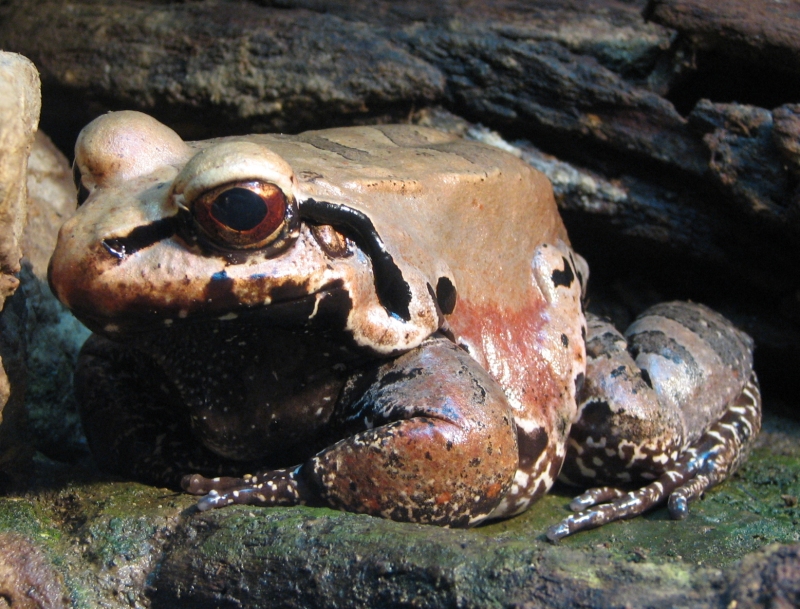
SMOKY JUNGLE FROG
Leptodactylus pentadactylus
DESCRIPTION
Smoky Jungle Frog (Leptodactylus pentadactylus) is a large, robust frog known for its distinctive smoky coloration, which helps it blend into its rainforest habitat. This species exhibits a variety of vocalizations, particularly during the breeding season, where males call to attract females. They are primarily found in tropical rainforests, where they thrive in moist environments and are often seen near water bodies.
FUN FACTS
- Smoky Jungle Frogs are known for their impressive vocal abilities, with males producing a variety of calls that can be heard over long distances
- These calls are not only used for attracting mates but also for establishing territory among competing males
- | Interestingly, Smoky Jungle Frogs can absorb water through their skin, allowing them to stay hydrated in their humid rainforest environment
- This adaptation is crucial for their survival, especially during dry spells when water sources may become scarce
QUICK INFO
Lifespan5-10 years in the wild
Average Weight200-300 g
Average Length10-15 cm
Diet TypeCarnivore
Social Structuresolitary, though males may gather in groups during the breeding season to call for females
Activity PatternNocturnal
Breeding SeasonWet season (varies by region)
- Habitat
- This species inhabits tropical rainforests, often near streams and ponds where they can find ample food and breeding sites. They prefer areas with dense vegetation that provides cover from predators.
- Biomes
- Tropical Rainforest
- Native Range
- Leptodactylus pentadactylus is native to the Amazon Basin, primarily found in countries like Brazil, Colombia, and Peru.
- Continent
- South America
- Countries
- Brazil, Colombia, Peru
- Diet
- Smoky Jungle Frogs are carnivorous, primarily feeding on insects and other small invertebrates. They are opportunistic feeders and will consume a variety of prey items available in their habitat.
- Diet Type
- Carnivore
- Favorite Food
- insects, small invertebrates
- Social Structure
- solitary, though males may gather in groups during the breeding season to call for females
- Activity Pattern
- Nocturnal
- Group Size
- 1-5
- Territorial
- 0
 VU
VU
 LC
LC
200-300 g
Weight
10-15 cm
Length
- Coloration
- smoky gray to brown with darker mottling, providing excellent camouflage
- Sexual Dimorphism
- males are generally smaller than females and have more pronounced vocal sacs
- Lifespan
- 5-10 years in the wild
- Offspring per Birth
- up to 1000 eggs
- Sexual Maturity
- 1-2 years
- Breeding Season
- Wet season (varies by region)
LC
Least Concern
IUCN Red List Status
- Population Status
- The population status of Smoky Jungle Frogs is currently stable, though habitat loss poses a potential threat.
- Wild Population Estimate
- unknown
- Population Trend
- Stable
- Endangered
- 0
- Threats
- Main threats include habitat destruction due to deforestation and pollution of water bodies. Climate change may also impact their breeding habitats and food availability.
- Predators
- birds, snakes, larger amphibians
- Defense Mechanisms
- They rely on their cryptic coloration for camouflage to avoid detection by predators.
- Found in Zoos
- Uncommon