


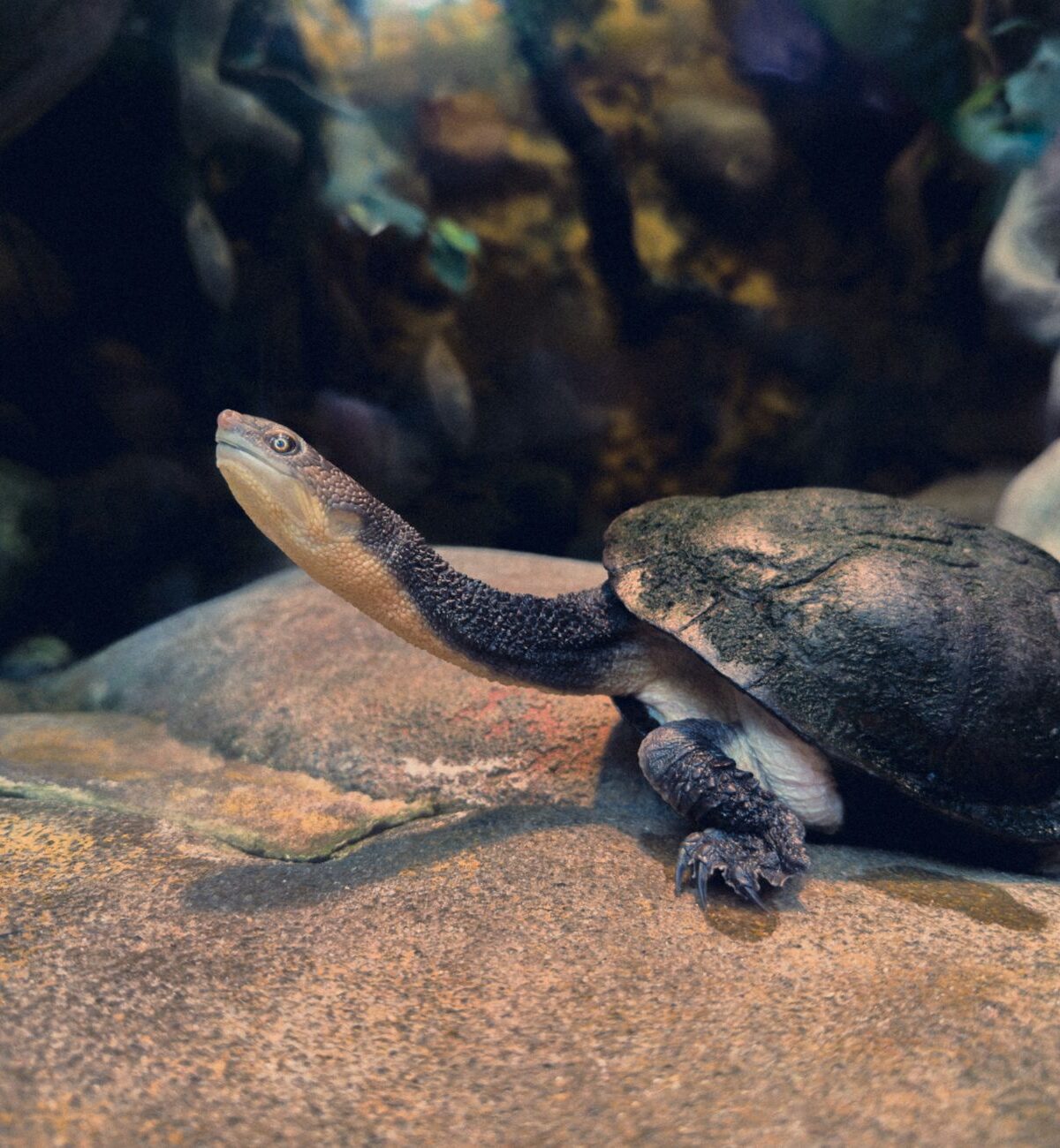
SNAKE-NECKED TURTLE
Chelodina longicollis
DESCRIPTION
Snake-necked Turtle (Chelodina longicollis) is commonly known as the Long-necked Turtle and is characterized by its elongated neck, which can be stretched out to capture prey. This turtle has a streamlined body and a flat shell, allowing it to navigate through water with ease. It is primarily found in freshwater habitats, where it exhibits a semi-aquatic lifestyle, often seen basking on logs or submerged vegetation.
FUN FACTS
- The Snake-necked Turtle is known for its unique hunting technique, where it uses its long neck to strike at prey with remarkable speed and precision
- This adaptation allows it to catch fish and invertebrates that are often out of reach for other turtles
- | Interestingly, these turtles can hold their breath for up to 30 minutes while submerged, making them adept at avoiding predators and hunting in their aquatic environments
QUICK INFO
Lifespan20-30 years in the wild, up to 40 in captivity
Average Weight1-2 kg
Average Length20-30 cm
Diet TypeCarnivore
Social Structuresolitary
Activity PatternDiurnal
Breeding SeasonSpring to early summer
- Habitat
- This species inhabits a variety of freshwater environments, including rivers, lakes, and swamps. It prefers areas with abundant vegetation and submerged structures for shelter.
- Biomes
- Freshwater, Wetlands
- Native Range
- The native range of the Snake-necked Turtle includes eastern and southern Australia, particularly in regions with suitable freshwater habitats.
- Continent
- Australia
- Countries
- Australia
- Diet
- The Snake-necked Turtle primarily feeds on aquatic invertebrates and small fish. Its long neck allows it to reach prey that is otherwise difficult to access.
- Diet Type
- Carnivore
- Favorite Food
- aquatic invertebrates, small fish
- Social Structure
- solitary
- Activity Pattern
- Diurnal
- Group Size
- 1-5
- Territorial
- 0
 VU
VU
 LC
LC
1-2 kg
Weight
20-30 cm
Length
- Coloration
- The coloration of the Snake-necked Turtle is typically dark brown to olive, with lighter markings on the shell.
- Sexual Dimorphism
- Males are generally smaller than females and have a more concave plastron.
- Lifespan
- 20-30 years in the wild, up to 40 in captivity
- Offspring per Birth
- 2-10
- Sexual Maturity
- 4-5 years
- Breeding Season
- Spring to early summer
LC
Least Concern
IUCN Red List Status
- Population Status
- The population of Snake-necked Turtles is currently stable, but habitat loss poses a potential threat.
- Wild Population Estimate
- Unknown
- Population Trend
- Stable
- Endangered
- 0
- Threats
- Main threats include habitat destruction due to urban development and pollution in freshwater systems. Additionally, they are vulnerable to predation by introduced species such as foxes and dogs.
- Predators
- Birds of prey, foxes, domestic dogs
- Defense Mechanisms
- When threatened, Snake-necked Turtles can retract their heads into their shells and remain motionless to avoid detection.
- Found in Zoos
- Common