


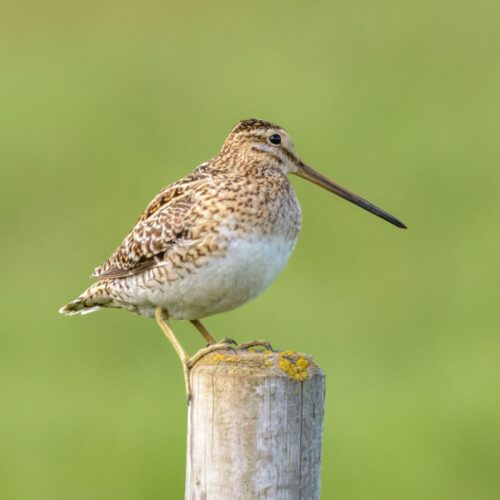
SNIPE
DESCRIPTION
Snipe are medium-sized wading birds known for their long, slender bills and cryptic plumage that helps them blend into their wetland habitats. They exhibit a unique behavior of 'zigzag' flight, which is often accompanied by a distinctive drumming sound produced by the air rushing through their wing feathers. Ecologically, snipe are important indicators of wetland health, as they rely on these environments for feeding and breeding.
FUN FACTS
- Snipe have a unique courtship display that includes aerial acrobatics and a distinctive drumming sound made by their wings during flight
- This drumming is produced by the air rushing through their wing feathers, creating a sound that can be heard from a distance
- | The term 'snipe' is often used in hunting and birdwatching contexts, and these birds are known for their elusive nature, making them a challenging target for hunters
- Their ability to blend into their surroundings and their quick, erratic flight patterns contribute to their reputation as difficult to catch
QUICK INFO
Lifespan5-10 years in the wild
Average Weight150-300 g
Average Length25-30 cm
Diet TypeInsectivore
Social Structuresolitary or in small groups, often seen alone or in pairs during breeding season
Activity PatternCrepuscular
Breeding SeasonSpring (April-June)
- Habitat
- Snipe inhabit a variety of wetland environments, including marshes, bogs, and wet grasslands. They prefer areas with dense vegetation that provides cover for nesting and foraging.
- Biomes
- Wetlands, Grasslands
- Native Range
- Snipe are found across North America, Europe, and parts of Asia, migrating seasonally between breeding and wintering grounds.
- Continent
- North America, Europe, Asia
- Countries
- United States, Canada, United Kingdom, France, Germany, Russia
- Diet
- Snipe primarily feed on invertebrates, including earthworms, insects, and crustaceans, which they probe for in soft mud and shallow water. They may also consume plant material occasionally.
- Diet Type
- Insectivore
- Favorite Food
- earthworms, insects
- Social Structure
- solitary or in small groups, often seen alone or in pairs during breeding season
- Activity Pattern
- Crepuscular
- Group Size
- 1-5
- Territorial
- 1
 CR
CR
150-300 g
Weight
25-30 cm
Length
- Coloration
- brown and mottled, providing excellent camouflage
- Sexual Dimorphism
- males are generally smaller than females
- Lifespan
- 5-10 years in the wild
- Offspring per Birth
- 4
- Sexual Maturity
- 1 year
- Breeding Season
- Spring (April-June)
LC
Least Concern
IUCN Red List Status
- Population Status
- Snipe populations are generally stable, but some local declines have been noted due to habitat loss.
- Wild Population Estimate
- unknown
- Population Trend
- Stable
- Endangered
- 0
- Threats
- Main threats include habitat destruction due to agricultural expansion and wetland drainage. Climate change also poses a risk by altering their breeding and feeding habitats.
- Predators
- foxes, hawks, owls, and larger birds of prey
- Defense Mechanisms
- Snipe rely on their cryptic coloration and ability to remain motionless to avoid detection by predators.
- Found in Zoos
- Rare