


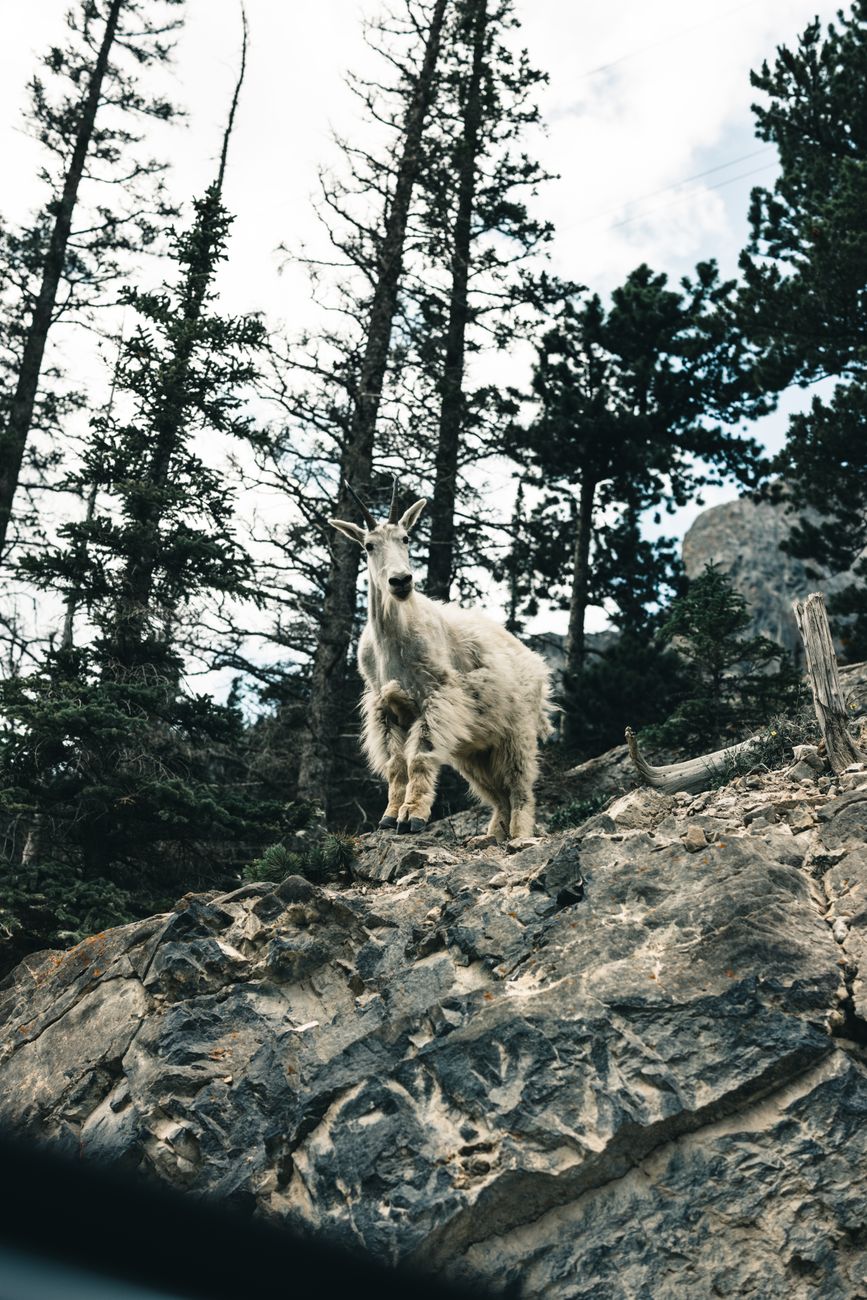
SNOW GOAT
DESCRIPTION
Also called Mountain Goat, the Snow Goat is a robust and agile ungulate known for its thick white fur, which provides insulation against cold temperatures. These animals have strong, curved horns and a stocky build, allowing them to navigate steep, rocky terrains with ease. Snow Goats are social animals, often found in small groups, and they exhibit a range of vocalizations to communicate with one another.
FUN FACTS
- Snow Goats have specialized hooves that provide excellent traction on rocky surfaces, allowing them to climb steep cliffs with ease
- Their thick fur not only keeps them warm but also helps them blend into their snowy surroundings, making them less visible to predators.|Despite their name, Snow Goats are not true goats but are more closely related to antelopes and sheep
- They are known for their impressive jumping ability, which can reach distances of up to 12 feet in a single leap
QUICK INFO
Lifespan12-15 years in the wild, up to 20 years in captivi
Average Weight45-125 kg
Average Length1.2-1.5 m
Diet TypeHerbivore
Social Structuregroup — they typically live in small herds consisting of females and their young, while males may be more solitary or form bachelor groups.
Activity PatternDiurnal
Breeding SeasonFall (November-December)
- Habitat
- Snow Goats inhabit steep, rocky mountain ranges, often at high elevations where vegetation is sparse. They are well-adapted to cold, rugged environments, which provide them with both food and protection from predators.
- Biomes
- Mountain, Alpine
- Native Range
- Snow Goats are native to the mountainous regions of North America, particularly in the western United States and Canada.
- Continent
- North America
- Countries
- United States, Canada
- Diet
- Snow Goats primarily graze on grasses, shrubs, and other vegetation found in their mountainous habitats. They are known to be selective feeders, often choosing the most nutritious plants available.
- Diet Type
- Herbivore
- Favorite Food
- grasses, shrubs
- Social Structure
- group — they typically live in small herds consisting of females and their young, while males may be more solitary or form bachelor groups.
- Activity Pattern
- Diurnal
- Group Size
- 5-15
- Territorial
- 0
 LC
LC
LC
LC
 LC
LC
45-125 kg
Weight
1.2-1.5 m
Length
0.9-1.1 m at shoulder
Height (Shoulder)
- Coloration
- thick white fur with a shaggy appearance
- Sexual Dimorphism
- males are generally larger than females and have more prominent horns
- Lifespan
- 12-15 years in the wild, up to 20 years in captivi
- Gestation Period
- 150 days
- Offspring per Birth
- 1-2
- Sexual Maturity
- 2-3 years
- Breeding Season
- Fall (November-December)
LC
Least Concern
IUCN Red List Status
- Population Status
- The population of Snow Goats is generally stable, but localized declines have been observed due to habitat loss and hunting.
- Wild Population Estimate
- approximately 100,000
- Population Trend
- Stable
- Endangered
- 0
- Threats
- Main threats to Snow Goats include habitat loss due to human encroachment and climate change, which affects their alpine environments. Additionally, hunting and predation by large carnivores can impact local populations.
- Predators
- Mountain Lions, Wolves, Bears
- Defense Mechanisms
- Snow Goats rely on their agility and ability to navigate steep terrain to escape predators, often fleeing to high cliffs where they are less accessible.
- Compatible Animals
- none
- Found in Zoos
- Uncommon